
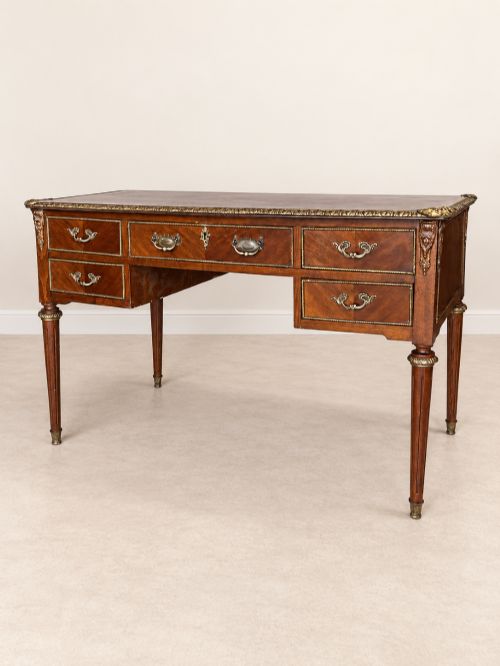
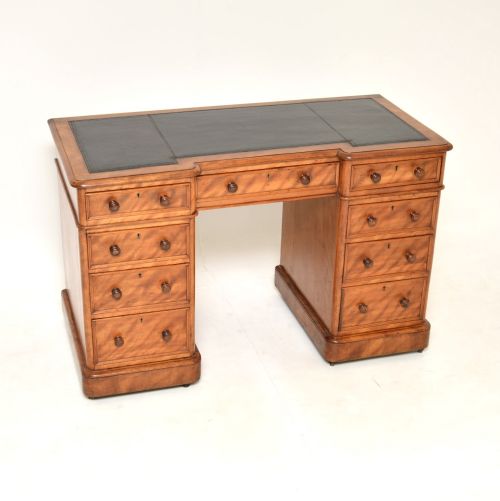
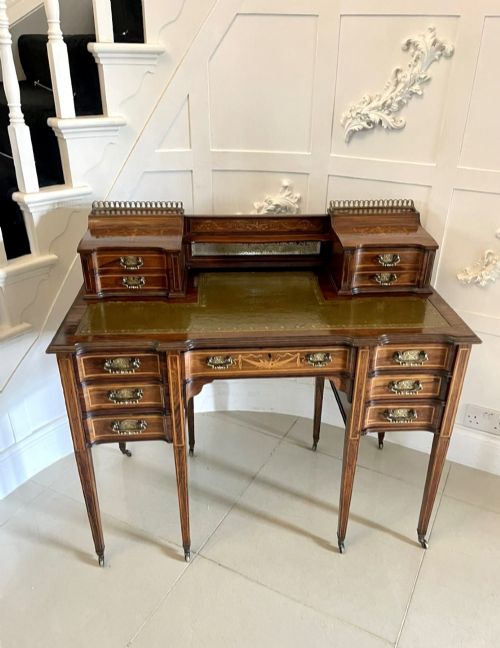
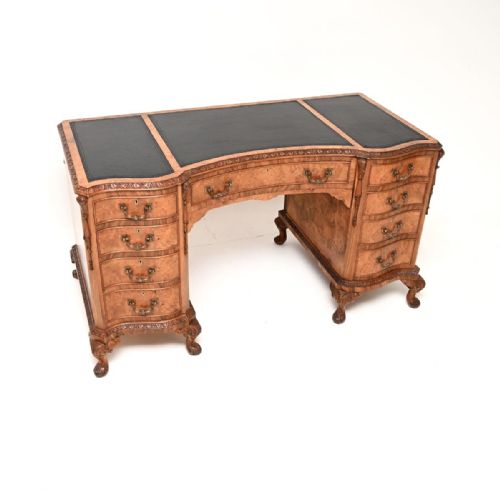
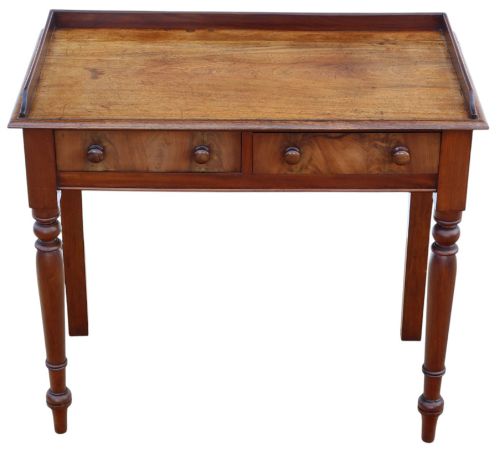
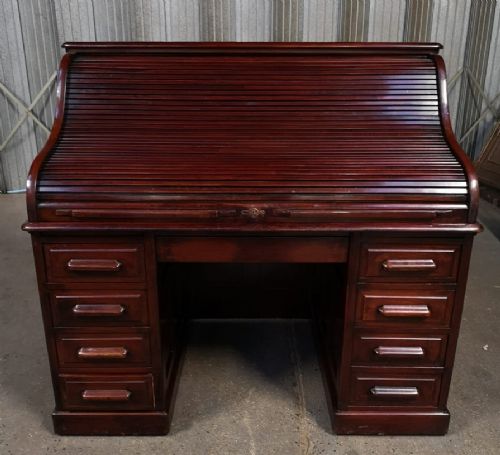
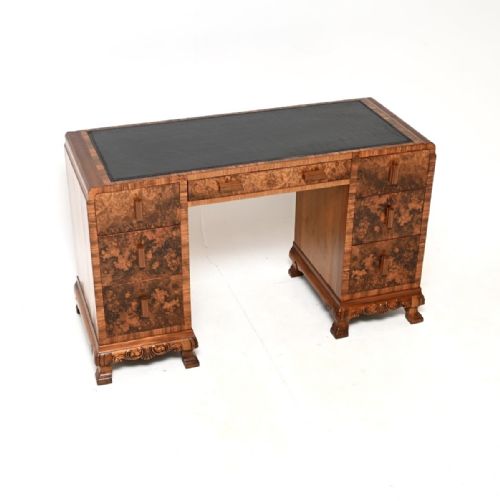
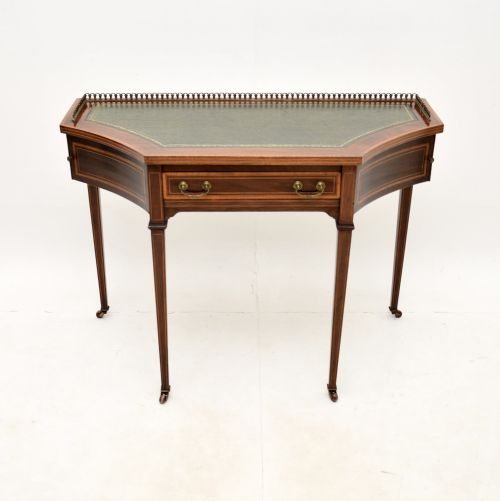
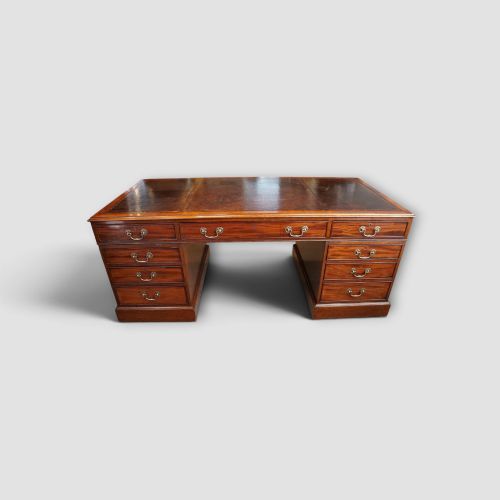
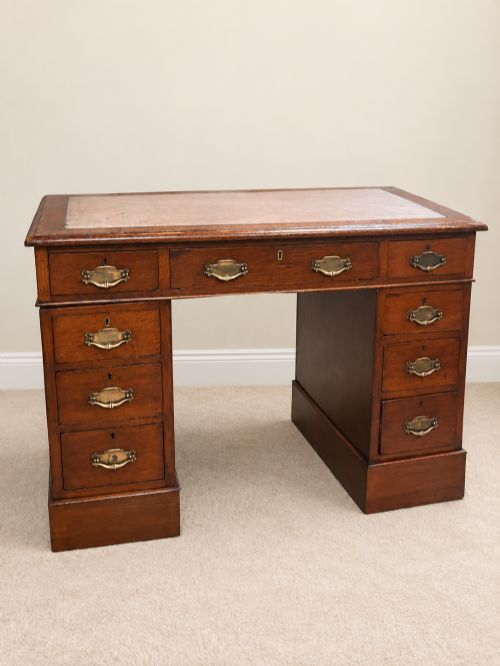
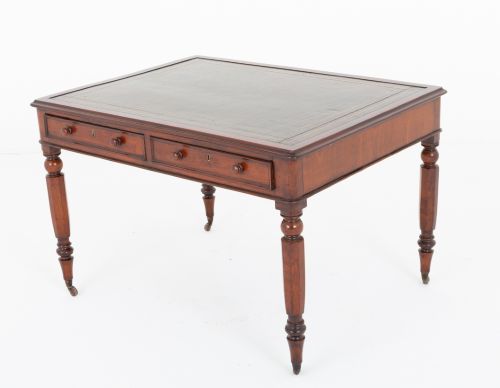

Table Top Writing Desk
When you search for a table top writing desk, you seek a compact writing surface designed to sit upon another piece of furniture.
Table Top Writing Desk
A table top writing desk provides a dedicated platform for correspondence and paperwork without demanding the floor space of a full pedestal or partners desk.
These pieces emerge across the nineteenth and early twentieth centuries, spanning Victorian, Edwardian, and later periods in compact proportions.
The version most commonly encountered is a portable or surface-standing bureau and writing box format, often incorporating internal compartments and a sloping or flat writing plane.
How They Were Made
Cabinet makers construct these pieces using timbers such as mahogany, walnut, and oak, frequently applying finer veneers like burr walnut or satinwood to the primary surfaces.
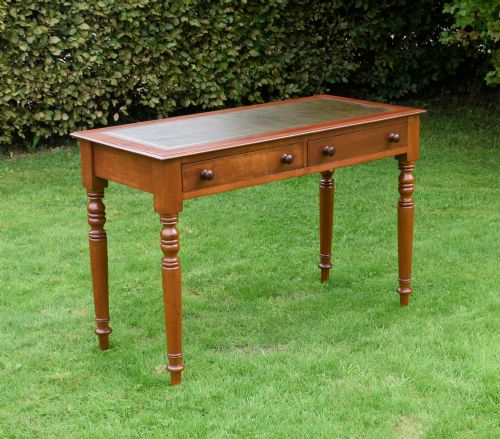
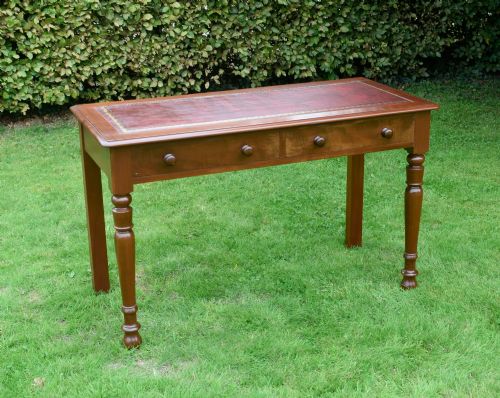
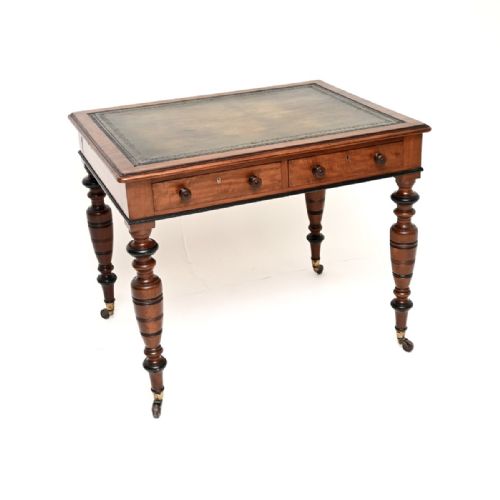
Writing surfaces are typically inset with tooled leather or suede, bordered by blind tooling or gilt decoration to create a durable and refined workspace.
Many historical desks retain stubborn traces of dried Victorian ink inside their smallest secret compartments.
What Varies in Quality
Superior examples display meticulous timber selection, using figured veneers that align symmetrically across the fall front or writing surface.
The refinement of internal fittings, such as secret drawers, dovetailed drawer linings, and original working brass hardware, distinguishes finer workshop production from standard commercial output.
Trollope and sons·Maple and Co·François Linke·Edwards and Roberts·Paul Sormani·Johnstone and Jeanes·Cooper and Holt·Gillows·Thomas Turner·Ray and Miles
The Table Top Writing Desk Glossary
- Bureau
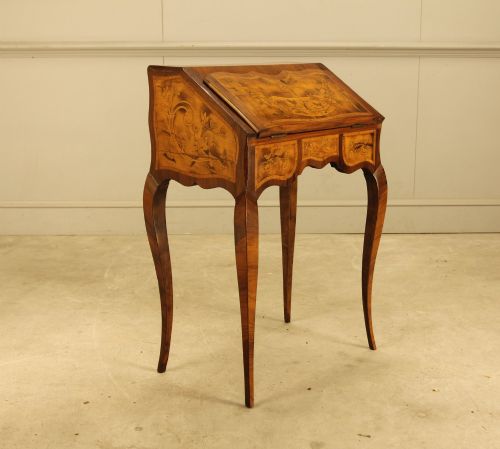
- A desk featuring a sloping hinged flap that opens to reveal internal compartments and drawers. This form provides a concealed writing surface when closed.
- Inlay
- The technique of inserting contrasting pieces of wood or other materials into a recess to form decorative patterns. Satinwood and lighter timbers are frequently utilised for this purpose.
- Tooled leather
- Leather decorated with blind or gold-leaf impressions using heated metal tools. It provides a durable writing surface inset into the wooden top.
- Ormolu
- Gilded bronze mounts applied to furniture for decorative effect. This technique appears predominantly on continental pieces.
- Partners desk
- A large double-sided desk designed for two people to work opposite one another. These incorporate drawers and cupboards on both faces.
Table Top Writing Desk: Frequently Asked Questions
What is a table top writing desk?
A table top writing desk is a compact writing surface designed to be placed on top of an existing table or chest rather than standing directly on the floor. These pieces provide a functional workspace complete with internal compartments for stationery.
They reflect the cabinet-making standards of the nineteenth and early twentieth centuries, utilising timbers such as mahogany, walnut, and oak.
How were these desks used historically?
These desks served as private writing stations for correspondence, ledger management, and record keeping in domestic studies and drawing rooms. The fitted interiors held inkwells, quails, stamps, and writing paper securely.
Portable examples allowed owners to move their working space between rooms or transport their stationery during travel.
How do I care for the leather top?
The leather inset requires minimal moisture and should be dusted regularly with a dry, soft cloth. Conditioning balm can be applied periodically to prevent the leather from drying out.
Avoid placing hot cups or liquids directly onto the surface to protect both the leather and the underlying timber.
How do I identify the period of a desk?
Dating relies upon examining the construction techniques, timber choices, and secondary woods used within the carcass and drawer linings. Regency and Victorian pieces often display distinct hardware styles and veneer thicknesses compared to later Edwardian examples.
Maker stamps, stamps on locks, and regional cabinet-making characteristics further clarify the exact decade of manufacture.