
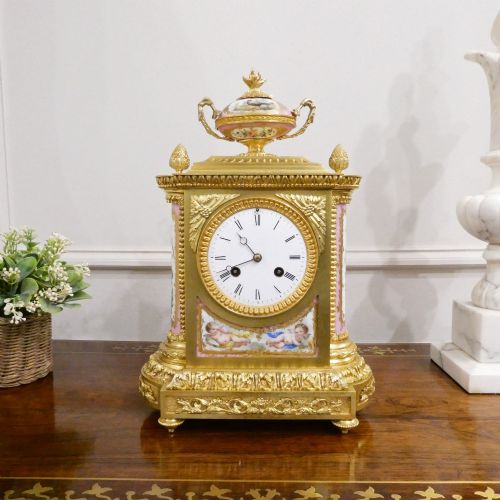
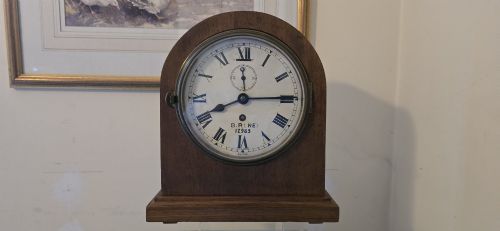
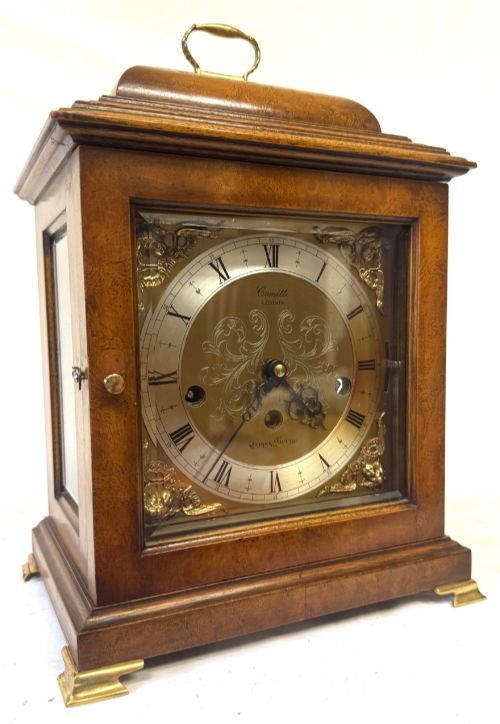
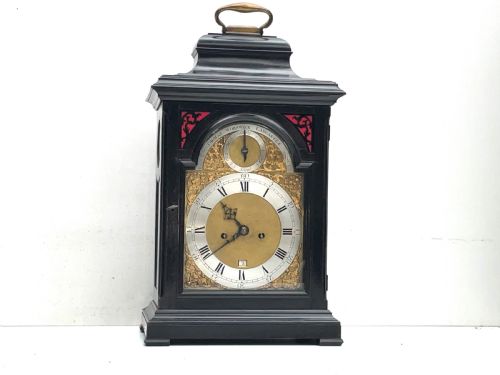
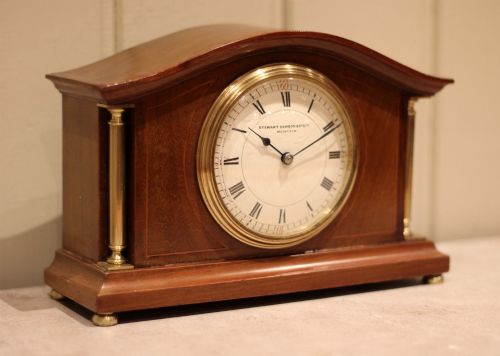
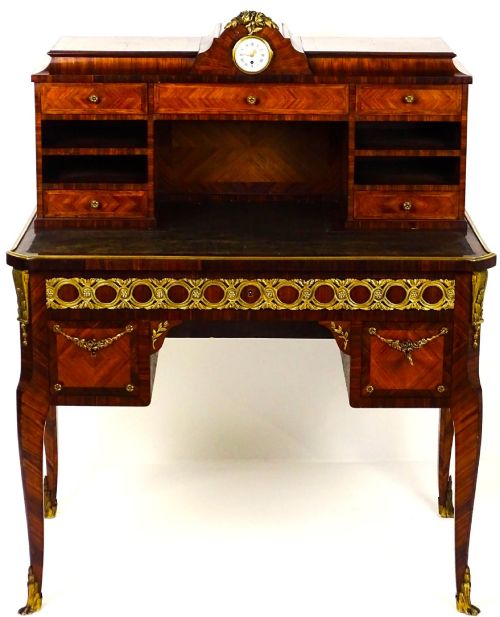
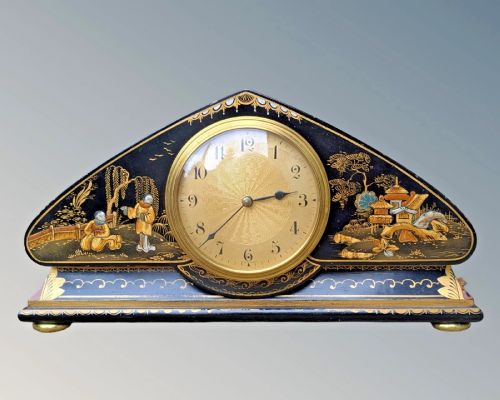
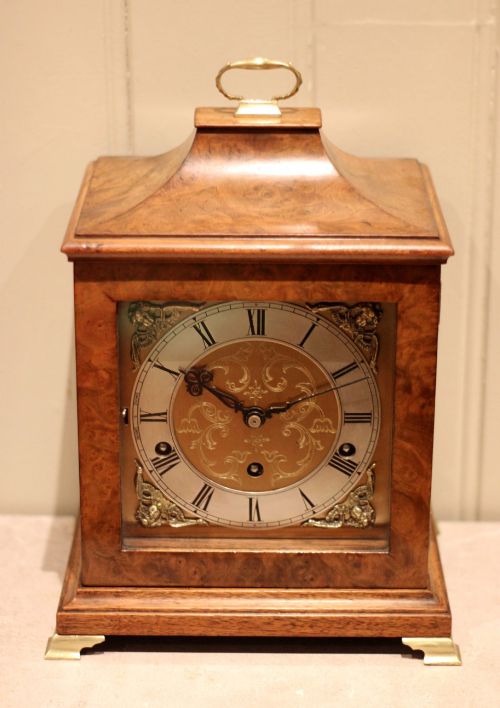
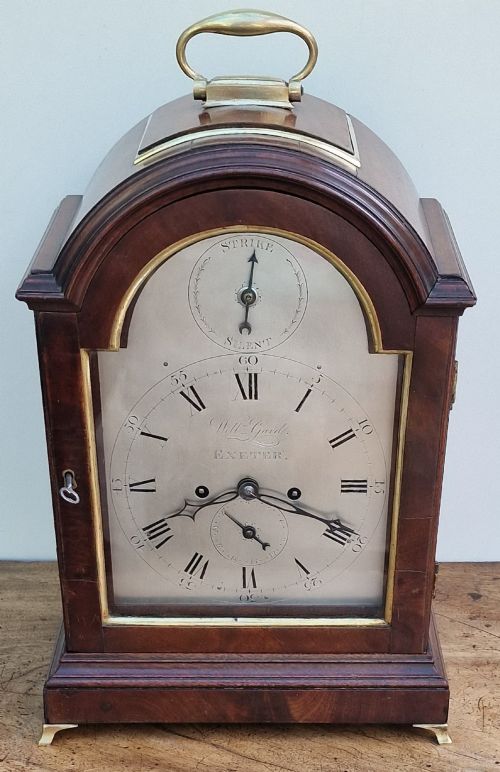

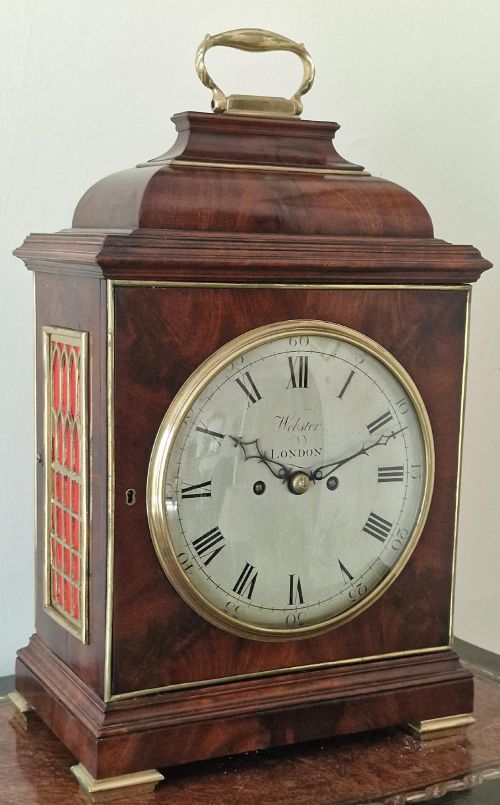
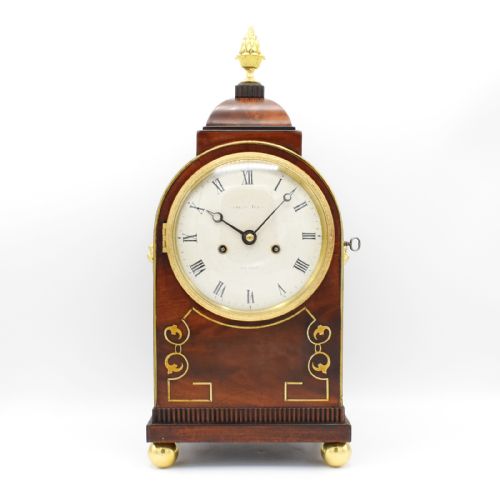
Table Top Clock
A table top clock sits on a desk, bracket or mantel, keeping time while anchoring a room with period craftsmanship.
Table Top Clock
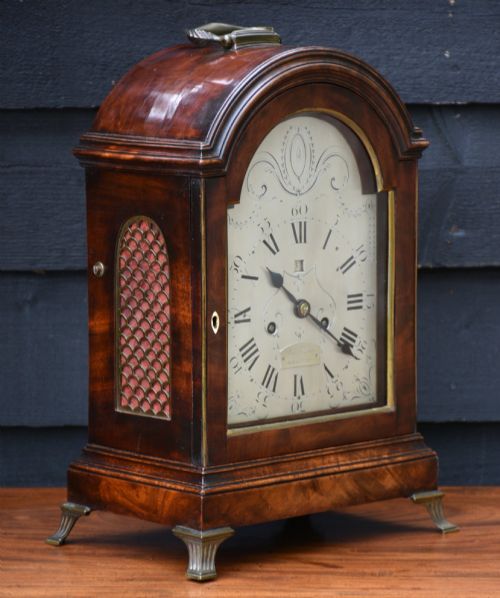
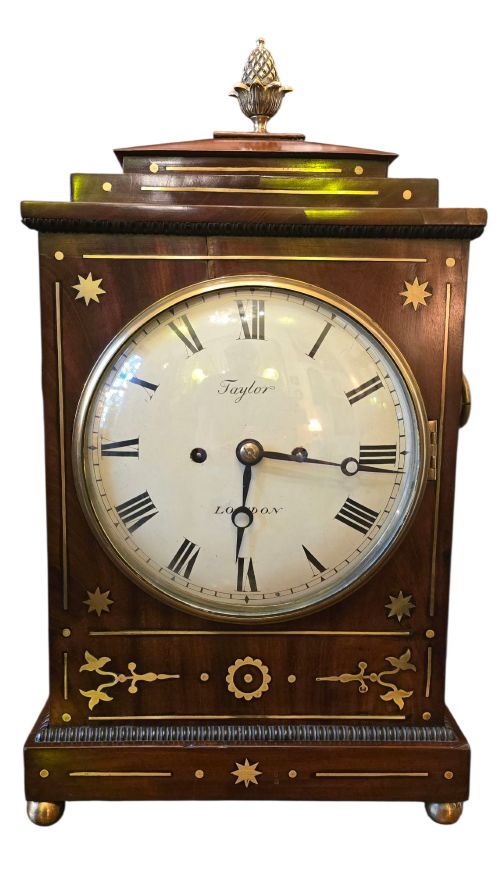
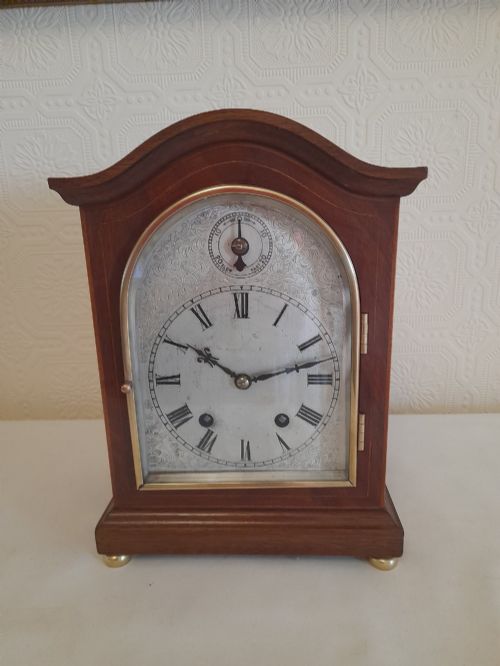
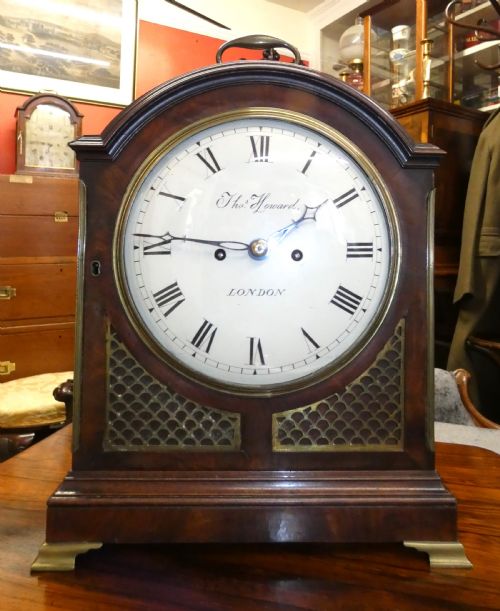
A table top clock is a portable timepiece designed to sit on a surface rather than hang upon a wall or stand on the floor. When searching for a table top clock, buyers encounter formats ranging from seventeenth-century ebony basket-top designs to Georgian mahogany bracket clocks and later Edwardian timepieces.
The pieces on this page span the seventeenth, eighteenth, nineteenth and early twentieth centuries, encompassing styles from William and Mary through Regency to Chinoiserie and Edwardian. The most frequent examples met here are nineteenth-century and Georgian mahogany or rosewood bracket and mantel clocks with fusee movements.
Makers and retailers represented across these eras include London watch and clock makers such as John Pepys, Joseph Windmills, and Mappin & Webb. Cases adopt forms like the lancet top, single pad top, and basket top, sometimes accompanied by striking or chiming mechanisms.
How they were made
Cases rely on traditional cabinet timbers including mahogany, ebony, walnut, satinwood and oak, frequently enhanced with brass mounts, ormolu, silver, and glazed panels. Woodworkers constructed these housings to enclose intricate mechanical movements driven by springs and fusee or verge escapements.
Dials incorporate engraved brass, painted enamel, or gilded metal, paired with finely shaped hands and executed by specialised horologists. The integration of woodwork and metalwork demanded precision from both cabinet makers and clockmakers.
Some nineteenth-century models came with an optional wall bracket, proving that even clocks suffered from floor space envy.
What varies in quality
Quality in a table top clock rests in the crispness of the case carving, the preservation of original veneers such as ebony or mahogany, and the refinement of the brass mounts or floral inlays. Finer examples retain their original movement components, such as verge or fusee mechanisms by noted makers.
The structural integrity of the timber housing, the legibility and artistry of the dial, and the presence of signed plates or backplates elevate an individual piece. Lesser pieces show replacement parts, heavy cabinet alterations, or simplified dial work without maker attribution.
Jean-Baptiste Delettrez·Comitti Of London·Paul Sormani·William Gard·Mappin & Webb·Webster·Ellicott & Smith·Desbois & Wheeler·Schneckenburger·Jonathon Lowndes·S Simpson·John Pepys·Joseph Windmills·William Speakman·Cording·Bryson·J.C Vickery·Henry Jones·Phillips Brothers·Wilkinson·Barrett·Joseph Norris·John Ebsworth·Fromanteel & Clarke·John Grant
The Table Top Clock Glossary
- Bracket clock
- A portable timekeeper originally built with a matching wall bracket to support it, though most now rest on furniture surfaces. They often feature striking movements and arched or basket tops.
- Fusee
- A conical pulley used in spring-driven clocks to equalize the diminishing power of the mainspring as it unwinds. This mechanism improves the timekeeping accuracy of the clock.
- Verge escapement
- An early type of escapement mechanism utilising a crown wheel and a vertical rod with pallets. It governs the release of gear trains in seventeenth and eighteenth-century clocks.
- Basket top
- A curved, multi-tiered case summit reminiscent of a woven basket, typical of late seventeenth and eighteenth-century table and bracket clocks. It often incorporates pierced brass frets for sound emission.
- Lancet top
- A pointed, gothic-arch shape applied to the upper portion of a clock case. This silhouette became popular during the Regency and Georgian periods.
Table Top Clock: Frequently Asked Questions
Where should a table top clock go?
These clocks find a natural home on a mantelpiece, sideboard, desk, or a dedicated wall bracket where their mechanical movement can be wound and heard.
They require a stable, level surface away from direct heat sources and dampness to preserve the wooden case and delicate internal brasswork.
How do fusee movements work?
A fusee movement uses a conical drum and a cord or chain to regulate the pull of the mainspring as it runs down.
This clever mechanical device ensures uniform torque is delivered to the gear train throughout the winding cycle, helping the clock maintain steady time.
How do I identify a Georgian clock?
Georgian clocks generally display rich mahogany timbers, architectural proportions, and brass dial spandrels or silvered chapter rings.
Examining the backplate often reveals the signature of the maker and style conventions typical of the eighteenth century.