


Table Centrepiece Stand
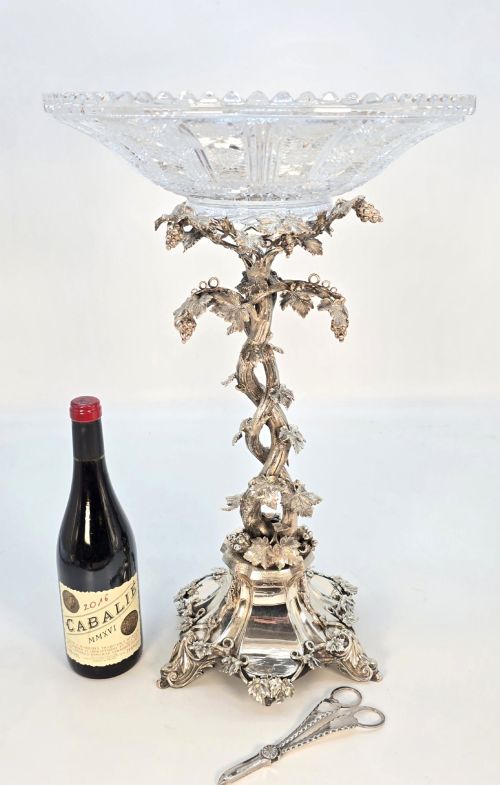
These table centrepiece stand examples bring height and structure to a dining table through fitted glass, silver plate and bronze.
Table Centrepiece Stand
A table centrepiece stand anchors the middle of a dining table, holding fruit, flowers or lighting to create a formal focal point. The items collected under this phrase span periods from the Georgian era through to the Art Deco decades, including Victorian and Edwardian examples.
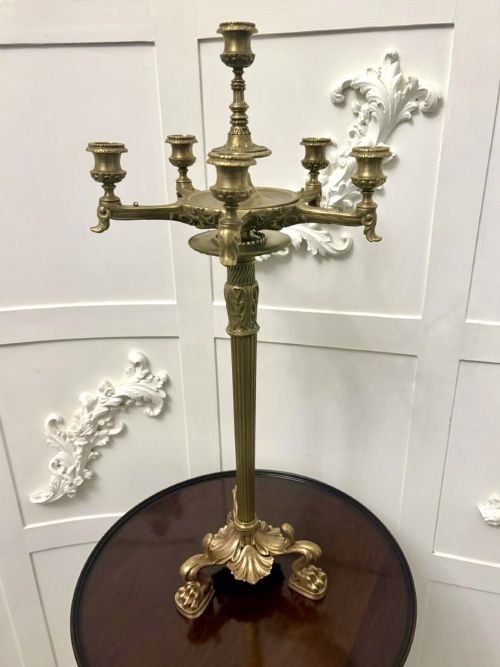
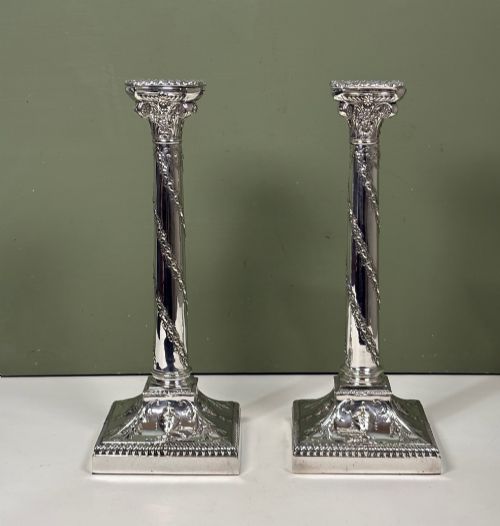
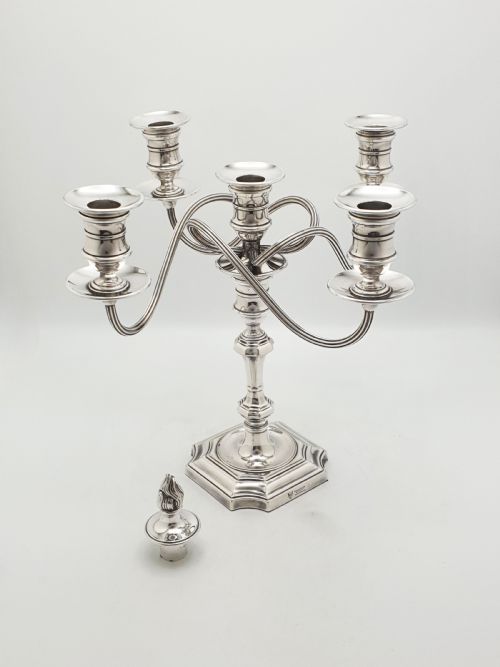
Most pieces you meet on this page take the form of silver plated or sterling silver epergnes, glass bowls on pedestals, and multi-branch candelabra. Alongside these, you will find revolving lazy susans, cruet sets and mirrored plateau bases designed to reflect candlelight.
Origins vary between English workshops, French foundries and German makers, each bringing distinct regional styling to their metalwork and glassware. These objects were made to serve a practical function during communal dining while displaying the host's taste and means.
How they were made
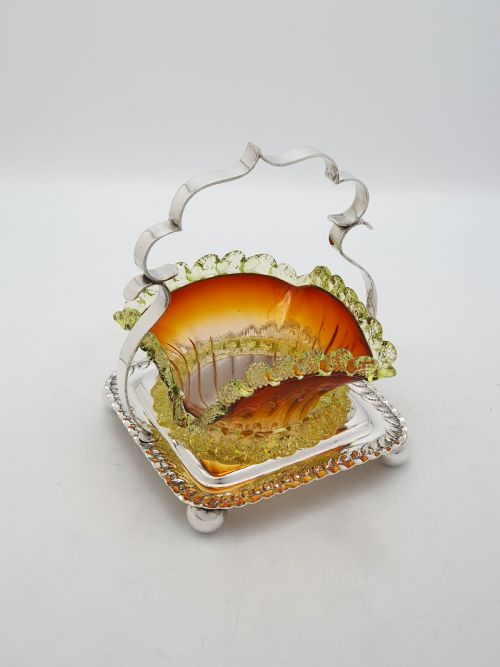
Silversmiths and electroplaters applied thin layers of silver over base metals like copper or nickel brass, often mounting the result on weighted bases for stability. Glass components were blown, cut, or moulded into coloured hues such as cranberry, amber and vaseline.
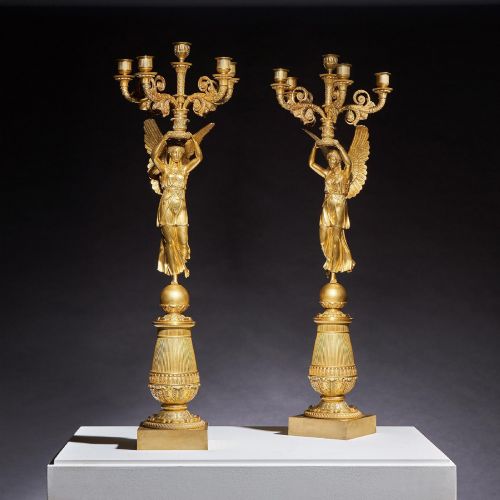
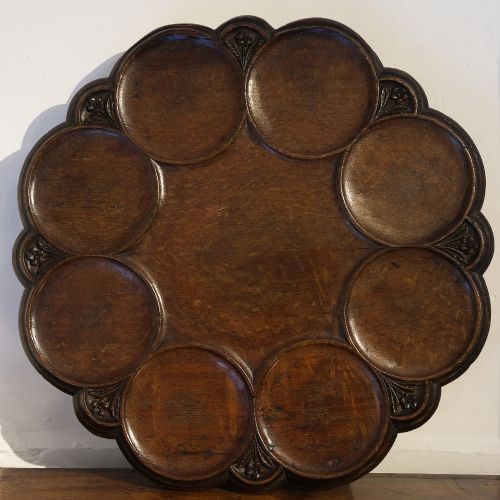
Foundries cast bronze and ormolu using traditional methods, chasing the surfaces by hand to sharpen the leaf scrolls, puttis or figurative details. Oak timber was turned and joined for heavier serving items like rotating trays and cake displays.
Listings feature items spanning the 18th, 19th, and 20th centuries, covering styles from Georgian to Art Deco.
What varies in quality
The weight and depth of the metal plating distinguish sturdier examples from thinner wares that wear down over time to the base metal. Cast bronze and gilt elements show their calibre in the crispness of the chasing and the weight of the underlying metal.
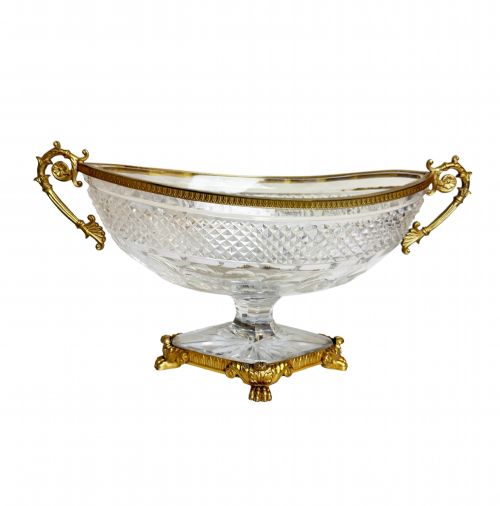
Glass inserts reveal quality through the clarity of the crystal, the precision of the wheel-cut facets, and the richness of coloured glass bowls or epergne trumpets. Makers who employed skilled modellers produced figures and mounts with far greater anatomical and botanical accuracy.
Pierre Philippe Thomire·Mappin and Webb·Walker and Hall
The Table Centrepiece Stand Glossary
- Epergne
- A large table centrepiece featuring a central bowl with multiple branching arms or trumpets for holding fruit, sweets or flowers. These structures are frequently formed from silver plate combined with coloured glass.
- Ormolu
- Gilded bronze produced by applying a mercury and gold amalgam to cast bronze before heating to drive off the mercury. This technique creates a rich golden finish found on French and English decorative mounts.
- Cruet set
- A matched collection of glass bottles or cruets mounted in a metal frame, designed to hold condiments, oil, and vinegar at the table. They often feature handle stands for passing between guests.
- Mirrored plateau
- A low mirrored glass tray set within a wooden, silver plated or bronze frame, placed centrally on a table beneath candelabra. The reflective surface multiplies the flickering candle flame.
- Vaseline glass
- Pressed or blown glass containing uranium dioxide, which gives it a distinctive yellow-green tint and strong fluorescence under ultraviolet light. It was widely utilised in Edwardian table wares.
Table Centrepiece Stand: Frequently Asked Questions
What is an epergne used for?
An epergne served as an elaborate table centrepiece for displaying fruit, sweetmeats or floral arrangements during formal nineteenth and early twentieth century dinners. The branching trumpets and hanging baskets created height above the dining spread.
Hosts used these pieces to draw the eye upward and punctuate large tables with colour from tinted glass bowls. They remained popular centrepieces through both the Victorian and Edwardian periods.
How do I clean silver plated stands?
Clean silver plated stands gently with a soft microfibre cloth and a mild silver cream formulated specifically for plated items. Avoid abrasive dipping solutions that can strip thin silver layers off the underlying base metal.
Take particular care around glass inserts and mirrored surfaces, keeping moisture away from the edges of mirrors where it can damage the backing.
Are these stands suitable for daily use?
Many of these sturdy stands remain entirely functional for holding fruit, cakes or candles during contemporary meals. Solid oak lazy susans and silver plated trays handle regular rotation and serving without issue.
Delicate antique glass trumpets and fine epergne arms require careful handling during washing and repositioning on the table.
How do I tell Victorian from Edwardian pieces?
Victorian stands tend to feature heavier, more ornate ornamentation such as Rococo revival scrolls, deep hand-cut crystal, and rich cranberry glass. Maker marks and registration numbers often point to nineteenth century production dates.
Edwardian and Art Nouveau examples shift toward lighter, more flowing botanical lines, amber or vaseline glass inserts, and sleeker silver plated mounts characteristic of the early twentieth century.