




Syrian Mother of Pearl Furniture
Syrian mother of pearl furniture brings intricate geometric inlay and rich timbers into a room, offering functional seating and tables rooted in centuries of Levantine craft.
Syrian Mother of Pearl Furniture
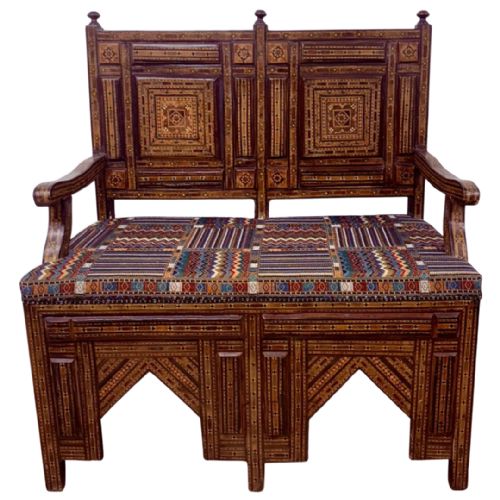
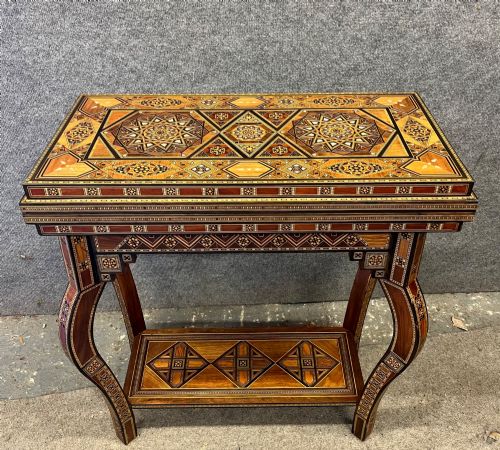
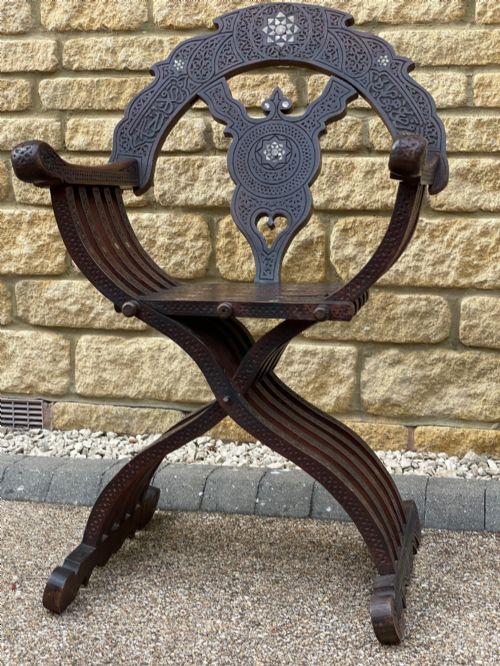
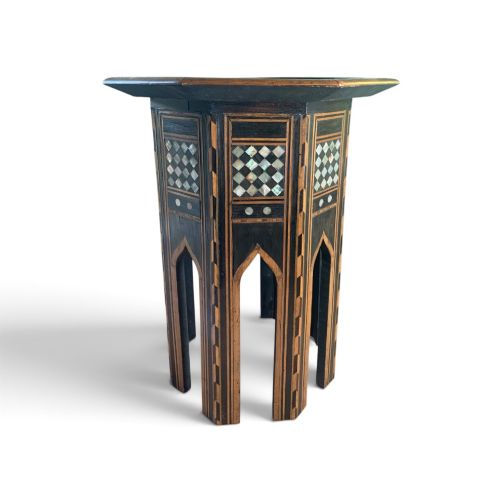
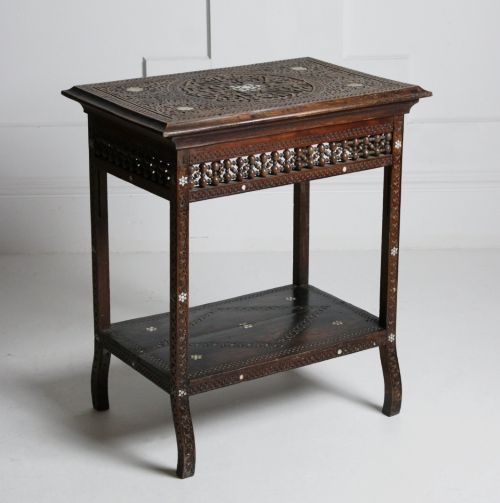
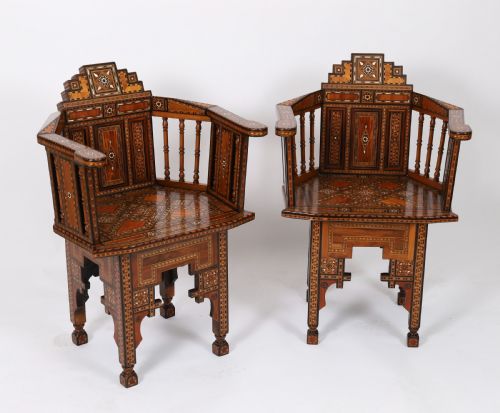
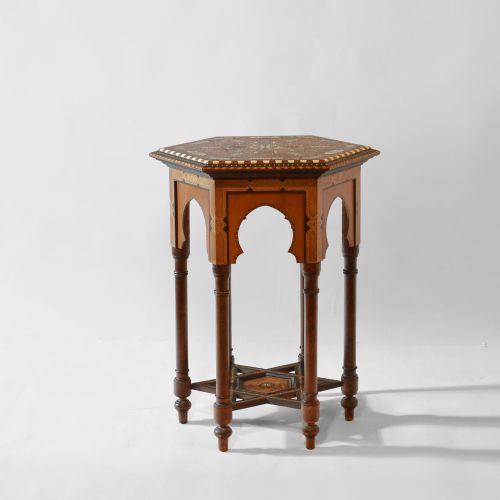
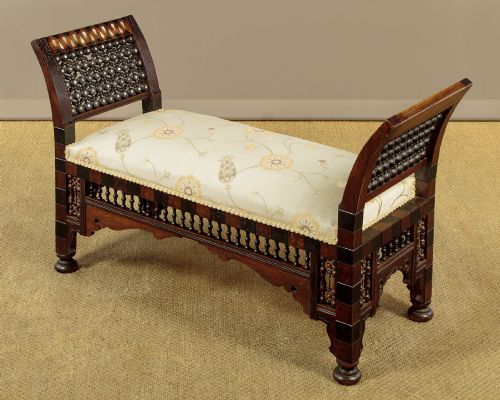
When you search for Syrian mother of pearl furniture, you encounter a distinct group of decorative items spanning the nineteenth and early twentieth centuries. These pieces encompass utilitarian forms such as side tables, occasional tables, and games tables, alongside seating including armchairs, benches, and window seats.
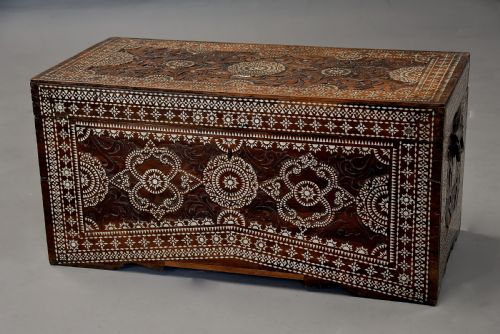
You frequently meet hexagonal and octagonal occasional tables alongside chairs and trunks created in styles identified as Moorish Revival, Ottoman, and Levantine. Makers and retailers such as Liberty and Co also adapted these aesthetic traditions for British interiors during the late nineteenth and early twentieth centuries.
The assortment includes larger furnishing forms like cabinets, writing tables, and three-piece settee suites. These objects combine regional craftsmanship with European demand, resulting in functional household items covered entirely in patterned mosaic work.
How they were made
Craftsmen built the foundational structures using walnut, hardwood, ebony, ebonised wood, and fruitwood. These timber frames provided a sturdy base for the intricate surface ornamentation applied across every visible plane.
Workers applied tiny geometric pieces of mother of pearl, abalone, and bone onto the wooden surfaces using specialised adhesives. This parquetry technique created dense, repeating patterns of stars, polygons, and intricate borders that defined the finished appearance.
What varies in quality
The precision and density of the geometric inlay work determine the visual refinement of each piece. Tightly fitted mosaic tesserae demonstrate superior hand-cutting compared to wider gaps filled with excessive dark mastic.
The selection of underlying timber and supplementary materials influences the overall character. Combinations utilising ebony, abalone, and finely carved hardwood exhibit a higher degree of material ambition than simpler softwood or fruitwood equivalents.
Liberty and Co
The Syrian Mother of Pearl Furniture Glossary
- Mother-of-pearl
- The iridescent inner layer of mollusc shells, harvested for its shimmering quality. It is cut into thin geometric polygons and embedded into timber.
- Parquetry
- A geometric mosaic of wood, bone, or shell pieces arranged to form decorative patterns. This technique covers the entire surface of Syrian tables and chairs.
- Moorish Revival
- An architectural and decorative style popular in the nineteenth century. It reinterprets Islamic design motifs for Western domestic interiors.
- Levantine
- Pertaining to the Levant region of the Eastern Mediterranean. This term describes the cultural origin of the decorative traditions seen on these furnishings.
- Tessera
- An individual small block of stone, shell, or bone used in mosaic work. Thousands of these tiny pieces form the surface patterns on the furniture.
Syrian Mother of Pearl Furniture: Frequently Asked Questions
What is Syrian mother of pearl furniture?
These items are nineteenth and early twentieth century wooden furnishings decorated with intricate geometric mosaics made from mother-of-pearl, bone, and abalone. They include tables, chairs, cabinets, and trunks influenced by Middle Eastern and North African design traditions.
Many of these objects were imported directly into Britain or produced in collaboration with European retailers who popularised the Moorish aesthetic in domestic interiors.
How were these tables and chairs used?
Hexagonal and octagonal tables functioned as occasional furniture for holding lamps or decorative objects in drawing rooms and reception spaces. Writing tables and games tables served practical domestic purposes while displaying complex surface decoration.
Seating items such as armchairs, window seats, and settee suites provided functional places to sit while contributing to an exotic, eclectic interior decorative scheme.
How do I identify the period?
Dating relies on timber selection, structural joinery, and the style of the inlay work alongside documented retail associations. Pieces originating in the nineteenth century often employ heavier hardwood frames and denser bone and pearl configurations.
Items produced around nineteen-twenty frequently reflect transitional export designs or specific stylistic adaptations created for European department stores.
How do I care for inlaid furniture?
Maintain stable indoor humidity levels to prevent the wooden substrate from expanding and causing the tiny pearl and bone tesserae to loosen. Avoid placing these items in direct sunlight or near heat sources that could dry out the adhesives.
Dust gently with a soft, dry cloth without applying harsh chemical polishes that might degrade the dark mastic filler between the mosaic pieces.