


Swiveling Dressing Mirror
A swiveling dressing mirror turns smoothly on side pivots to angle your reflection, offering a practical antique utility for the bedroom or dressing room.
Swiveling Dressing Mirror
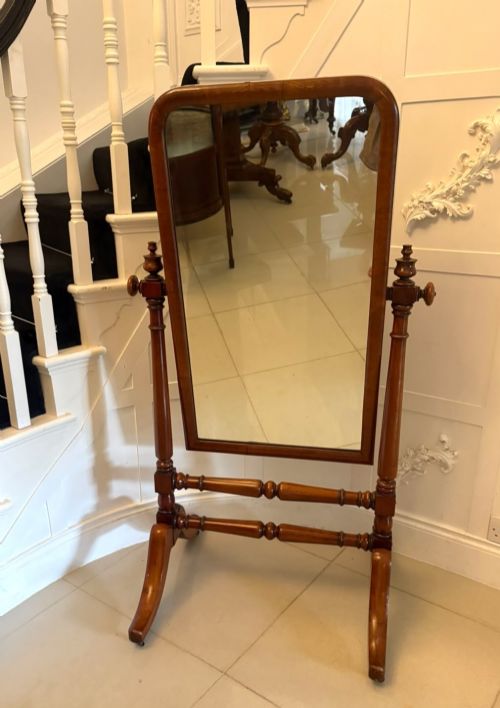
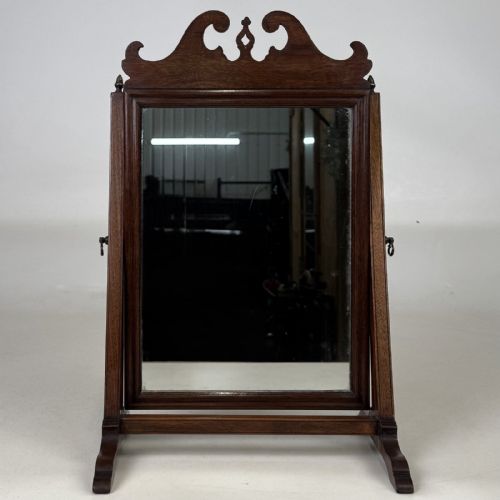
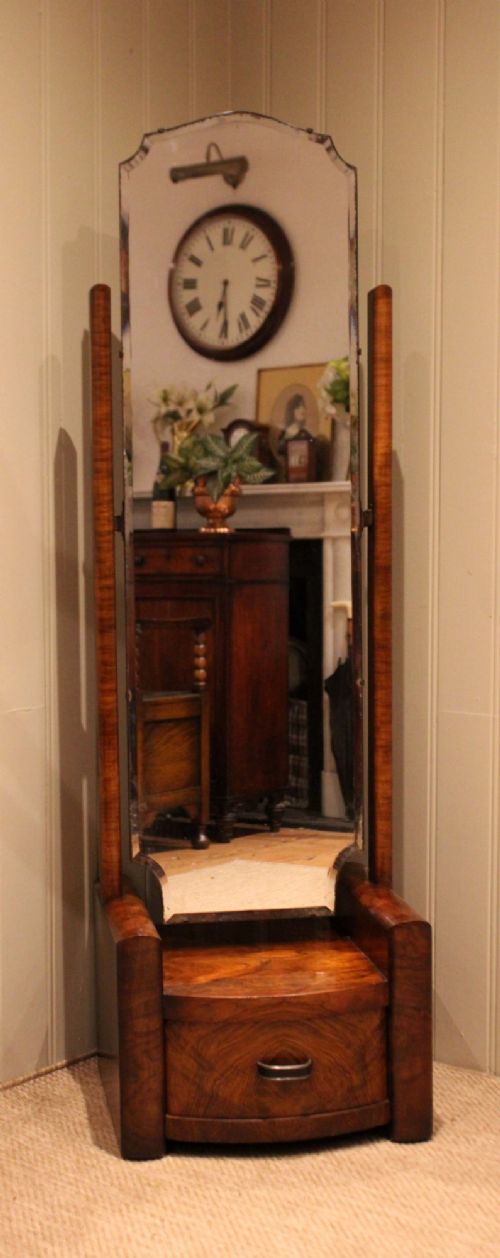
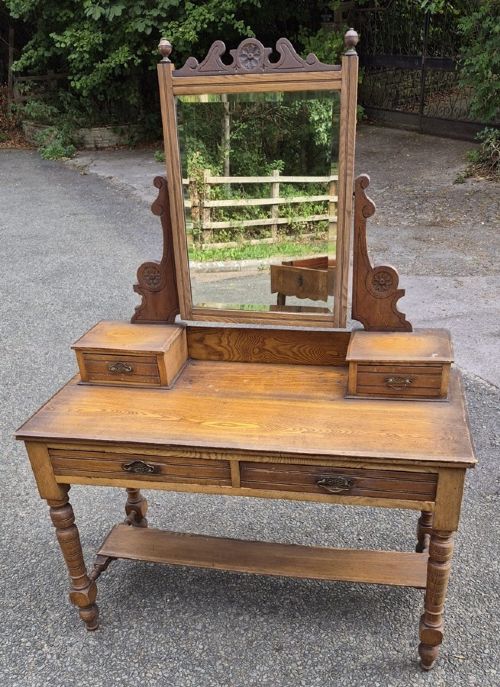
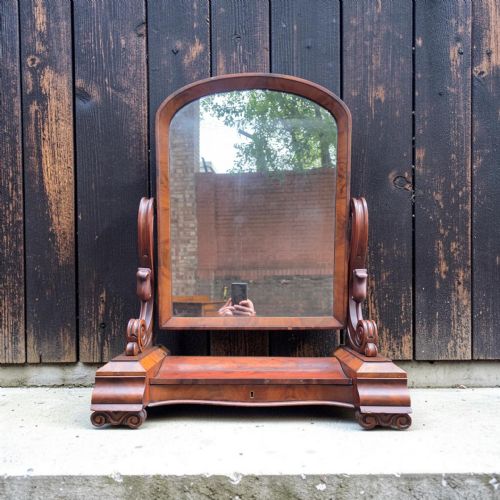
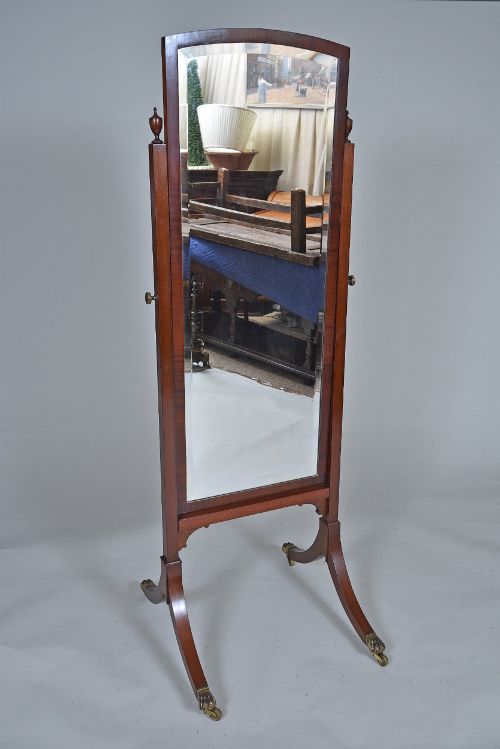
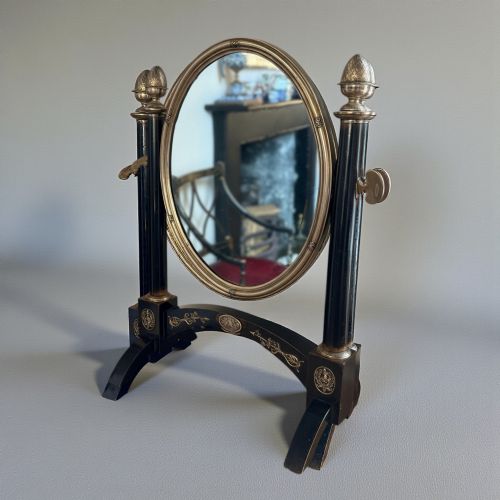
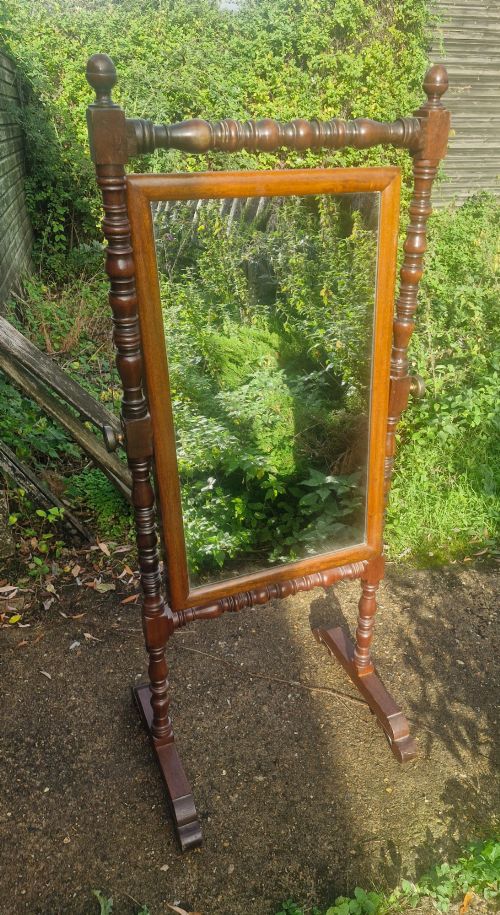
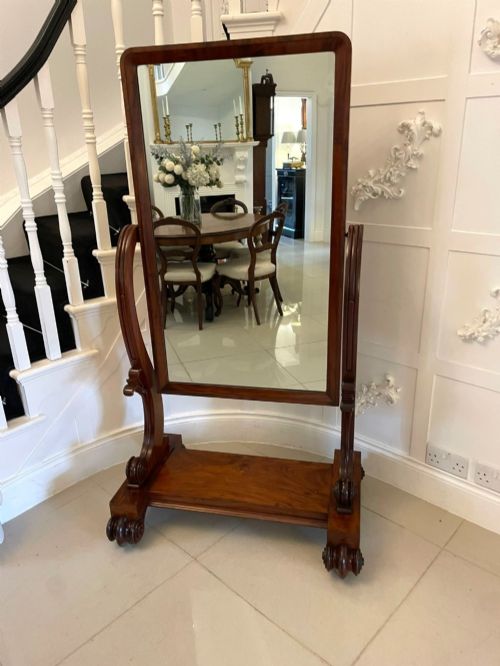
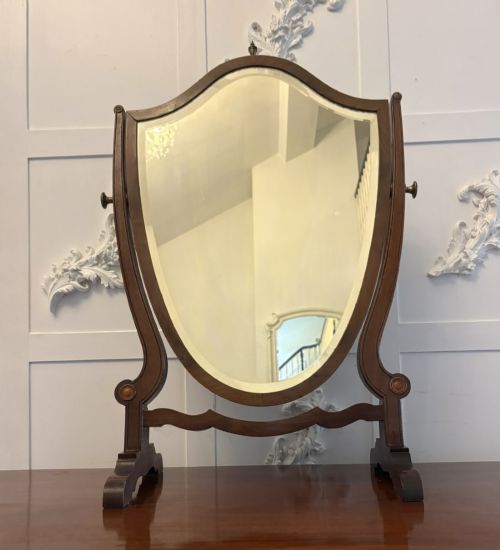
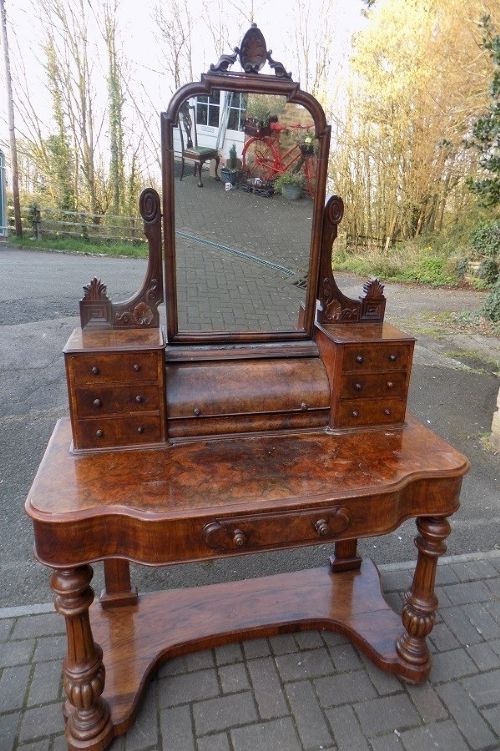
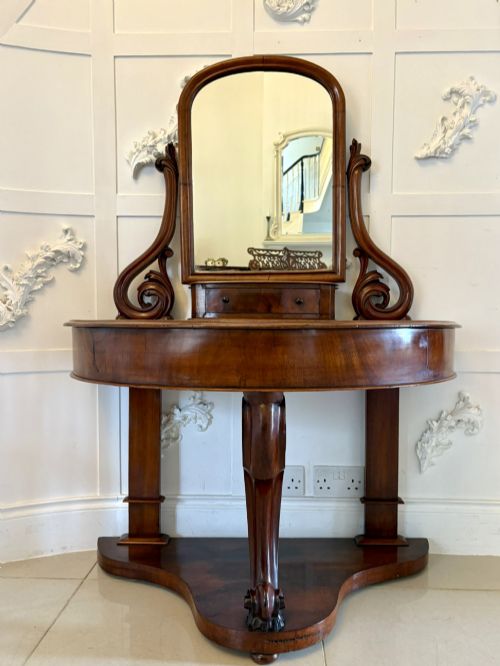
A swiveling dressing mirror, often called a swing mirror, toilet mirror, or cheval mirror, sits either upon a table or stands independently on the floor. When searching for a swiveling dressing mirror, you encounter pieces spanning from the 18th century through the Georgian, Victorian, Edwardian, and Art Deco periods. These items range from compact table-top glass with small drawer bases to large floor-standing cheval mirrors.
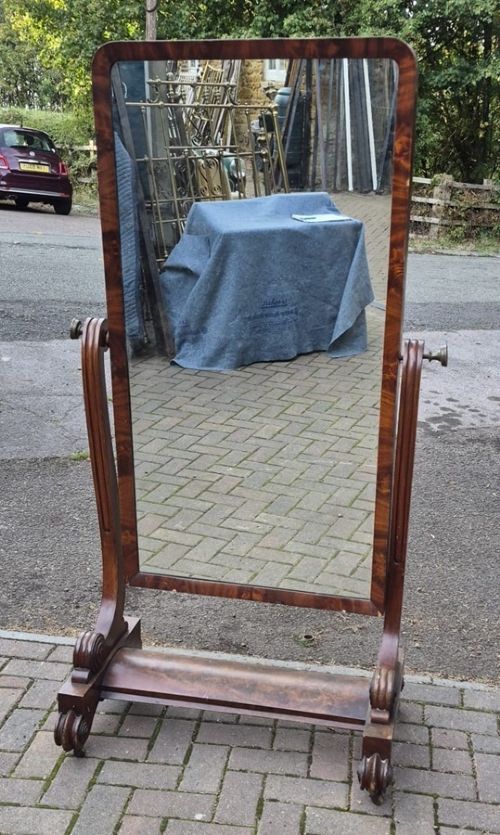
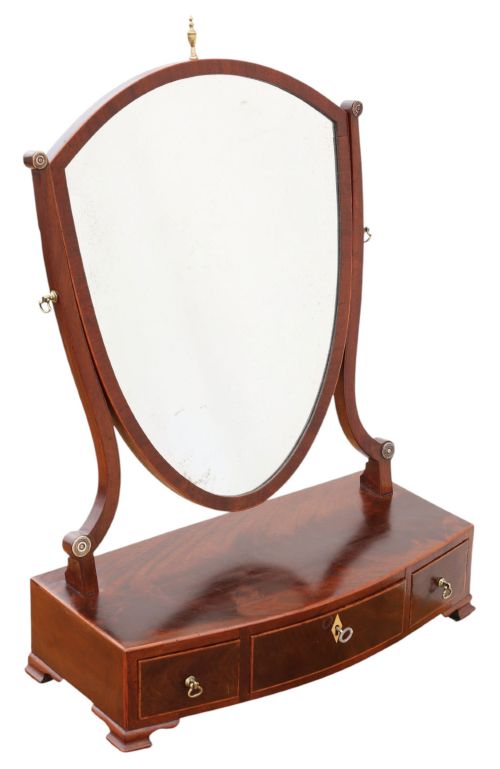
Table versions typically rest on box bases fitted with tiny drawers for trinkets, while larger floor models utilise vertical standing frames supported by scrolling legs or trestle bases. The glass plate itself is housed in an adjustable frame held by two lateral screws or pins, allowing the user to tilt the angle at will. Oak, mahogany, walnut, and burr walnut form the main wooden structures supporting the tilting mechanism.
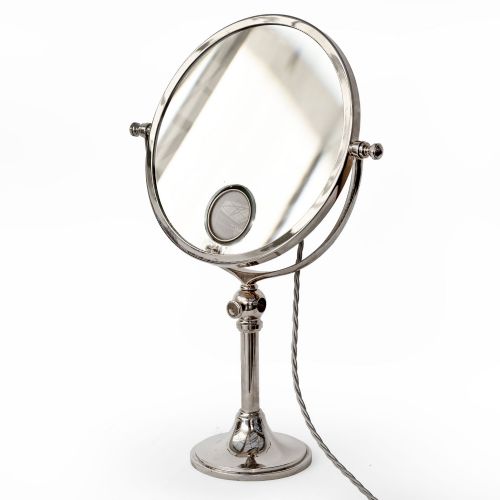
The selection on this page leans heavily toward mahogany examples from the Victorian and Edwardian eras, alongside Georgian and 19th-century variants. You will also find specialised pieces such as shaving mirrors, illuminated makeup mirrors, and French Empire designs featuring ormolu mounts. Each form serves the fundamental purpose of personal grooming while reflecting the cabinet-making fashions of its decade.
Materials and Construction
Cabinet makers constructed these mirrors primarily using solid and veneered mahogany, walnut, oak, and satin birch, frequently selecting burr walnut for decorative grain patterns on the drawer fronts. Frames and support pillars often incorporate turned wooden uprights, barley twist columns, or cast bronze and nickel-plated brass mountings. Table models rely on pegged or dovetailed joints for their small base boxes.
The tilting action depends on brass or metal pivot screws, screw nuts, and side arms fitted into the frame sides to hold the mirror at the desired angle. Glass plates in older items were hand-silvered or cast, sometimes framed with delicate boxwood stringing or gilded borders. Later pieces incorporate heavier cast bronze fittings and adjustable metal stands, particularly by the early 20th century.
Swiveling Dressing Mirror Retail Price Guide 2026
Typical asking prices for swiveling dressing mirror among the pieces listed under this phrase on Sellingantiques today, from the lower quarter to the upper quarter. They describe what is for sale here now, not the wider market.
A shaving mirror with built-in illumination reminds us that early morning routines required good lighting long before electricity reached every bedroom.
Assessing Craftsmanship
Quality in a swiveling dressing mirror shows in the timber selection, the crispness of the turning on the uprights, and the stability of the pivot mechanism. Superior examples feature dense, figured mahogany or burr walnut, hand-cut dovetails on the base drawers, and substantial brass hardware that holds the heavy glass firmly without slipping.
Lesser items display plain, secondary woods with minimal figure, loose pivot actions that fail to maintain an angle, and poorly fitted replacement mirror glass. The integration of the side arms with the upright posts indicates whether a piece was built by a skilled workshop or produced as standard utilitarian furniture.
Heal And Sons
The Swiveling Dressing Mirror Glossary
- Cheval mirror
- A large standing dressing mirror supported on a frame with four legs, tall enough to reflect the full length of the user. The glass swings entirely within its vertical uprights.
- Toilet mirror
- A smaller dressing mirror designed to stand upon a table, chest, or dressing-table top. These typically incorporate a small box base with one or more small drawers.
- Swing mirror
- An alternative term for any mirror hung on side pivots allowing it to tilt back and forth. It describes the primary mechanical action of these dressing items.
- Shield shaped
- A mirror glass cut into the outline of a heraldic shield, popular during the Georgian period. This silhouette is usually framed in mahogany and mounted on a serpentine base box.
- Ormolu
- Gilded bronze mounts applied as decorative ornaments to furniture pieces, seen particularly on French Empire style frames. The technique adds metallic contrast to the polished wood surface.
Swiveling Dressing Mirror: Frequently Asked Questions
What is the difference between a cheval mirror and a toilet mirror?
A cheval mirror is a tall, floor-standing piece designed to show your entire outfit, supported by a heavy frame with legs.
In contrast, a toilet mirror is much smaller and sits on top of a table or dressing chest to assist with close grooming.
How do the swivel pivots work on these mirrors?
The glass frame hangs between two vertical posts using threaded metal pins or screws inserted through side arms.
Tightening these pivot screws allows you to lock the glass at your preferred viewing angle.
Are the mirror plates original on antique swing mirrors?
Many older pieces retain their original glass, which can exhibit light foxing, minor speckling, or subtle distortions due to early manufacturing methods.
Because glass is fragile, some surviving examples feature replaced mirror plates fitted during later restoration work.
Where should I place a table top dressing mirror?
These mirrors suit placement on top of a sturdy chest of drawers, a dedicated vanity, or a dressing table where the height aligns comfortably with your seated view.
Ensure the supporting surface is deep enough to balance the weight of the base box and the tilting glass frame.