
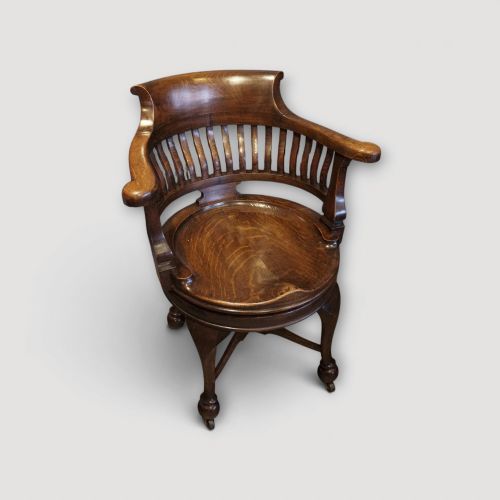
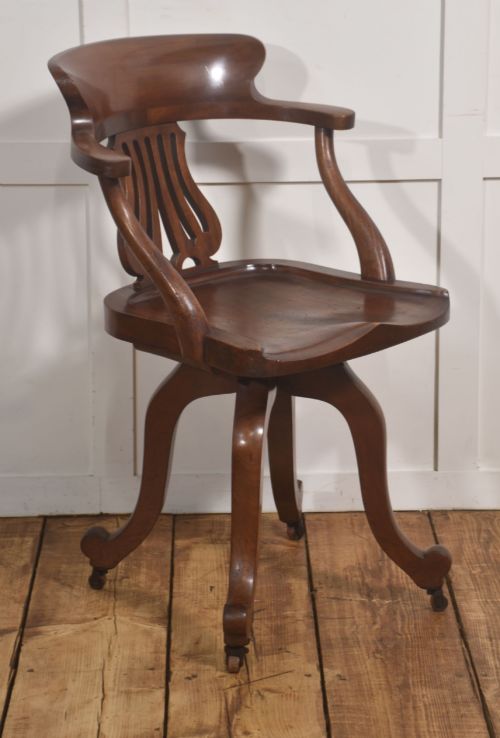
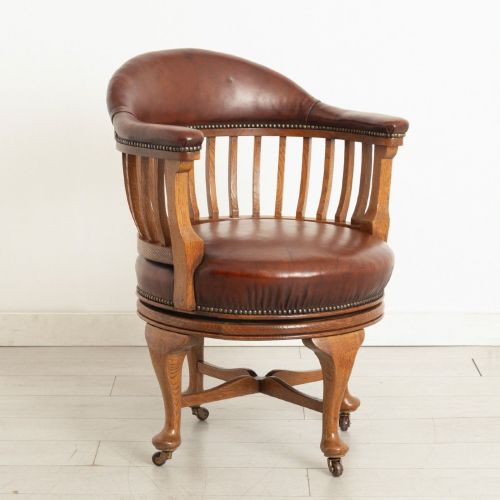
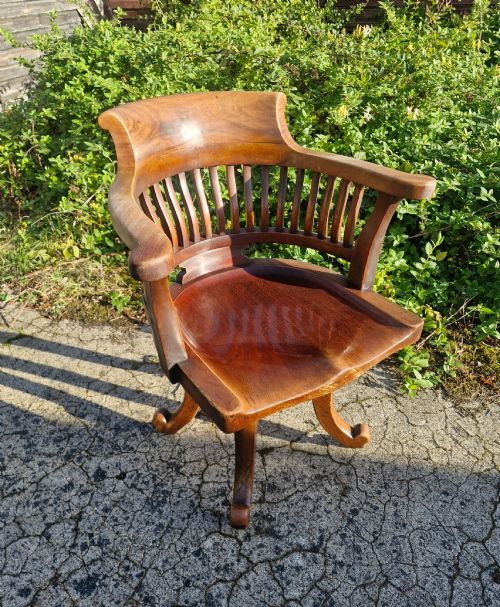


Swivel Library Chair
When you want a swivel library chair, you are choosing a sturdy timber seat designed for working at a desk with adjustable height and movement.
Swivel Library Chair
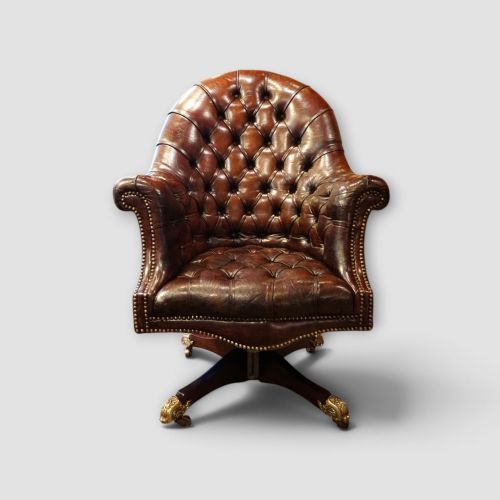
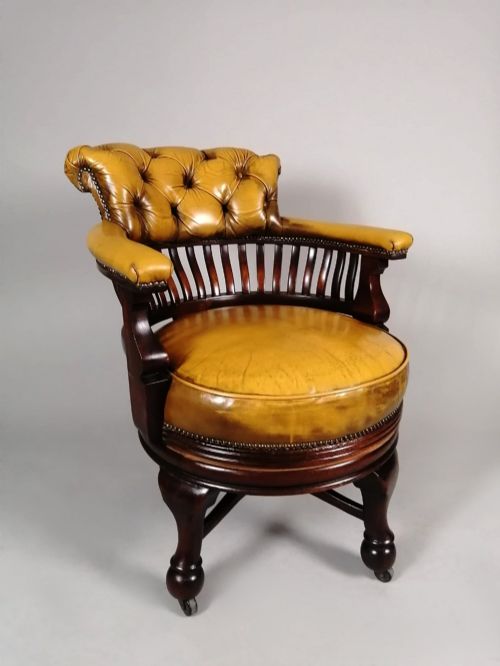
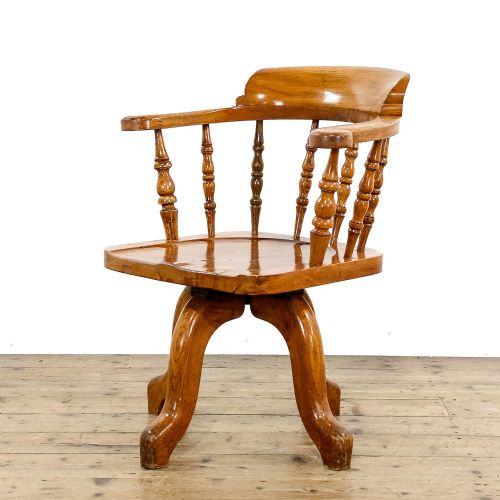
A swivel library chair is a functional seating form primarily encountered from the Victorian, Edwardian and early twentieth-century periods. These pieces serve as desk chairs, office chairs and captain's chairs, combining a revolving mechanism with timber frames.
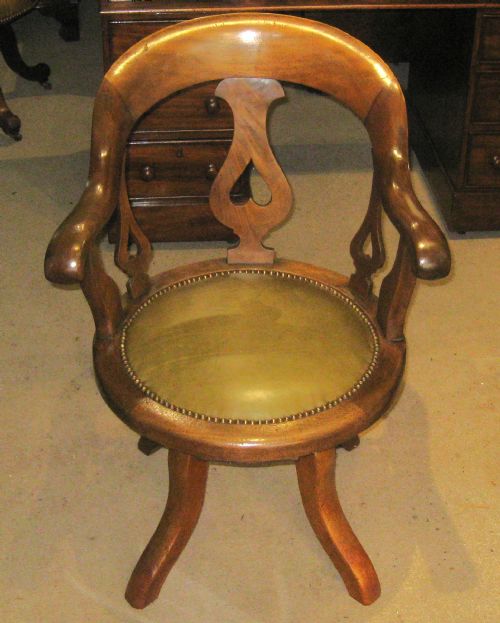
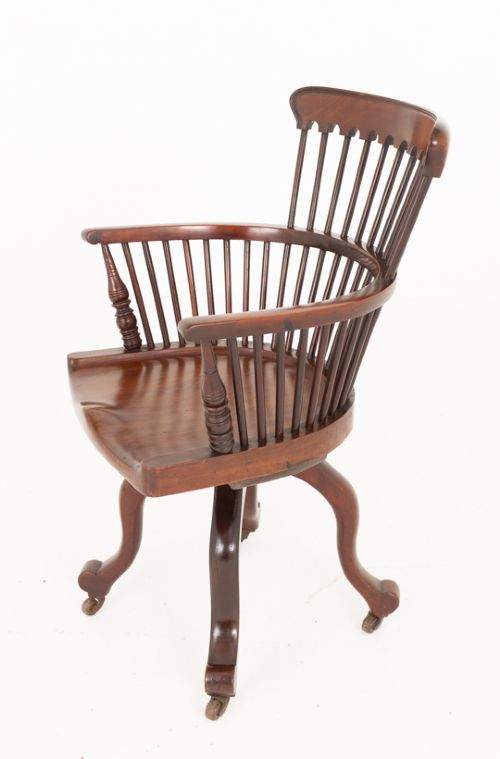
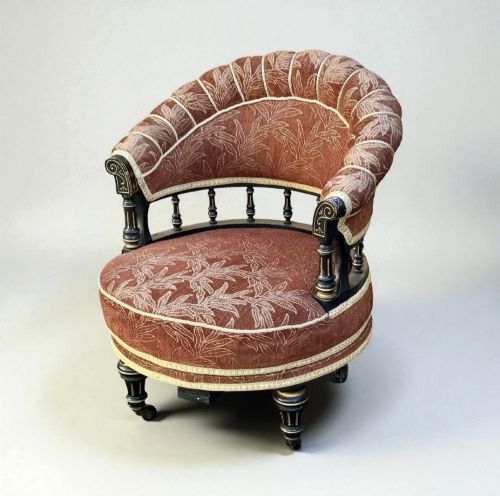
You will most commonly meet versions made from mahogany, oak and walnut, often paired with leather or hide upholstery. The designs range from plain oak and beech frames to ebonised or golden mahogany models with armrests.
Origins span nineteenth-century workshops through to interwar production, reflecting the evolution of office and library seating. The typical form incorporates a central swivel column allowing the occupant to turn while seated at a desk.
Materials and construction
Makers utilised solid hardwoods such as mahogany, oak, walnut, ash and beech to build the structural frames, often combining timbers like oak and beech within a single chair. Brass and cast iron components formed the revolving swivel mechanisms and height-adjustment screws underneath.
Upholstery typically involved leather, tan hide or leather-covered pads set into the timber seats and backrests. Joinery methods relied on sturdy framing to support the movement and weight associated with revolving office and library seating.
Listings span the Victorian and Edwardian periods into the 1930s, featuring mahogany, oak, walnut, beech, leather and brass.
Judging quality in swivel seating
Quality rests in the selection of timber and the robustness of the revolving mechanism. Finer examples display richly grained mahogany or golden mahogany alongside substantial brass and iron swivel hardware.
The integration of the turning mechanism into the wooden base dictates the mechanical success of the chair. Chairs retaining their original adjustable height screws and sturdy timber frames represent the higher tier of surviving pieces.
George Bartholomew and Co
The Swivel Library Chair Glossary
- Revolving
- A term describing a chair built with a central pivot mechanism allowing the seat to turn through a full circle. This movement defines the swivel library chair category.
- Captain's Chair
- A sturdy armchair, frequently featuring a rounded wooden backrail supported by small spindles above a solid timber or upholstered seat. These forms often incorporate swivel bases.
- Ebonised
- Timber treated with a dark finish to resemble ebony, a technique applied to Victorian armchairs to create a formal appearance. This finish alters the natural colour of the wood.
- Arts and Crafts
- A design movement prioritising traditional craftsmanship and plain construction over mass-produced ornamentation. Pieces from this style emphasise visible timber grain and simple joinery.
- Tan Hide
- A natural leather upholstery material used on desk chair seats to provide a durable and comfortable surface. It appears frequently on Edwardian and Victorian office seating.
Swivel Library Chair: Frequently Asked Questions
What is a swivel library chair?
A swivel library chair is a revolving timber desk or office seat designed for working environments. These pieces feature a central pivot allowing the user to turn.
They combine wooden frames in mahogany, oak or walnut with leather upholstery and adjustable height mechanisms.
How do I date a swivel library chair?
Dating relies on observing the timber choice, construction methods and stylistic details associated with periods like the Victorian era or the Edwardian period. Mahogany and ebonised finishes often point to the nineteenth century.
Later pieces from the 1920s and 1930s utilise simpler oak and beech construction with different mechanical hardware.
Were these chairs used in offices or homes?
These chairs served both domestic libraries and professional offices, functioning as desk chairs and captain's chairs. Their revolving action suited working at large writing tables.
Survivors include examples made for domestic studies as well as American and English commercial settings.
What woods were used for swivel chairs?
Makers primarily employed hardwoods such as mahogany, oak and walnut for the visible frames. Beech and ash also appear in structural components and secondary framing.
Brass and cast iron were standard materials for the internal swivel mechanisms and height screws.