




Swiss Carved Animals
Swiss carved animals are expressive wooden sculptures and functional objects from the nineteenth and early twentieth centuries that bring historic Alpine character into any room.
Swiss Carved Animals
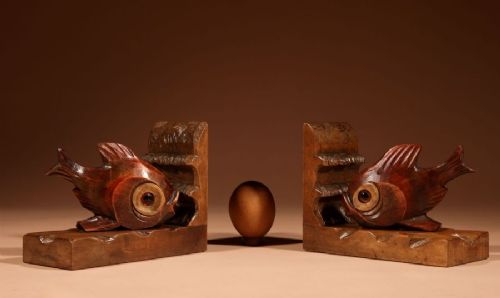
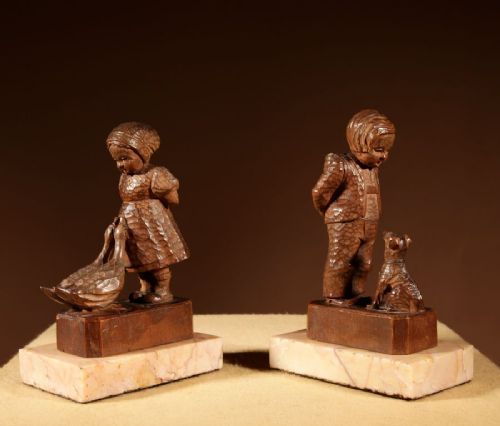
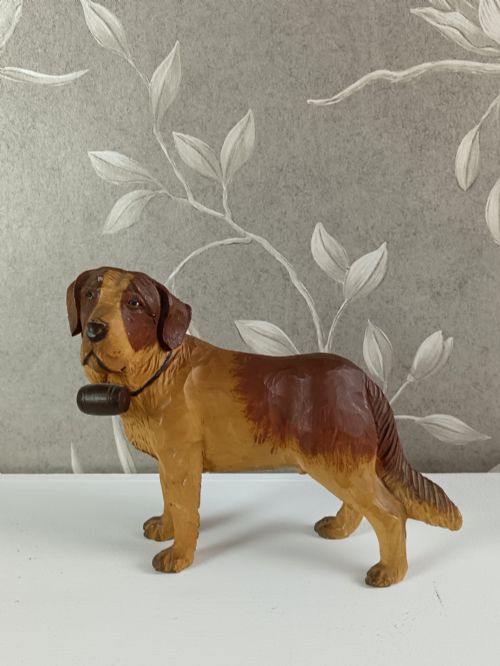
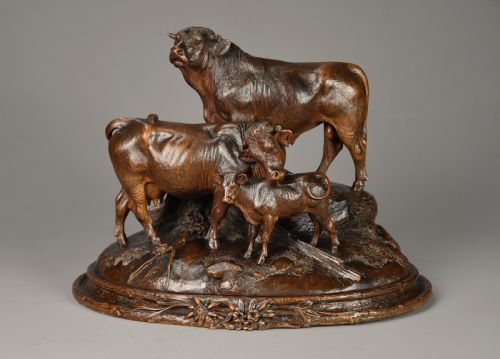
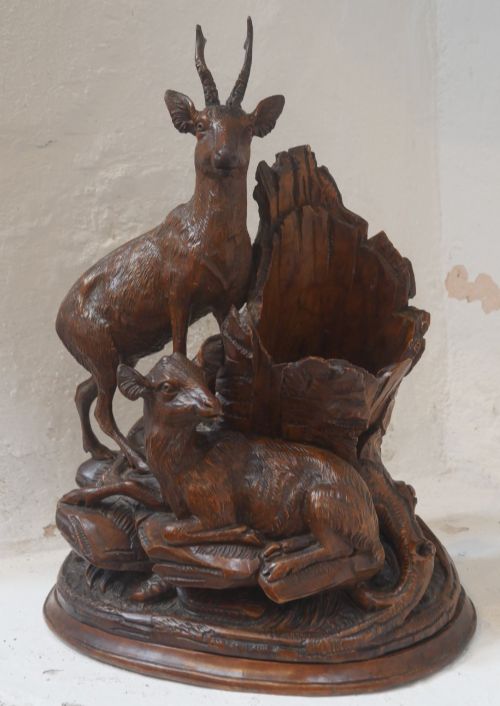
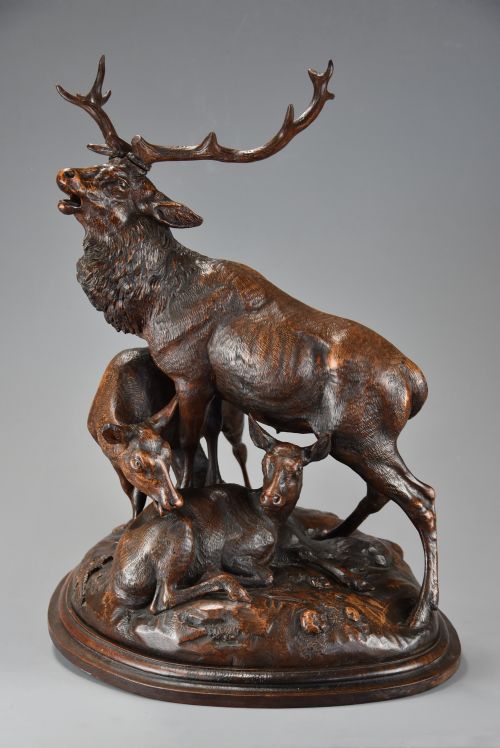
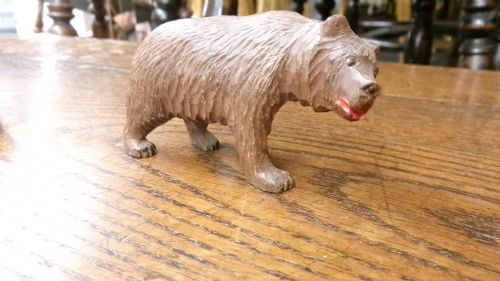
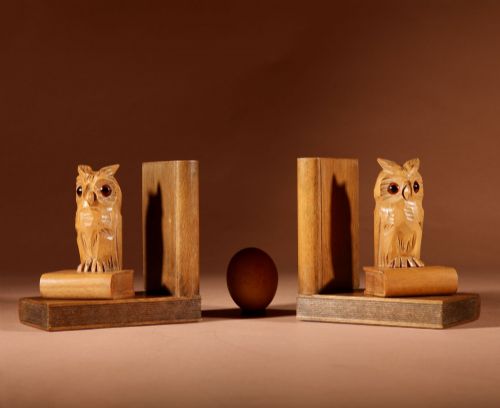
Swiss carved animals encompass a diverse range of wooden figures, from detailed studies of red deer, bears, and cattle to practical items such as bookends, inkwells, and table lamps. These pieces primarily emerge from the nineteenth century and the early decades of the twentieth century, reflecting the rich woodcarving traditions of the region.
The aesthetic is deeply rooted in Black Forest and Alpine folk art traditions, capturing both naturalistic wildlife and more amusing or stylised subjects. Buyers encounter subjects ranging from Saint Bernard rescue dogs and ibex to domestic cats and goldfish.
Functional objects integrate animal forms into everyday Victorian and Edwardian desk accessories, mirrors, barometers, and nutcrackers. These items combine utility with intricate craftsmanship, making them popular for both display and practical use.
Materials and Techniques
Carvers predominantly utilised soft and workable timbers native to the region, notably linden wood, lime wood, and walnut. These woods allowed artisans to achieve deep undercut details and realistic textures such as fur, hair, and feathers.
Swiss Carved Animals Retail Price Guide 2026
Typical asking prices for swiss carved animals among the pieces listed under this phrase on Sellingantiques today, from the lower quarter to the upper quarter. They describe what is for sale here now, not the wider market.
Listings span the nineteenth century into the twentieth, showcasing linden wood, walnut, and lime wood across diverse forms including clocks, mirrors, and desk tidies.
Judging Quality
The distinction between standard items and exceptional pieces rests on the precision and naturalism of the carving. Master carvers captured skeletal structure, muscle tension, and characteristic expressions in subjects like stags, bears, and dogs.
Signatures, stamps, or workshop attributions, such as works associated with J. Huggler, elevate specific pieces. The overall scale, ambition of the composition, and the integration of the carving into functional forms like clock cases or large bookends also define the upper tier.
J HUGGLER
The Swiss Carved Animals Glossary
- Black Forest
- A regional style of nineteenth-century woodcarving originating in Central Europe, known for realistic depictions of animals and foliage.
- Linden wood
- A pale, fine-grained timber frequently utilised by carvers for its capacity to hold intricate, delicate details without splitting.
- Alpine folk art
- A traditional decorative style reflecting rural mountain culture and local wildlife through handcrafted wooden objects.
- Desk tidy
- A compartmentalised desk accessory, often carved with animals, designed to hold pens, ink, and stationery.
Swiss Carved Animals: Frequently Asked Questions
How do I date swiss carved animals?
Dating relies on stylistic clues, timber selection, and period characteristics associated with the nineteenth and early twentieth centuries. Pieces often align with Victorian or Edwardian design motifs.
Makers' stamps, historical signatures, and functional contexts like early electric conversions or mechanical clock movements provide further chronological markers.
Were these carvings purely decorative?
While many pieces are standalone sculptures, a significant portion served practical functions in nineteenth-century interiors. Carvers integrated animal figures into bookends, inkwells, barometers, and table lamps.
This combination of utility and artistry meant owners displayed them on desks, mantels, and tables as functional art.
How do I care for wooden animal carvings?
Preserving these pieces requires stable environmental conditions away from direct sunlight and extreme temperature fluctuations. Excessive heat can cause historical timber to dry out and split.
Gentle dusting with a soft, dry brush maintains the surface without introducing moisture or damaging delicate carved details.