



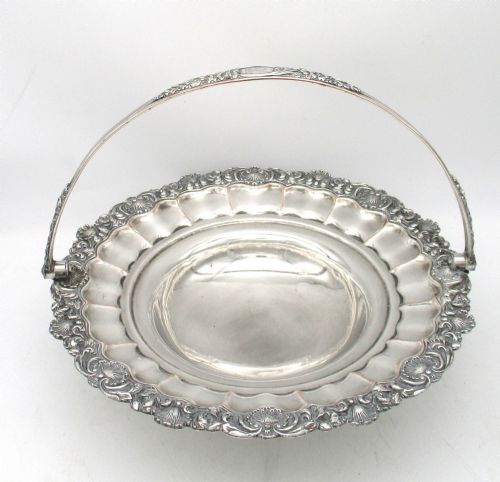
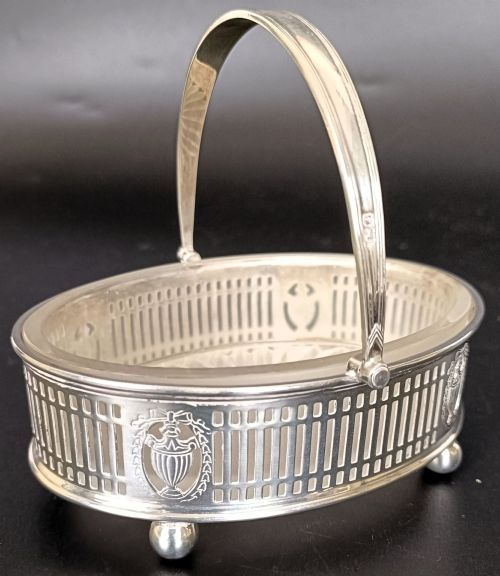
Swing Handled Basket
A swing handled basket brings portable grace to the table, uniting practical service with delicate metalwork and coloured glass liners.
Swing Handled Basket
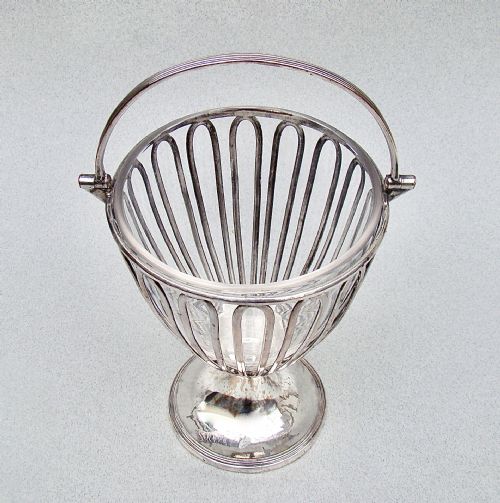
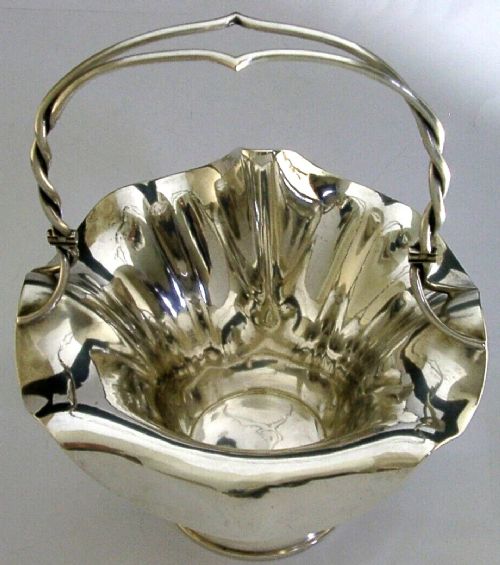
When you search for a swing handled basket, you encounter a refined category of antique serveware designed for sugar, fruit, bread, or sweetmeats. The form relies on a flexible, arching metal handle that drops to either side for easy access and compact storage.
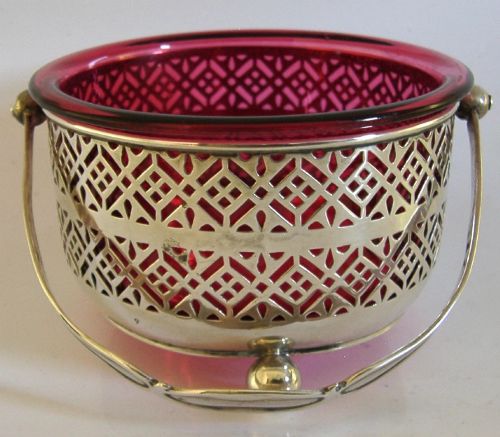
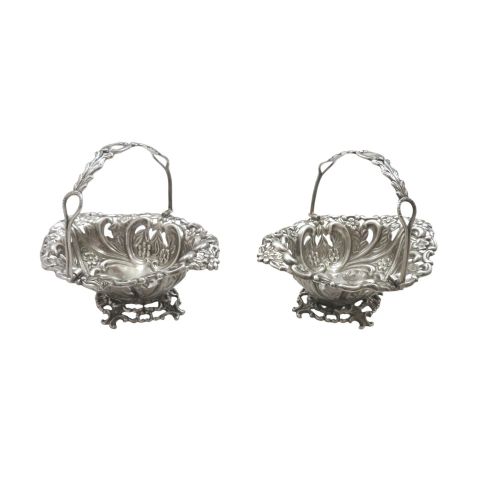
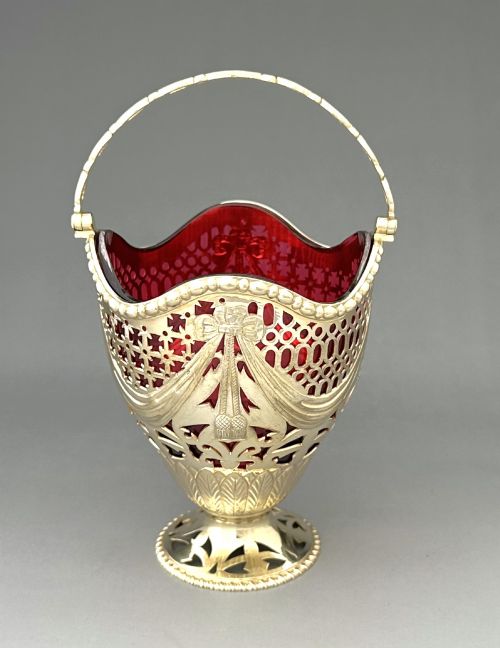
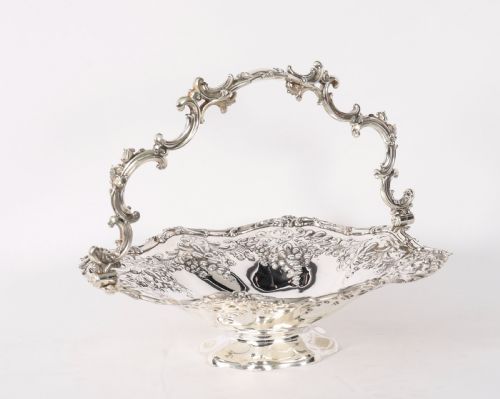
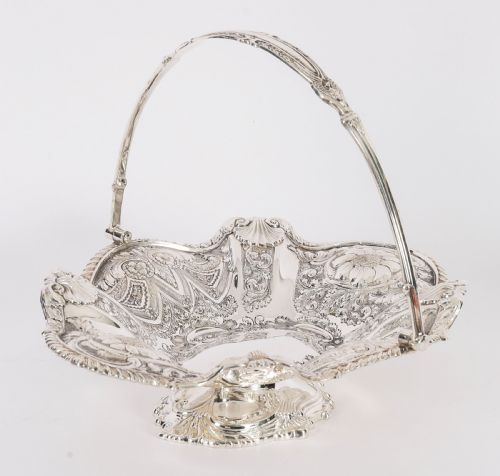
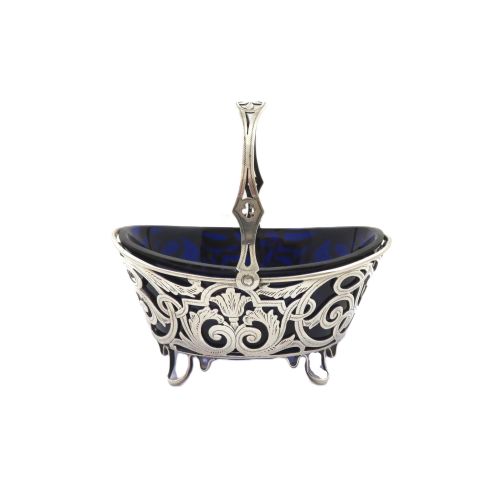
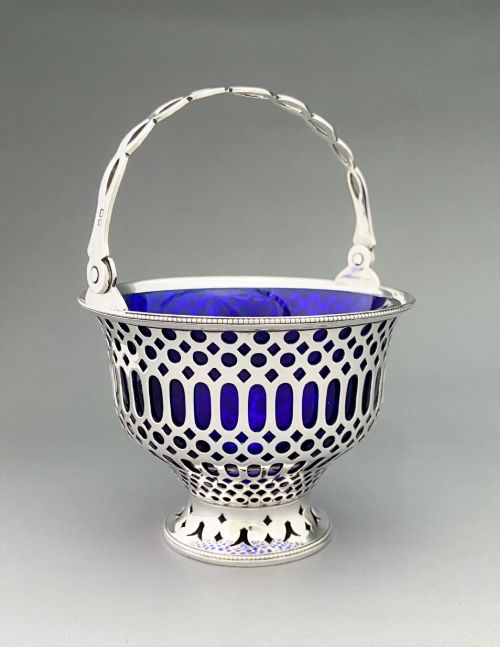
On this page, you meet pieces ranging from diminutive Georgian and Victorian sugar baskets with glass liners to large Edwardian and Georgian fruit or bread baskets. Sterling silver and Old Sheffield Plate dominate the selection, often accompanied by cranberry, cobalt, or ruby glass.
Origins span the eighteenth, nineteenth, and early twentieth centuries, with substantial representation from Georgian, Victorian, and Edwardian periods. Makers utilised various styles including Neoclassical, Rococo Revival, Art Nouveau, and wirework designs.
How They Were Made
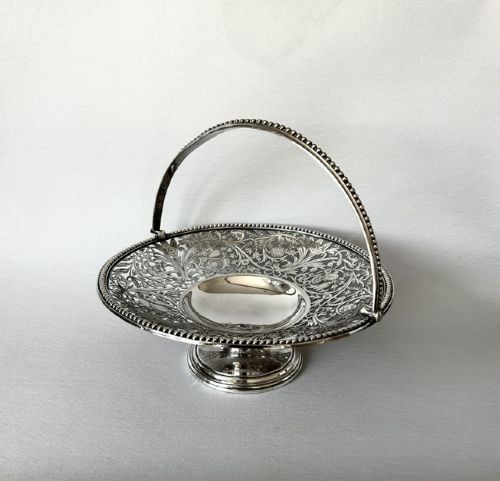
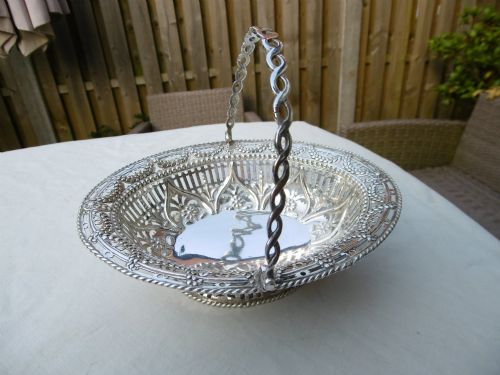
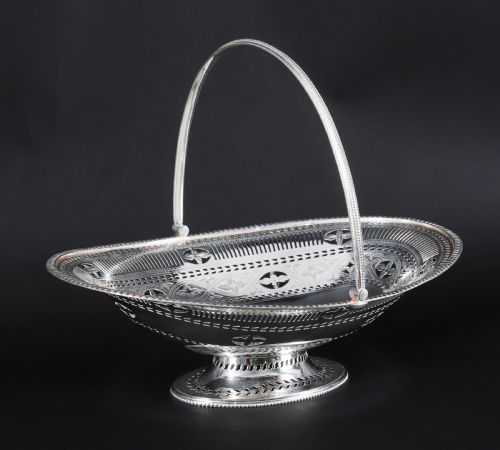
Silversmiths and platers shaped these vessels through piercing, fretwork, lattice cutting, and repoussé embossing, creating intricate openwork walls that kept the objects light yet rigid. Pierced designs frequently secured coloured glass liners that contrasted sharply with the polished silver or plate.
Old Sheffield Plate and silver plate employed fused metals or electroplating over copper or nickel bases, while Georgian and Edwardian examples often utilised solid sterling silver. Handles required robust casting or wrought construction to withstand the movement of the swing mechanism over generations.
Swing Handled Basket Retail Price Guide 2026
Typical asking prices for swing handled basket among the pieces listed under this phrase on Sellingantiques today, from the lower quarter to the upper quarter. They describe what is for sale here now, not the wider market.
Some Edwardian baskets possess handles heavy enough to outweight the delicate wirework frames they swing upon.
What Varies in Quality
Quality rests upon the crispness of the pierced or fretwork detail and the weight of the metal utilised in the body and handle. Cast floral handles and hand-engraved crests indicate a higher tier of craftsmanship compared to standard pressed metal.
The presence of an original, undamaged coloured glass liner - whether cranberry or ruby glass - significantly elevates the completeness and desirability of a piece. Maker marks from established firms also distinguish exceptional workshops from anonymous production.
Aldridge And Green·Henry Chawner·George W Scott And Sons Ltd·Elkington·Samuel Herbert·Hammond Creake And Co·James Deakin And Sons·William Hutton And Sons·William Bond·James Dixon And Sons Ltd·W M F
The Swing Handled Basket Glossary
- Swing handle
- A movable arch attached to pivots on opposite rims of a basket, dropping down flat when not in use. This feature allowed the vessel to fit neatly on crowded dining tables or sideboards.
- Old Sheffield Plate
- An early fusing technique where a thin sheet of sterling silver was fused to a thicker copper core by heat and pressure. It predates electroplating and often shows a subtle line of copper at the cut edges.
- Pierced work
- A decorative technique where metal is cut through to create openwork patterns like lattices, scrolls, or geometric motifs. It lightened the weight of large fruit and bread baskets.
- Repoussé
- A method of shaping metal by hammering the design from the reverse side to form raised floral or scroll reliefs on the exterior. This added tactile depth to Victorian and Edwardian rims.
Swing Handled Basket: Frequently Asked Questions
What were swing handled baskets used for?
These vessels served various dining functions depending on their size, holding sugar on the tea table, fruit after dinner, or bread and cakes.
The movable handle allowed servants or diners to pass the basket easily around the table without disturbing neighbouring glassware.
How do I care for silver baskets?
Clean sterling silver and silver plate gently with a soft cloth and proprietary polish, avoiding abrasive pads that harm engraved or pierced details. Remove glass liners before washing to protect both the metal and the coloured glass.
Store the pieces in dry conditions and handle the swing mechanism carefully to prevent strain on the pivot pins.
Are glass liners original to the baskets?
Many surviving sugar and fruit baskets retain their original cranberry, ruby, or cobalt glass liners, which were blown to fit the specific interior contours. Because glass breaks easily over centuries, replacement liners do occur and are worth noting.
An original liner fits snugly against the pierced metal walls without excessive movement.
How can I tell Georgian baskets from Edwardian ones?
Georgian baskets from the eighteenth century often feature refined neoclassical piercing, bright-cut engraving, or delicate wirework associated with makers like William Bond or Henry Chawner. Edwardian pieces from the early twentieth century frequently display heavier floral repoussé rims, extensive lattice patterns, and electroplated finishes from firms like James Dixon and Sons.
Hallmarks stamped on the metal provide definitive date letters and city assay marks for official verification.