



Swedish Round Table
A swedish round table brings calm Nordic balance to a room, offering warm timber grains and painted finishes that anchor a seating area.
Swedish Round Table
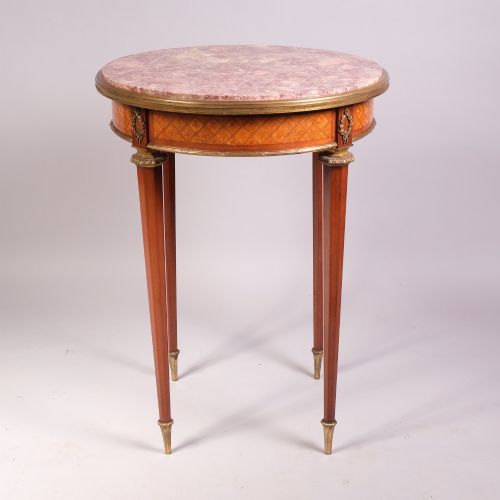
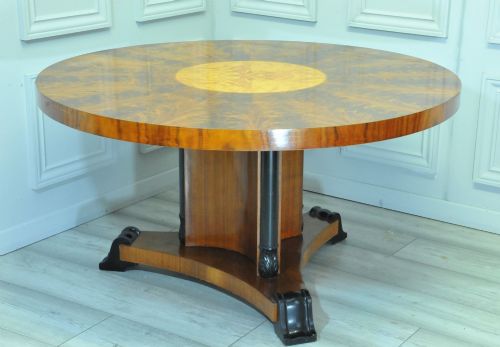
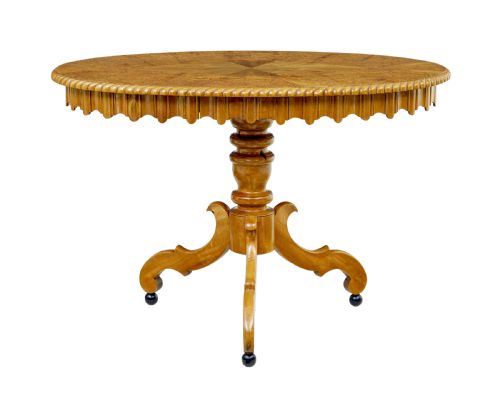
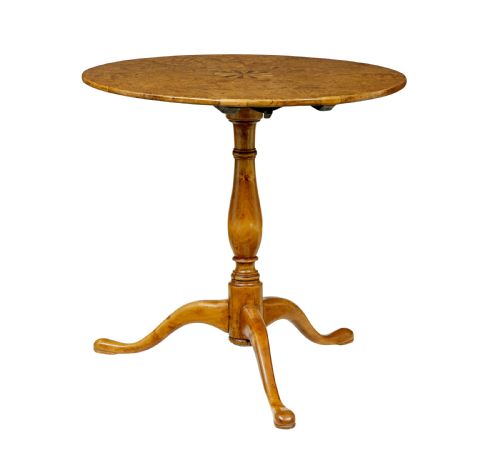
When you search for a swedish round table, you encounter circular centre tables, occasional pieces, and lamp tables originating from northern Europe. These items span the nineteenth century through the art deco period, offering versatile surfaces for domestic interiors.
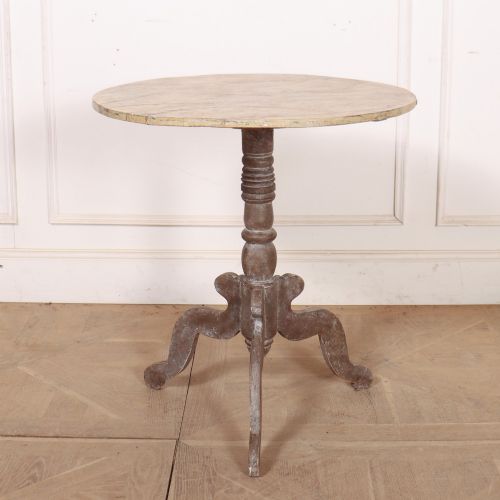
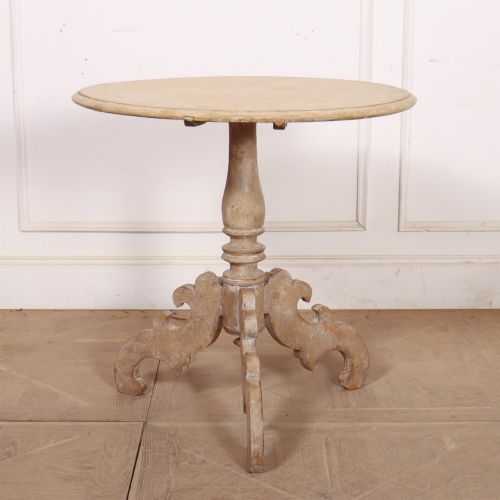
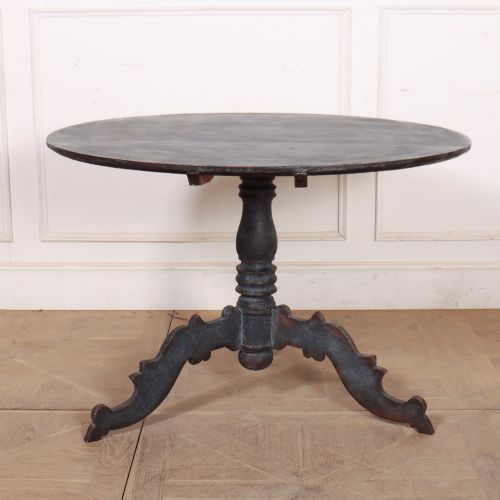
The nineteenth century examples on this page heavily feature birch, pine, and painted wood, alongside specific styles such as Biedermeier and Gustavian. You will regularly meet circular centre tables and tripod lamp tables that combine utility with understated decorative presence.
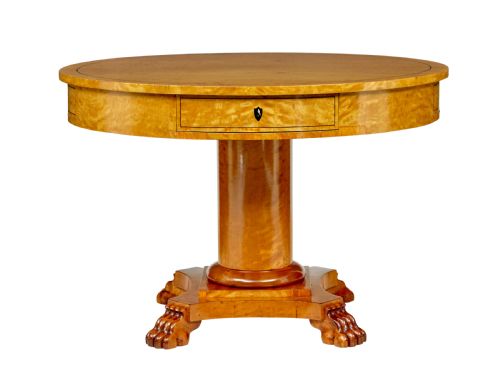
Later pieces shift into twentieth-century designs, incorporating satin birch, elm, and burr birch veneer. These variations provide buyers with choices ranging from rustic painted country surfaces to highly figured grain patterns.
How they were made
Cabinet makers utilised native timbers such as birch, pine, and mahogany, often selecting burr birch and satin birch veneer for prominent tabletops. These woods were chosen for their distinctive grain patterns and warm hues, which were enhanced through polishing or painting.
Construction techniques balanced structural stability with visual lightness, employing central pedestals, tripod bases, and slender console supports. Surfaces were either left as exposed timber showing natural figure or finished with decorative paint layers.
Swedish Round Table Retail Price Guide 2026
Typical asking prices for swedish round table among the pieces listed under this phrase on Sellingantiques today, from the lower quarter to the upper quarter. They describe what is for sale here now, not the wider market.
The listings on this page span the nineteenth century and the 1920s, featuring birch, pine, and painted wood in Gustavian and Biedermeier styles.
What varies in quality
The distinction between ordinary and superior pieces rests on the choice of timber and the execution of surface treatments. Finer examples display expertly matched burr birch veneers or carefully preserved original paint finishes that retain their depth.
Proportion and structural joinery dictate the overall success of the piece, with better workshops achieving harmonious lines in pedestals and aprons. The integrity of the timber figure and the subtlety of any inlay work further distinguish the selection.
The Swedish Round Table Glossary
- Burr birch
- A timber featuring swirling, knotty growths that create highly decorative patterns. Cabinet makers prized this wood for tabletops.
- Demilune
- A half-moon shape characteristic of console and occasional tables designed to stand flat against a wall. This form saves floor space while providing a display surface.
- Gustavian
- A Swedish neoclassical style inspired by French design during the reign of King Gustav III. It is known for restrained carving and pale painted finishes.
- Tripod base
- A three-legged support structure commonly found beneath circular lamp and centre tables. This design ensures stability on uneven floors.
- Biedermeier
- A central European style emphasising utilitarian comfort and clean lines without excessive ornamentation. Birch and other light hardwoods feature prominently.
Swedish Round Table: Frequently Asked Questions
Where should I place a swedish round table?
These tables function effectively as central pieces in a room or as lamp tables beside seating. Their circular footprint softens rectilinear room layouts.
Smaller occasional and pedestal versions suit corners or hallways where surface space is needed without blocking circulation paths.
How do I care for birch wood surfaces?
Maintain timber surfaces by dusting with a dry cloth and avoiding excessive moisture. Natural wax can nourish the grain periodically.
Keep antique wood away from direct heat sources and strong sunlight to prevent the timber from drying out or fading over time.
What is the difference between Gustavian and Biedermeier styles?
Gustavian design dates from the late eighteenth and early nineteenth centuries, featuring neoclassical details and light paint. It leans toward airy elegance.
Biedermeier focuses more on polished wood grains and domestic comfort, emerging later in the nineteenth century with smoother, minimalist surfaces.
Are painted finishes original on these tables?
Many nineteenth-century pieces retain their original painted surfaces, which often show natural craquelure and weathering from age. The presence of historic paint adds character and records the working life of the object.
Examination under good light helps reveal whether a painted finish has historic depth or represents a later decorative intervention.