




Swedish Pine Storage Box
A swedish pine storage box brings practical timber construction and regional painted decoration directly into domestic rooms.
Swedish Pine Storage Box
A swedish pine storage box encompasses utilitarian trunks, coffers, dough bins and blanket chests produced across the eighteenth and nineteenth centuries. Buyers encounter pieces spanning Scandinavian country, folk art and Gustavian styles, often retaining original painted surfaces.
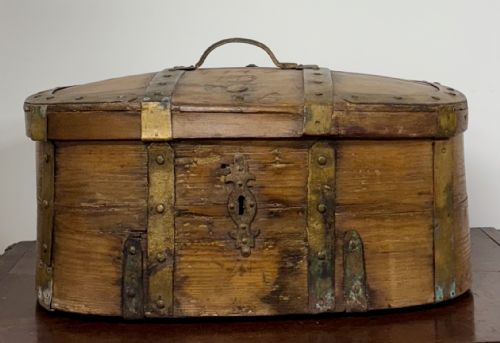
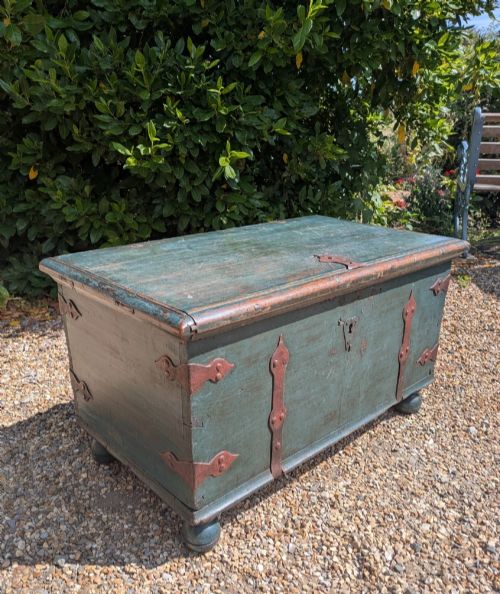
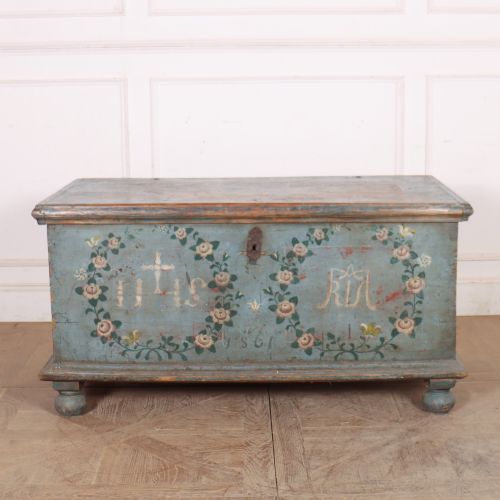
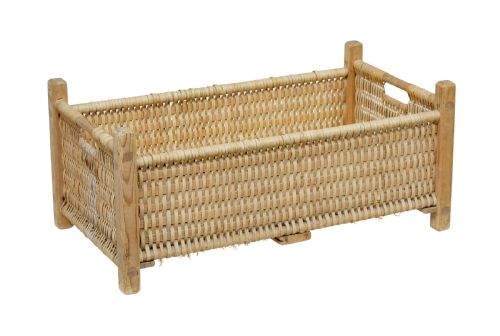
The selection ranges from small rectangular caskets and oval boxes to large dome-top coffers and storage benches. Many examples incorporate hand-forged iron strapwork or specific regional motifs such as labyrinth decorations.
Materials and construction
Construction relies primarily on native pine boards joined with dovetail or pegged corners to withstand heavy domestic use. Surfaces frequently receive layers of paint, forming a protective coat that ranges from solid tones to detailed folk art motifs.
Metal components utilise hand-forged iron and wrought iron for hinges, corner brackets and strapwork, complemented occasionally by brass fittings on specific storage boxes and strong boxes.
Assessing quality
Quality rests upon the integrity of the timber construction, the crispness of the ironwork and the survival of the original painted surface. Pieces retaining untouched, period paint demonstrate higher visual appeal than stripped or repainted examples.
Proportion and execution distinguish standard utilitarian vessels from finer folk art pieces, particularly where artisans applied intricate brushwork or geometric patterns such as labyrinths to marriage chests and coffers.
The Swedish Pine Storage Box Glossary
- Cofer
- A large wooden chest or box used traditionally for storing valuables or clothing. These heavy storage pieces often feature dome tops and iron strapwork.
- Dough bin
- A domestic wooden trough utilised for kneading and rising bread dough before baking. In pine, these double as functional rustic storage units.
- Gustavian
- The Swedish interpretation of neoclassical style named after King Gustav III. It exhibits restrained ornamentation and lighter painted finishes.
- Strapwork
- Flat metal bands of iron applied across the exterior of wooden chests for structural reinforcement and decoration. Hand-forged examples display individual smithing marks.
- Settle
- A wooden wooden bench featuring a high back and solid arms designed to block draughts. Storage compartments are frequently built beneath the seat.
Swedish Pine Storage Box: Frequently Asked Questions
How were these boxes used?
Households utilised these wooden vessels primarily for storing textiles, bedding, winter provisions and personal valuables. Large coffers and marriage chests held dowry items accumulated for weddings.
Smaller lidded boxes kept documents and precious items safe, while specialised bins accommodated flour, dough or logs near the hearth.
Are painted finishes original?
Many surviving pieces retain their initial layers of period paint, which protected the softwood and provided decoration. Collectors examine the pigment, craquelure and wear patterns to determine whether a painted surface dates to the period of manufacture.
Later overpainting or entirely stripped pine surfaces appear frequently across the market, reflecting changing domestic tastes over subsequent centuries.
How do I date a pine chest?
Dating relies on construction methods, fastener types, hardware styles and recorded dates or inscriptions. Eighteenth-century examples typically employ hand-planed boards and simpler early joinery, while nineteenth-century pieces often integrate machine-sawn elements and distinct folk art palettes.
Ironwork characteristics, such as hand-forged strap hinges, also provide chronological indicators for pieces lacking direct inscriptions.