




Swedish Painted Console
These swedish painted console tables bring pale wood and quiet northern proportion to an entrance hall or living room.
Swedish Painted Console
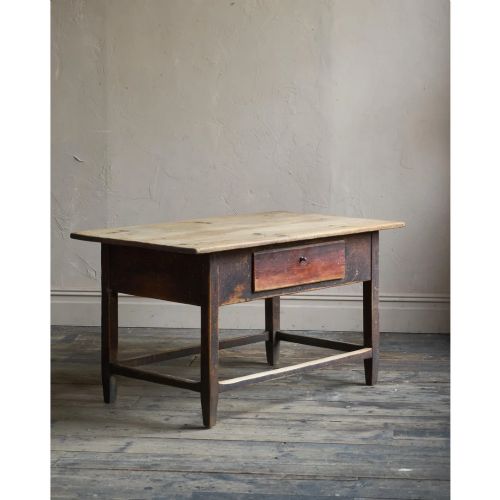
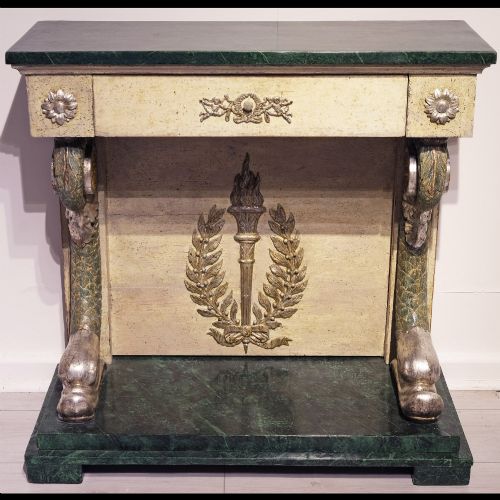
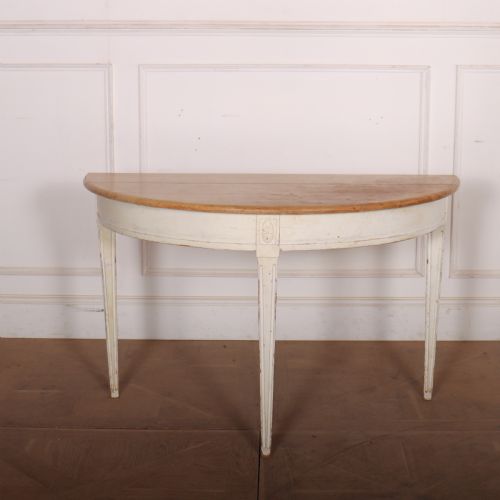
When you search for a swedish painted console, you look at demi-lune tables, side tables, and writing desks originating from the eighteenth century to the early twentieth century. The selection leans heavily on nineteenth-century pieces, alongside occasional Edwardian pairs and 1920s folk variations.
Forms range from half-moon console tables and writing desks to preparation tables and lamp tables. Many pieces arrive as matched pairs, featuring structural box stretchers or simple straight legs.
The aesthetic bridges formal Gustavian neoclassicism and rustic Scandinavian country farmhouse traditions. These tables serve primarily as hall furniture or decorative side pieces in a room.
Materials and construction
Makers built these tables predominantly from pine and birch, applying layered oil or distemper paint finishes. Surfaces often display original paint, with occasional touches of gold leaf, gilt, or zinc tops.
Joinery relies on traditional timber construction methods suited to regional workshops. Surfaces frequently exhibit the soft patination of accumulated paint layers built up over generations.
Swedish Painted Console Retail Price Guide 2026
Typical asking prices for swedish painted console among the pieces listed under this phrase on Sellingantiques today, from the lower quarter to the upper quarter. They describe what is for sale here now, not the wider market.
Listings span from the 18th century through the Edwardian era and 1920, utilising pine, birch, marble, and zinc.
Distinctions in quality
Quality rests in the survival of original paint surfaces versus later overpainting. Untouched historic surfaces with natural wear carry more integrity than freshly coated timber.
Proportion and carving define the upper tiers, distinguishing refined Gustavian neoclassical lines from simpler folk-made variants. Crisp execution in demilune curves and original hardware elevate the piece.
The Swedish Painted Console Glossary
- Demi-lune
- A half-moon shaped table designed to stand flat against a wall. These pieces frequently function as console tables in narrow spaces.
- Distemper
- A water-based paint using size or glue as a binder. This traditional medium creates a matte finish found on many regional pieces.
- Box stretcher
- An interconnecting framework of wooden rails near the base of a table. This structure adds rigidity to the legs.
Swedish Painted Console: Frequently Asked Questions
How do I use a console table?
These tables fit well in hallways, living rooms, or dining spaces where surface area is needed without bulk. They hold lamps, mirrors, or decorative objects against a wall.
Because many examples feature demi-lune shapes, they tuck neatly into narrower passages and corners.
How do I clean painted furniture?
Dust surfaces gently with a dry, soft cloth to protect fragile historic paint layers. Avoid modern chemical solvents or wet cloths that lift old distemper.
Preserving the original surface requires minimal intervention and gentle care over time.
What is Gustavian style?
King Gustav III inspired this Swedish interpretation of French neoclassical design during the late eighteenth century. It translates continental luxury into simpler, brighter northern proportions.
Characteristics include fluted legs, subdued carved details, and pale painted finishes.
Are these tables solid pine?
Most regional Swedish tables utilise native pine or birch for their primary frames and structural elements. Carpenters shaped local softwoods because they accepted painted finishes readily.
Secondary woods may appear in internal framing or drawer construction.