



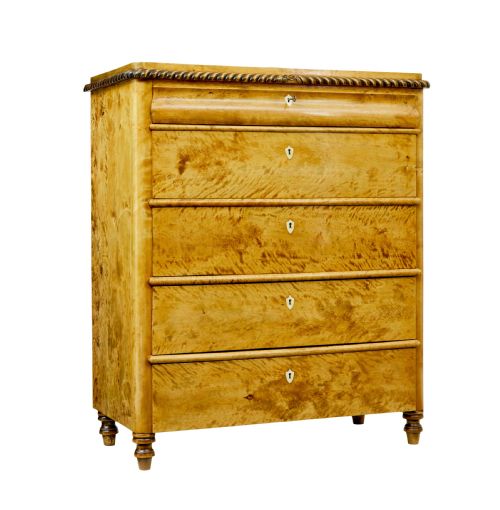


Swedish Biedermeier Drawers
These swedish biedermeier drawers offer pale timber elegance and generous proportions, bringing functional storage to any room.
Swedish Biedermeier Drawers
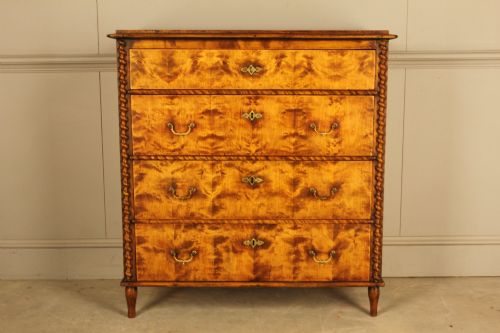
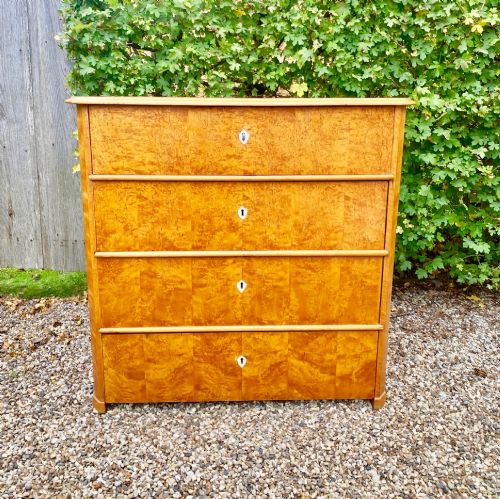
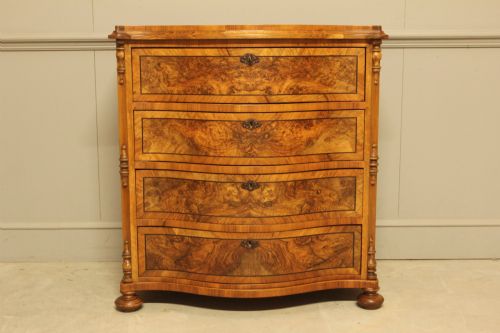
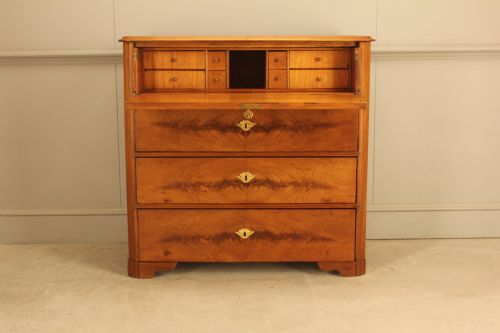
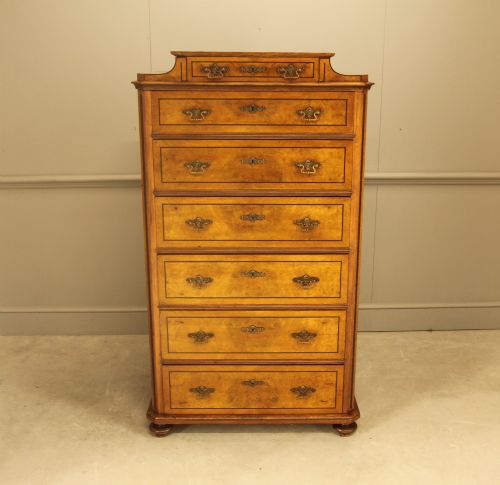
When searching for swedish biedermeier drawers, buyers encounter case furniture dating primarily from the nineteenth century alongside occasional revival pieces. The form centres on chests of drawers and secretaire chests of drawers configured with multiple horizontal tiers for storage.
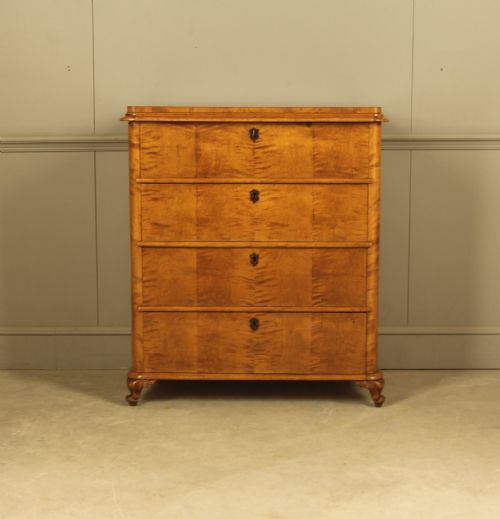
The prevailing aesthetic relies on pale northern European timbers rather than the darker woods favoured in other regions. Most examples take the shape of straight fronted chests or taller secretaire units containing fitted writing compartments.
Alongside standard drawer chests, related forms appear including side tables, occasional tables, and vanity mirrors. These pieces originate from Scandinavian workshops spanning the nineteenth century and later revival periods.
What varies in quality
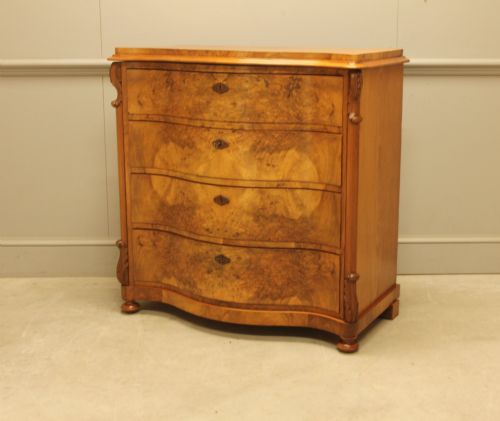
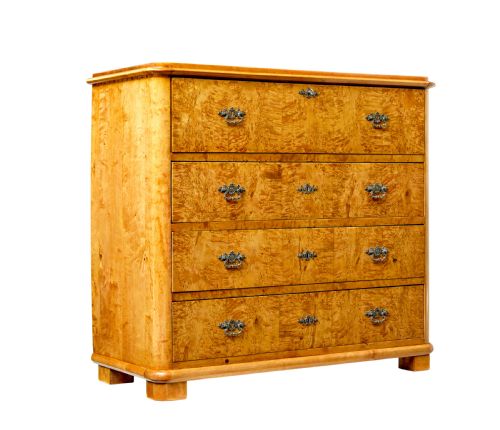
Quality rests primarily on the selection and matching of the veneer figures across the drawer fronts. Uniformity and symmetry in flame birch or burr birch veneers distinguish finer examples from plain timber surfaces.
The crispness of carved elements and the integration of secretaire writing drawers demonstrate the maker's skill. Finer pieces maintain balanced proportions between the carcase and the timber figuring without relying on excessive ornamentation.
Swedish Biedermeier Drawers Retail Price Guide 2026
Typical asking prices for swedish biedermeier drawers among the pieces listed under this phrase on Sellingantiques today, from the lower quarter to the upper quarter. They describe what is for sale here now, not the wider market.
One clever chest pretends to be plain timber until you open the painted drawers and discover an entire birch wonderland.
Gemla Fabrikers
The Swedish Biedermeier Drawers Glossary
- Secretaire chest of drawers
- A chest of drawers featuring a fitted drop down writing desk drawer at the top. This internal section conceals small compartments and pigeonholes for correspondence.
- Flame birch
- A distinctive timber veneer cut to display a rippling, flame like grain pattern. Cabinet makers arranged these veneers symmetrically across large drawer surfaces.
- Burr birch
- Wood harvested from tree growths that produce swirling, knotty grain formations. This material yields highly textured patterns prized for decorative furniture panels.
- Empire revival
- A nineteenth century design movement that reinterpreted classical Roman and French imperial motifs. Pieces from this style often incorporate bolder architectural lines and contrasting wood tones.
Swedish Biedermeier Drawers: Frequently Asked Questions
How do I identify a secretaire chest?
A secretaire chest includes a pull down top drawer that reveals a fitted interior with small compartments and a writing surface. This dual purpose design allows the piece to function as both a chest of drawers and a desk.
Beneath the writing section, standard horizontal drawers provide conventional storage space. The exterior appearance often mimics a regular chest until the top drawer is opened.
What woods were used in these pieces?
Cabinet makers predominantly used birch, utilising variants such as flame birch, burr birch, tiger birch, masur birch, and satin birch for surface veneers. These timbers were applied over pine carcases to create a pale, decorative finish.
Additional materials include elm, burr walnut, and mahogany. Accents in brass, bone, and metal frequently complete the hardware and key escutcheons.
How do I care for birch veneer?
Protect antique veneers by keeping furniture away from direct sunlight and steady heat sources. Extreme temperature fluctuations cause timber to dry out and veneers to lift.
Dust regularly with a dry cloth and avoid harsh chemical polishes. Maintaining stable room humidity preserves the integrity of the nineteenth century woodwork.
Are these pieces from the nineteenth century?
The majority of pieces date from the nineteenth century, reflecting the height of the Biedermeier and Empire revival periods in Scandinavia. Construction methods and timber choices align with traditional nineteenth century cabinet making practices.