
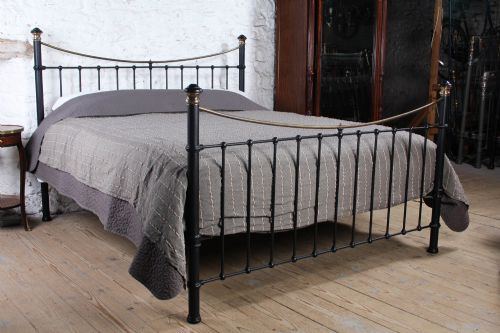


Super King Metal Bedstead
A super king metal bedstead offers grand proportions and robust construction, providing a commanding centrepiece for a generous bedroom.
Super King Metal Bedstead
When you search for a super king metal bedstead, you encounter substantial antique frames dating from the late Victorian and Edwardian eras, predominantly spanning the years between 1870 and 1910. These grand proportions accommodate modern oversized mattresses while offering the sturdy architectural presence characteristic of nineteenth and early twentieth-century sleeping furniture.
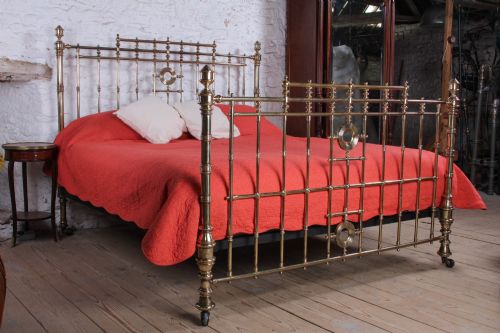
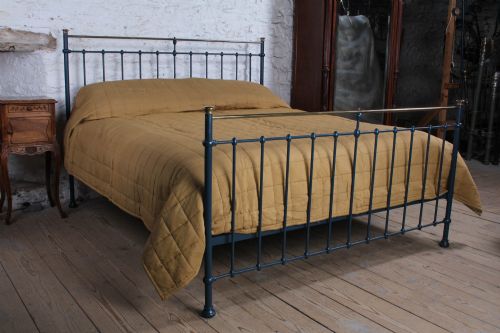
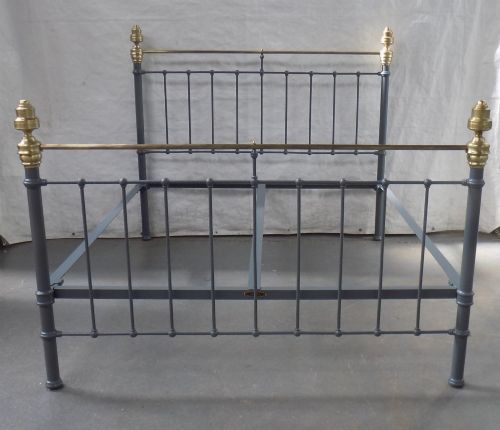
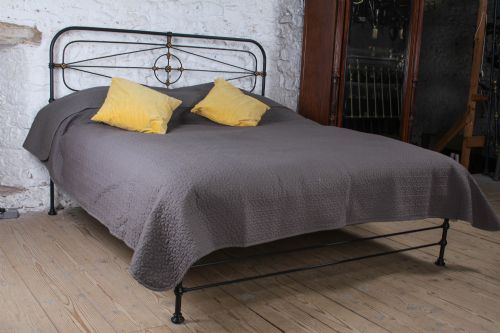
The selections available here combine cast iron, wrought iron, and brass components, alongside painted metal finishes and nickel-plated metal examples. Forms range from ornate French country designs and Italian Art Nouveau stylings to classic British Victorian and Edwardian configurations, including dip rail formats and no end low footboards.
Makers such as Maple & Co and Winfield appear within the records, demonstrating the high manufacturing standards of the period. Buyers most frequently meet combination pieces uniting dark or painted iron frames with gleaming brass rails and mounts.
Construction and materials
Foundries constructed these bedsteads using heavy cast iron for structural stability and detailed headboard castings, paired with wrought iron for side rails and internal support. Brass was utilised extensively for decorative top rails, knobs, and finials, often fixed securely to the iron framework.
Surface treatments involved durable applied paint finishes, notably in cream or black, alongside specialised protective plating such as nickel. Metal parts were shaped, turned, and joined using traditional foundry methods that ensured long-term durability without modern synthetic adhesives.
Some nineteenth-century makers signed their ironwork with foundry stamps hidden beneath the rails, leaving a tiny secret mark for future finders.
Evaluating quality and craftsmanship
Quality in these large frames rests upon the integrity of the original joints, the crispness of the iron castings, and the weight of the brass elements. Finer examples display meticulous detailing in the decorative brass mounts and balanced proportions between the iron structure and the ornamental fittings.
The distinction between standard production and superior work lies in the depth of the casting detail and the original quality of the finish, whether polished brass or applied enamel paint. Makers with established reputations achieved a superior finish that resisted wear and maintained structural alignment across the wider span.
Maple & Co·Winfield
The Super King Metal Bedstead Glossary
- Dip rail
- A headboard top rail that curves downwards in the centre to create a lower profile. This Edwardian design feature softens the visual impact of a wide frame.
- Cast iron
- Molten metal poured into a sand mould to form rigid, ornate bed components. It provides the heavy structural core for nineteenth-century frames.
- No end bed
- A bedstead featuring a tall headboard but no corresponding high footboard. This configuration suits modern bedrooms by maintaining an open line of sight.
- Nickel-plated metal
- Iron or steel coated with a thin layer of nickel to prevent corrosion and provide a bright, silvery finish. It gained popularity during the Art Nouveau period.
Super King Metal Bedstead: Frequently Asked Questions
Will a super king metal bedstead fit modern mattresses?
These antique frames were originally produced to custom nineteenth-century dimensions, which often correlate closely with contemporary super king proportions. Adjustments or custom bed bases are sometimes utilised to ensure a secure fit for modern mattress depths.
Buyers should verify the internal dimensions between the side rails before pairing the frame with a standard mattress. Historic iron frames provide robust support once correctly configured.
How do I care for brass and iron frames?
Maintenance involves gentle dusting and occasional cleaning with appropriate metal care products designed for lacquered or unlacquered brass. Avoiding abrasive cleaners preserves the original patination on both the iron and the brass components.
Painted metal surfaces require simple wiping with a dry or slightly damp cloth to prevent dust accumulation. Regular inspection of the bolted joints keeps the large frame rigid and stable.
How do I identify an Edwardian metal bedstead?
Edwardian frames often feature lighter proportions, cleaner lines, and design motifs influenced by the Art Nouveau movement. Dip rails and softer decorative curves distinguish them from earlier Victorian examples.
The materials frequently include nickel plating alongside traditional brass and iron combinations. These details reflect the changing domestic tastes of the early twentieth century.
What is a no end bed?
A no end bed design omits the traditional footboard entirely, leaving the foot of the bed open and unobstructed. This layout works well in smaller bedrooms or spaces where an uninterrupted view across the room is preferred.
Despite lacking a footboard, the structural rigidity is maintained through robust side rail fastenings and a heavy headboard. This form appears in both Victorian and Edwardian iterations.