





Studded Leather Table
These pieces sold under the name studded leather table bring tactile warmth and solid timber to a room.
Studded Leather Table
When you search for a studded leather table, you are actually looking at a variety of leather-topped furniture forms that have survived from the nineteenth and early twentieth centuries. The selection includes ottomans, footstools, dining chairs, and travelling trunks rather than standard coffee tables.
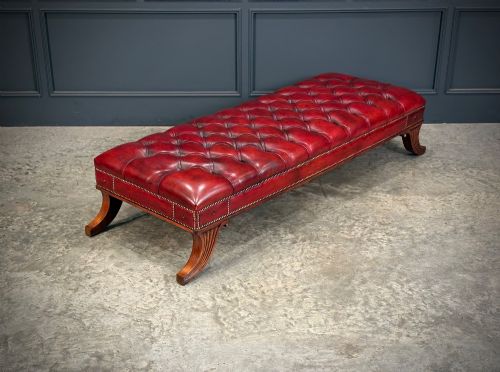
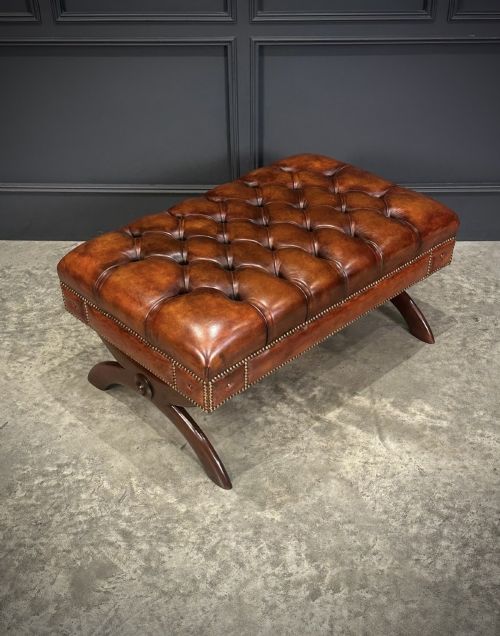
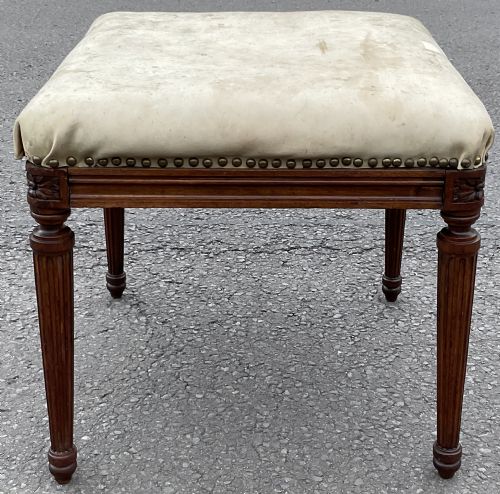
You are most likely to meet footstools and ottomans finished with buttoned leather upholstery and brass studding. These pieces date across the Regency, Victorian, and Edwardian periods, reflecting traditional English craftsmanship.
How they were made
Makers built the frames of these pieces using durable timbers such as mahogany, oak, camphor wood, and general hardwood. These woods provided a sturdy structural base designed to endure daily use.
The top surfaces feature hand-dyed or plain leather secured with metal brass studs, occasionally incorporating brassbound edges on trunks and chests for extra resilience.
Studded Leather Table Retail Price Guide 2026
Typical asking prices for studded leather table among the pieces listed under this phrase on Sellingantiques today, from the lower quarter to the upper quarter. They describe what is for sale here now, not the wider market.
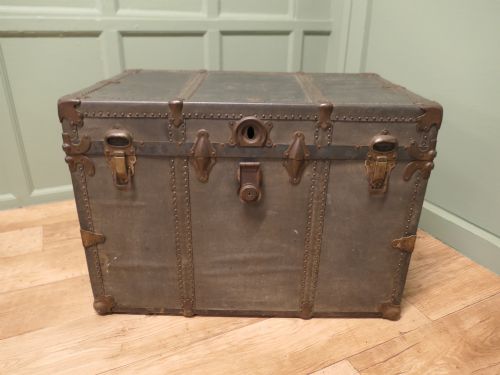
A travelling trunk on this page comes fitted for a journey, keeping nineteenth-century packing secrets locked inside its brassbound leather walls.
What varies in quality
The distinction between a standard piece and a superior example rests in the depth of timber selection and the precision of the upholstery work. Hand-dyed hides with rich patination sit at the upper end of the scale.
Finer items display careful joinery in woods like mahogany and oak, alongside neatly spaced brass studs that follow the structural lines of the frame rather than masking shortcuts.
The Studded Leather Table Glossary
- Ottoman
- A low upholstered seat or footstool without a back or arms, often featuring a hinged lid for storage. These pieces frequently utilise leather upholstery and brass studding.
- Cromwellian Revival
- A late nineteenth or early twentieth-century style imitating the austere, solid oak furniture of the mid-seventeenth century. It often appears in dining chairs and heavy seating.
- Brassbound
- Furniture or trunks edged and reinforced with strips of brass and secured with small pins. This technique protected vulnerable corners during transit.
- Camphor wood
- A fragrant tropical hardwood valued for its insect-resistant properties, commonly used in nineteenth-century trunks and chests. It provides a distinct aroma and sturdy construction.
Studded Leather Table: Frequently Asked Questions
What periods do these pieces come from?
The available pieces span the nineteenth and early twentieth centuries, including Regency, Victorian, and Edwardian eras. You will also find specific dates such as 1800, 1880, 1900, and 1920 represented.
Design characteristics shifted across these decades, moving from formal Regency lines to heavier Victorian proportions and later Edwardian interpretations.
How were leather ottomans used originally?
Ottomans and footstools served as functional seating or footrests in principal rooms. Many combined utility with comfort through padded leather tops.
Some trunk-form pieces were built for travel, doubling as storage containers for clothing and personal belongings during journeys.
How do I care for leather upholstery?
Leather surfaces require protection from direct sunlight and excessive heat to prevent drying and cracking. Regular dusting keeps the hide clean and maintains its finish.
Conditioning balms can be applied periodically to preserve suppleness, depending on whether the leather is hand-dyed or plain.
What timbers are used in these frames?
Frames and structures rely on traditional hardwoods such as mahogany and oak. Camphor wood also appears in specific trunks and chests for its durability.
These dense woods support the heavy use associated with seating and storage furniture from the nineteenth century.