

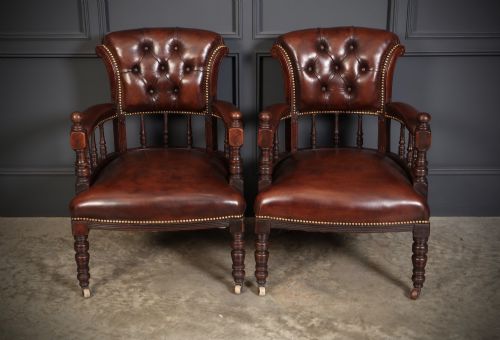
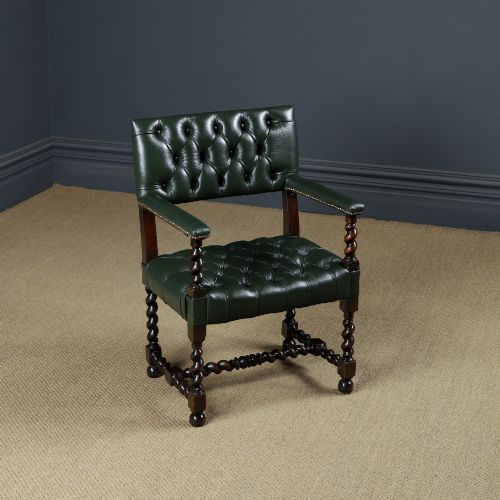
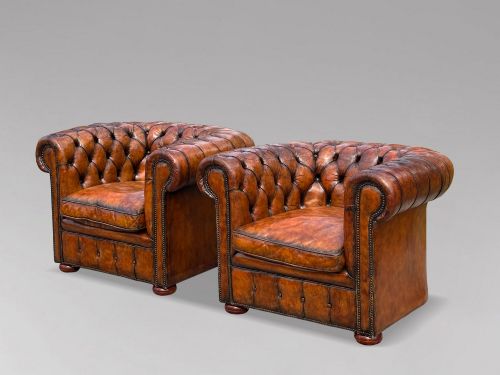
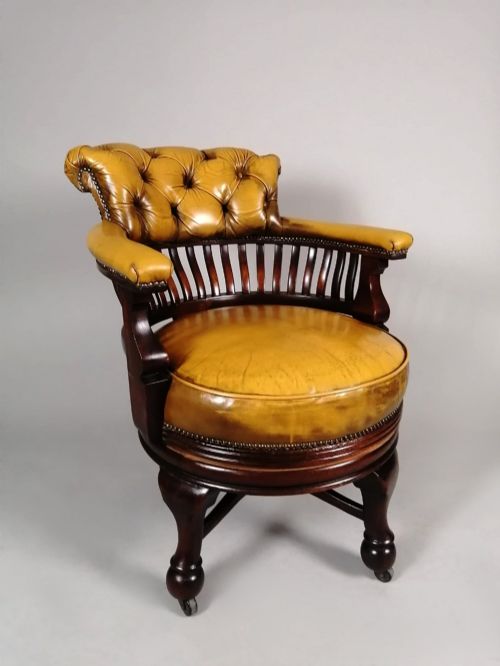
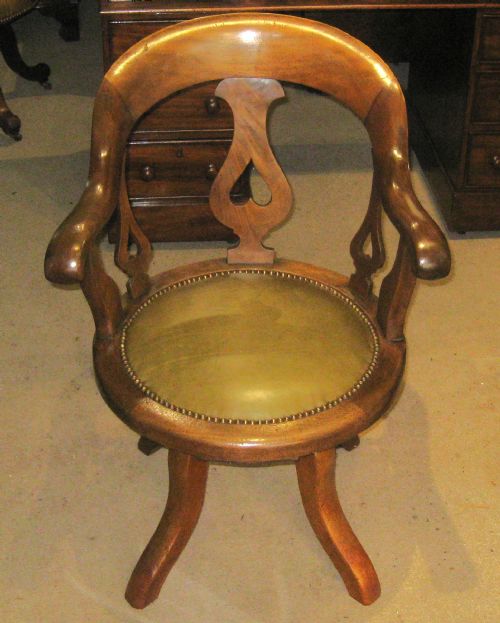


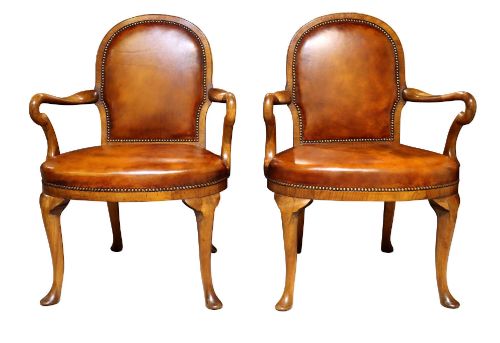


Studded Leather Captain Chair
A studded leather captain chair brings substantial leather upholstery and solid timber frames to the desk or library.
Studded Leather Captain Chair
A studded leather captain chair is a sturdy, supportive seat designed for writing desks, offices and libraries. The selection here spans the nineteenth century, the Victorian and Edwardian eras, through to the 1930s, encompassing desk chairs, armchairs, carver chairs and library armchairs.
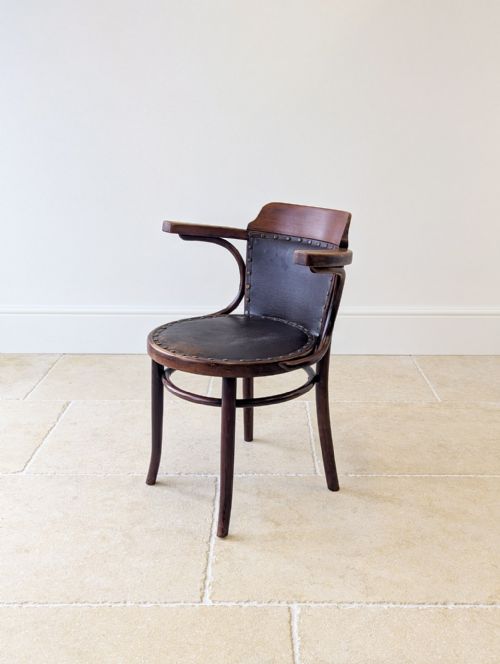
Most examples you encounter on this page take the form of revolving desk chairs or swivel and tilt models framed in mahogany, oak or walnut. Alongside these standard desk variants, the listings include occasional club armchairs, dining chairs, and bentwood designs.
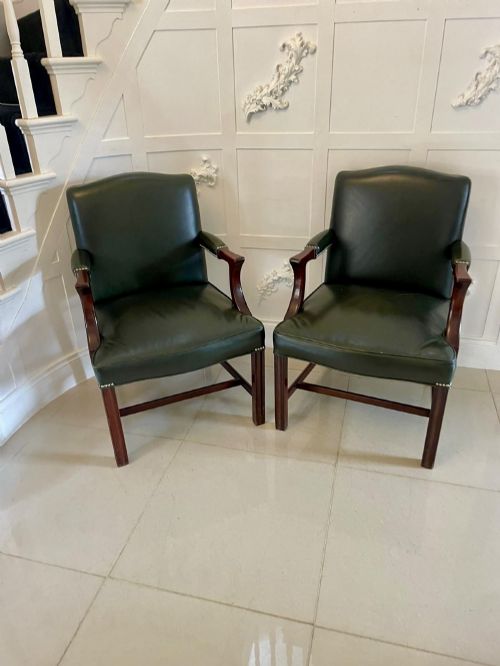
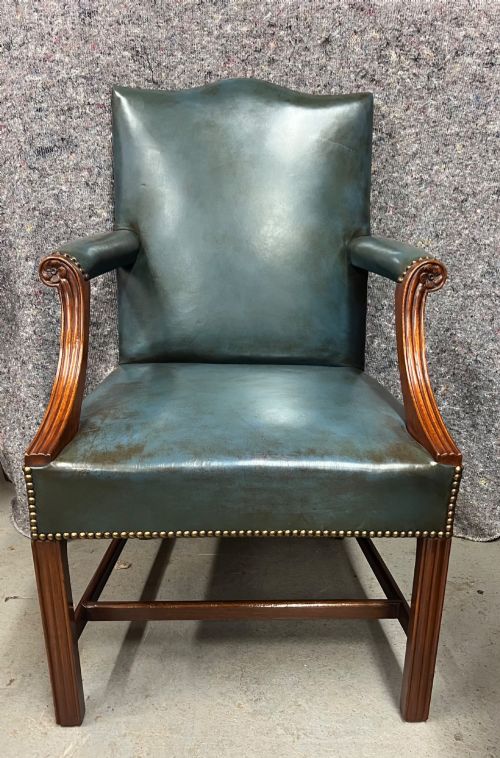
Origins range from formal Regency library armchairs upholstered in green leather to robust oak swivel chairs from the opening decades of the twentieth century. These pieces bridge the gap between domestic comfort and functional workspace seating.
How they were made
Makers constructed the frames primarily using hardwoods such as mahogany, oak, walnut, beech, burr elm and fruitwood, occasionally incorporating cast iron elements for swivel and tilt mechanisms. Leather hides provided the durable, tactile surface for seats and backs, secured firmly around the edges with brass studs.
Joinery relied on traditional methods suited to heavy daily use in offices and libraries, combining turned wooden spindles, scroll arms and curved backrests. Wood was polished to a rich finish, while leather was frequently hand-dyed in shades of green, dark red, brown or tan.
Studded Leather Captain Chair Retail Price Guide 2026
Typical asking prices for studded leather captain chair among the pieces listed under this phrase on Sellingantiques today, from the lower quarter to the upper quarter. They describe what is for sale here now, not the wider market.
Several heavy oak swivel chairs retain their original iron mechanisms, designed to squeak through decades of paperwork.
What varies in quality
The standard of a studded leather captain chair is defined by the depth of timber selection and the integrity of the frame construction. Heavier, dense hardwoods like solid mahogany or figured walnut represent a finer build than lighter utility timbers.
Quality also shows in the grade of the leather hide and the precision of the brass studding work. Original revolving and swiveling mechanical components that retain smooth operation distinguish superior specimens from simpler fixed-leg alternatives.
Kendrick and Jefferson
The Studded Leather Captain Chair Glossary
- Carver chair
- An armchair designed to match a set of dining chairs, often placed at the head of a table or utilised at a desk. These typically feature open arms integrated into the wooden frame.
- Swivel desk chair
- A revolving seat mounted on a central spindle, allowing the user to turn easily. Many twentieth-century examples incorporate a tilt mechanism for added adjustability.
- Library chair
- A substantial, comfortable armchair upholstered in leather and designed for prolonged reading. These pieces often feature generous padded arms and supportive backrests.
- Bentwood
- Wood softened by steam and bent into curved shapes, commonly utilised in Edwardian desk chairs. This technique created resilient, flowing frames without heavy joinery.
- Buttoned leather
- Upholstery pulled into a diamond pattern and secured with deep-set buttons. This method adds structural tension to the padding and creates a distinctive textured surface.
Studded Leather Captain Chair: Frequently Asked Questions
What is a studded leather captain chair?
A studded leather captain chair is a sturdy timber seat upholstered in leather and detailed with brass studs around the trim. These chairs are built for daily administrative work at a desk or study table.
They combine the formal appearance of a traditional armchair with practical mobility, often featuring revolving bases or supportive armrests designed for long periods of sitting.
How do I date an antique desk chair?
Dating a chair involves examining the timber species, the style of the frame, and the type of mechanical hardware used. Victorian and Edwardian examples often display distinct revival styles or early swivel mechanisms.
Looking beneath the seat reveals construction methods and joinery that help pinpoint the era of manufacture, alongside any maker marks or stamps left in the wood.
Are these chairs comfortable for daily use?
Many of these chairs were originally built for offices, studies and libraries where users sat for hours at a time. The combination of padded leather upholstery and ergonomic wooden frames provides reliable support.
Swivel and tilt variants offer extra flexibility for modern workspaces, allowing you to adjust your seating position throughout the working day.
Which woods are most common?
Mahogany and oak appear most frequently across the available selection, often chosen for their durability and handsome grain. Walnut, beech, burr elm and fruitwood also feature in specific regional or period pieces.
Lighter woods typically align with Edwardian pieces, while deeper, darker hardwoods are characteristic of nineteenth-century Victorian and Regency furniture.