


Studded Brass Accent Chair
A studded brass accent chair brings weight and character to a room, drawing the eye with solid timber frames and metal detailing.
Studded Brass Accent Chair
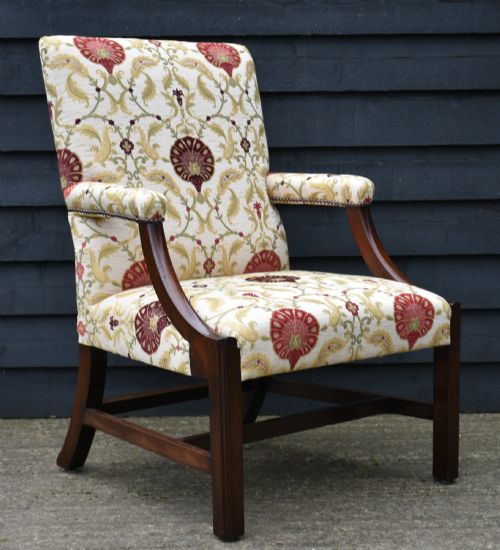
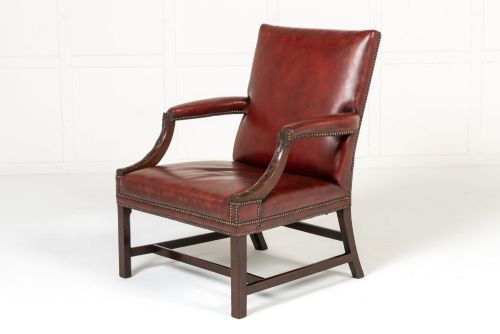
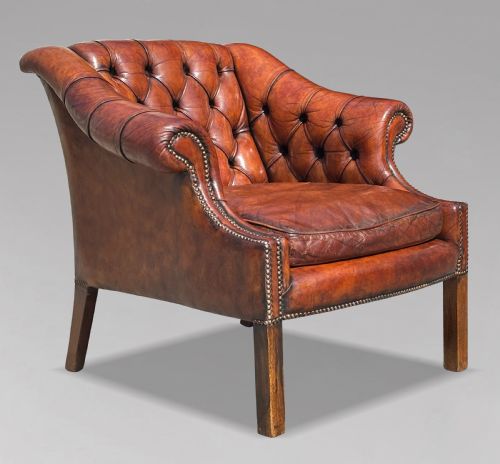
When you search for a studded brass accent chair, you encounter a varied selection of seating spanning multiple centuries and regional styles. The inventory on this page ranges from substantial eighteenth-century mahogany library seating to nineteenth-century oak hall chairs and leather club armchairs.
Most examples combine sturdy hardwood frames with upholstery in leather or fabric, finished with distinct metal stud work. Forms include open armchairs, carvers, and prayer chairs originating from English, French, Portuguese, and Indian workshops.
How they were made
Maker construction relies heavily on durable timbers such as oak, mahogany, walnut, and hardwood, shaped into robust frames. Artisans secure upholstery using individual brass studs driven directly into the wood or leather borders.
Surface decoration frequently includes carved woodwork alongside needlepoint panels, hand-dyed leather, and silk upholstery. These techniques combine structural joinery with tactile decorative elements.
Periods represented span from the eighteenth century through the Victorian era up to the 1930s.
What varies in quality
Quality reveals itself in the crispness of the timber carving and the structural integrity of the frame joints. Substantial proportions and well-seasoned woods separate utilitarian seating from finer library and drawing-room armchairs.
The treatment of the materials matters deeply, from the richness of hand-dyed leather to the careful placement of brass studs. Pieces retaining their original needlepoint panels or authentic period upholstery demonstrate superior craftsmanship.
The Studded Brass Accent Chair Glossary
- Gainsborough chair
- A wide, open-sided armchair with padded armrests, typically dating from the eighteenth century. This form was designed to accommodate the voluminous fashion of the period.
- Carver chair
- An armchair featuring wooden arms, often used at the head of a dining table or as a desk seat. These pieces frequently display carved wooden decoration.
- Hall chair
- A rigid wooden seat intended for an entrance hall rather than prolonged lounging. They often incorporate high backs and carved crests.
- Needlepoint
- Hand-stitched canvas embroidery utilising wool or silk threads. It appears on period chair panels and upholstery.
- Tub back
- A curved, enclosed chair back that wraps around the sitter in a continuous semicircular shape. This design offers a supportive and enclosed seat.
Studded Brass Accent Chair: Frequently Asked Questions
Where should I place a studded brass accent chair?
These chairs suit studies, libraries, and living spaces where a substantial wooden frame adds gravitas. They function well as standalone reading seats or paired beside a fireplace.
Ensure adequate clearance around the arms and legs so the carved details and brass work remain fully visible.
How do I care for leather upholstery?
Keep leather seating away from direct sunlight and heat sources to prevent the material from drying out. Regular dusting and occasional conditioning maintain the suppleness of the hide.
Avoid chemical cleaners that might damage hand-dyed surfaces or discolour the surrounding brass studs.
Are these chairs comfortable for daily sitting?
Comfort varies depending on the specific form, as pieces range from cushioned library armchairs to rigid wooden hall chairs. Upholstered club chairs and Gainsborough seats offer deep padding suited for relaxation.
Earlier wooden or prayer chairs prioritise upright posture and decorative presence over soft cushioning.
How can I tell the period of a chair?
Dating relies on observing timber choices, joinery methods, and stylistic cues such as Gothic Revival tracery or Georgian proportions. Eighteenth-century examples often feature dense mahogany and restrained carving.
Later nineteenth-century pieces frequently display revival styles, including Rococo and Jacobean motifs.