
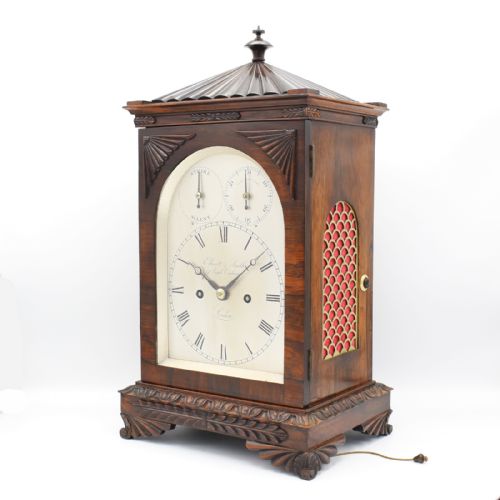


Strike Silent Table Clock
A strike silent table clock brings mechanical precision and time-honoured acoustics into a room.
Strike Silent Table Clock
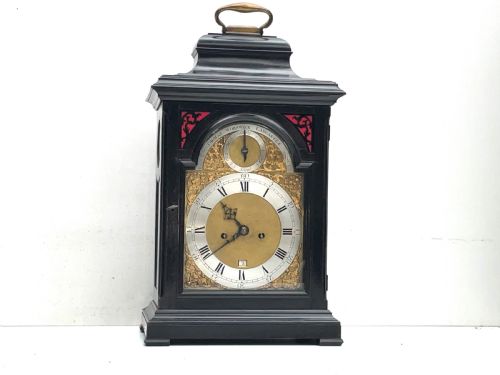
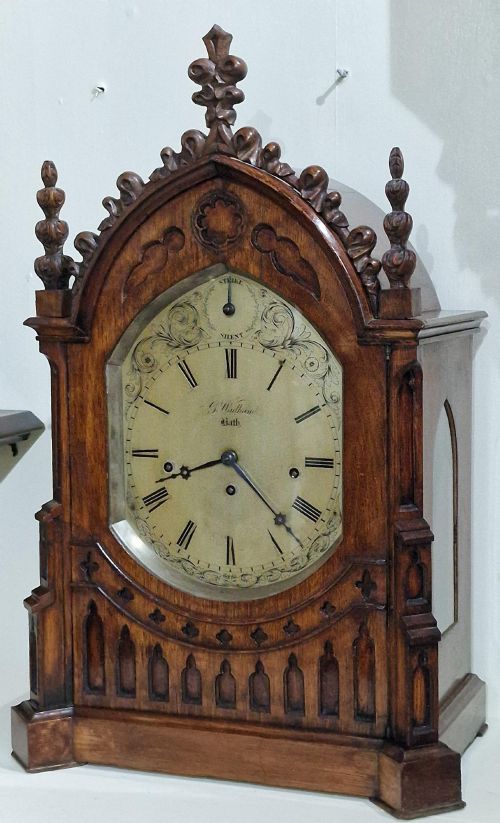
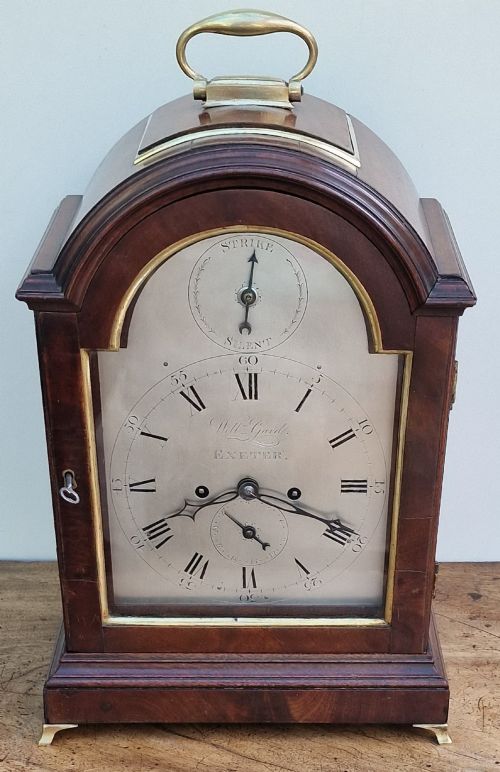
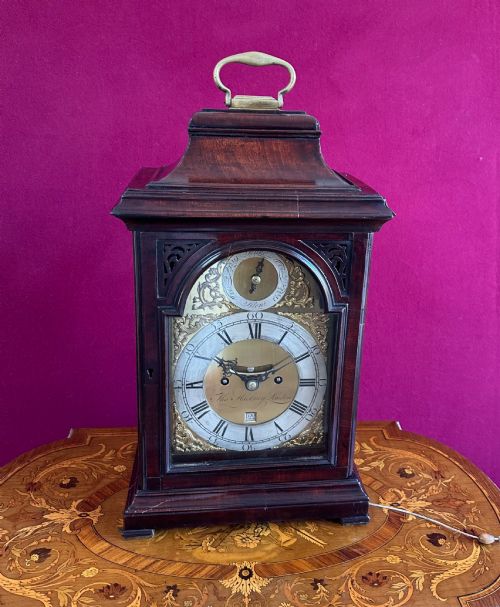
A strike silent table clock represents a pinnacle of horological craft, designed to sit upon brackets, desks, or mantelpieces within domestic spaces. These pieces primarily date from the eighteenth and nineteenth centuries, spanning the Georgian, Regency, and Victorian periods.
The objects take the form of bracket clocks and mantel clocks, housing complex movements within compact wooden housings. Such instruments serve both a practical timekeeping function and act as sculptural centrepieces for the interior.
Materials and Construction
Cases utilise dense timbers such as mahogany, ebony, rosewood, and ebonised wood, shaped into architectural forms like bell-top and break-arch designs. Glass panels protect the dial while allowing visibility of the internal mechanics.
Movements incorporate brass components, silvered brass dials, and enamel elements, driven by fusee mechanisms and verge escapements. Bells and gongs provide the acoustic strike, managed by systems that allow the user to silence the chime.
The inventory spans the eighteenth and nineteenth centuries, encompassing Georgian, Regency, and Victorian periods.
Quality Variations
The refinement of the movement dictates the standing of the piece, with complex triple fusee setups and early verge escapements representing elevated horological achievement. The precision in the cutting of brass wheels and the crispness of the engraving on dials separate standard items from finer works.
Cabinetry execution influences the overall stature, where timber selection and proportion play definitive roles. Cases featuring well-figured veneers and clean architectural mouldings align with superior workshop output.
George Wadham Bath·William Gard Exeter·Ellicott And Smith·Des Granges London·Louis Recordon·Payne And Co·Somersall London·Agar Of Malton·John Taylor London·Chater And Son·John McGregor·Isaac Hurley London·James Maitland London·John Rapton·L Donne
The Strike Silent Table Clock Glossary
- Fusee
- A conical pulley designed to maintain even tension on the clock train as the mainspring unwinds. This ensures consistent timekeeping accuracy throughout the running cycle.
- Verge escapement
- An early type of escapement mechanism that controls the release of power in pendulum or balance-wheel clocks. It is typically found in eighteenth-century examples.
- Bracket clock
- A portable timekeeper originally designed to sit upon a matching wall bracket or a table. These pieces often feature brass carrying handles on top.
- Bell-top case
- A style of clock case where the wooden top curves inward towards a central handle, resembling the shape of a hand bell. This silhouette is common in Georgian examples.
- Strike silent
- A mechanical function enabling the owner to mute the chiming mechanism of the clock. This prevents the bell from sounding during night hours.
Strike Silent Table Clock: Frequently Asked Questions
What is a strike silent table clock?
A strike silent table clock is a portable mechanical timepiece housed in a wooden case designed for placement on furniture. These pieces feature internal mechanisms that both tell the time and sound the hours on bells.
Owners can operate a lever to silence the striking mechanism when quiet is required. The form evolved significantly across the Georgian and Victorian eras.
How do fusee movements work?
A fusee movement uses a conical pulley connected to the mainspring via a chain or gut line. As the spring loses tension, the chain moves to a wider part of the cone to maintain consistent power.
This ingenious mechanical setup compensates for the declining force of the spring as it unwinds. It remains a hallmark of better quality antique timepieces.
Where were these clocks placed?
These clocks were originally designed to sit on dedicated wooden wall brackets or sturdy tables in principal rooms. Their portability allowed owners to move them between chambers as needed.
Carrying handles mounted on the top of the timber cases facilitated this movement. Today, they function primarily as mantel or desk pieces.
How do you date an antique clock?
Dating relies upon stylistic markers in the timber case, such as Regency Gothic revival motifs or Georgian bell-top silhouettes. The construction of the internal movement also provides clear chronological evidence.
Signature engravings on the brass dials often name the maker and operational city. Comparing these details against known working periods establishes the date of manufacture.