
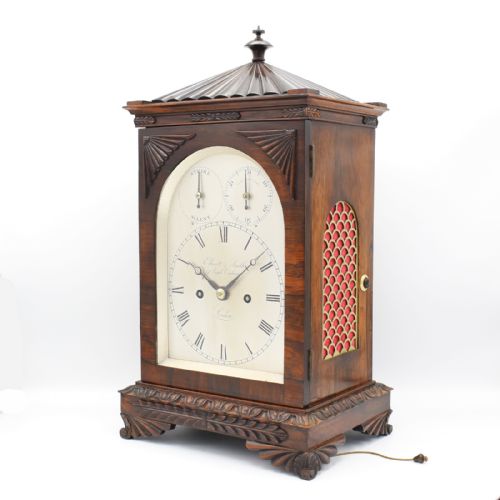


Strike Silent Mantel Clock
A strike silent mantel clock brings precision engineering and traditional cabinet-making together into a functional piece of domestic furniture.
Strike Silent Mantel Clock
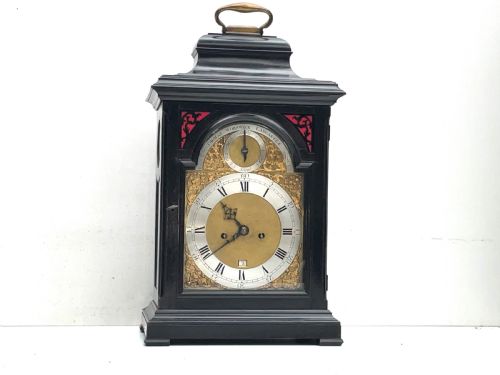
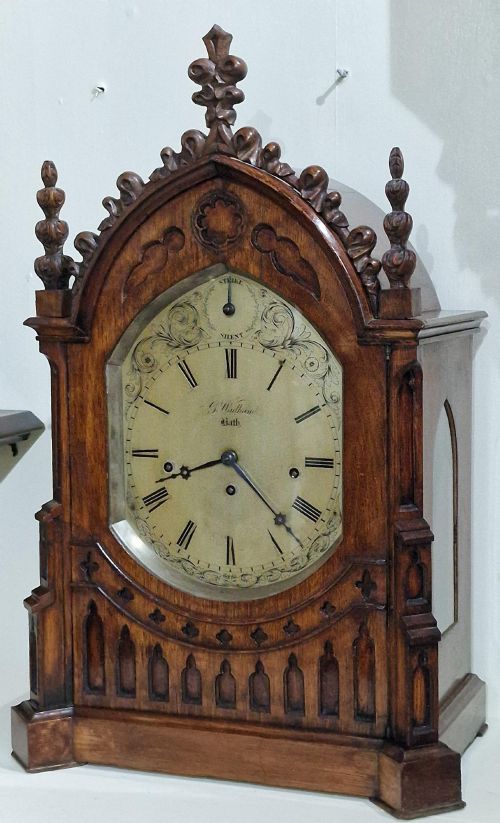
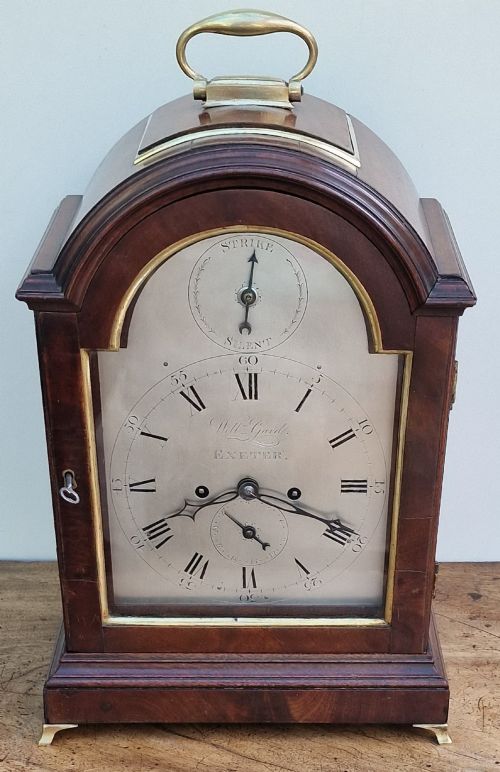
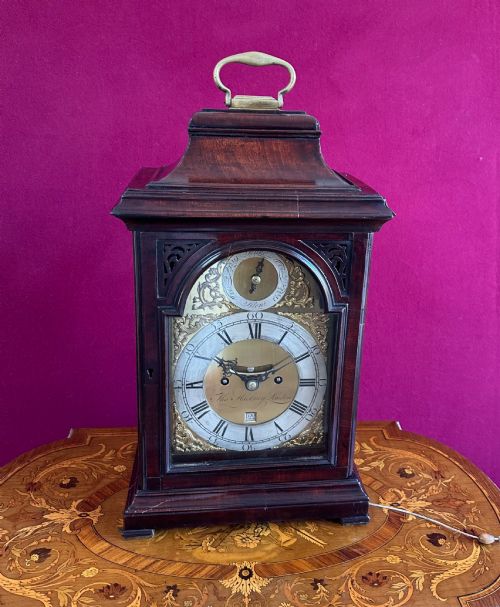
A strike silent mantel clock is a mechanical timepiece designed for tabletop or shelf placement, housing a movement capable of chiming the hours while offering a mechanism to silence the strike when desired. These pieces appear in forms such as bracket clocks and table clocks, spanning the eighteenth and nineteenth centuries.
The versions most commonly met on this page date from the Georgian, Regency, and Victorian periods, reflecting shifting tastes in domestic horology over more than a century of British craftsmanship. They frequently emerge in classic architectural silhouettes, including bell-top, break-arch, and Gothic revival cases.
Makers from London, Bath, Exeter, and Wick produced these items to serve as both reliable timekeepers and striking interior ornaments for drawing rooms and hallways.
Materials and construction
Cabinet makers built the timber housings using dense hardwoods such as mahogany, oak, ebony, and ebonised wood, often applying fine veneers over a sturdy carcase to achieve a polished finish. Glass panels protected the delicate dials while allowing visibility of the face.
Horologists fitted brass movements featuring verge escapements or fusee mechanisms, pairing them with silvered brass or enamel dials for clear legibility. Bells supplied the audible striking capability, driven by weights or springs.
Decorative touches included cast brass mounts, carrying handles, and fretwork sound panels that allowed the bell notes to resonate clearly through the wooden case.
Several makers thoughtfully included alarms alongside strike silent functions, ensuring owners could be roused from sleep as easily as they could silence the chimes.
Factors of quality
The distinction between standard examples and the finest work lies in the refinement of the internal movement and the crispness of the cabinet joinery. Master horologists integrated complex triple fusee or quarter-striking systems alongside superior verge escapements, while lesser pieces relied on simpler layouts.
Case execution plays a major role in overall merit, with figured veneers, sharp carving, and well-proportioned architectural details such as break-arches or bell-tops elevating the stature of the clock. Signed dials from notable makers further distinguish exceptional pieces from unsigned workshop output.
George Wadham·William Gard·Ellicott and Smith·Des Granges·Louis Recordon·Payne and Company·Agar of Malton·John Taylor·Chater and Son·John McGregor·Isaac Hurley·James Maitland·L Donne·John Rapton
The Strike Silent Mantel Clock Glossary
- Fusee
- A conical pulley used in spring-driven clocks to maintain an even tension on the movement as the mainspring unwinds. This device ensures consistent timekeeping accuracy throughout the running cycle.
- Verge escapement
- An early type of clock escapement controlled by a balance wheel or foliot. It regulates the release of the wheel train with a distinctive rocking motion.
- Bracket clock
- A portable tabletop clock originally designed to sit on a dedicated wall bracket. Later examples remained on mantelpieces and side tables despite retaining the traditional name.
- Silvered brass
- A metal dial surface treated with a silver compound to produce a bright, matte finish. Engraved numerals and maker signatures stand out clearly against this pale background.
- Bell-top
- A rounded, dome-shaped upper section of a wooden clock case resembling the profile of a bell. This silhouette was particularly popular during the Georgian era.
Strike Silent Mantel Clock: Frequently Asked Questions
What is a strike silent function?
The strike silent mechanism allows the owner to manually disengage the hourly chime of the clock without stopping the timekeeping train. This feature was particularly useful during night hours when an audible strike might disturb rest.
Operators typically pull a cord or move a small lever on the dial to shift a detent lever, locking the striking hammer in place until normal operation is resumed.
How do I wind a fusee clock?
Winding requires a dedicated key inserted into the winding holes on the dial face, turned clockwise until moderate resistance indicates the mainspring is fully tensioned. Care must be taken not to overwind antique mechanisms.
Most fusee movements require attention every seven or eight days, depending on the specific gear train and whether the clock includes a strike or alarm function.
Where should I place a bracket clock?
These clocks belong on stable, level surfaces such as sturdy mantelpieces, chests of drawers, or dedicated wall brackets where vibrations are minimised. A level foundation is essential for the pendulum or balance wheel to beat evenly.
Keep the piece away from direct sunlight, draughty doorways, and damp walls to preserve the polished mahogany or ebonised wooden case and delicate internal brasswork.
How can I tell the period of a clock case?
Case styles changed over the decades, moving from the architectural ebonised bell-top designs of the eighteenth century through Regency mahogany variations to later Victorian interpretations. Details such as brass bracket feet, fretwork side panels, and dial signatures offer strong clues to the decade of manufacture.
Consulting the recorded maker names and comparing dial formats like silvered brass versus enamel helps narrow down the active working years of the horologist.