






Stone Pedestal Garden Ornament
A stone pedestal garden ornament anchors an outdoor space with classical gravity, holding sundials, urns and busts above the lawn.
Stone Pedestal Garden Ornament
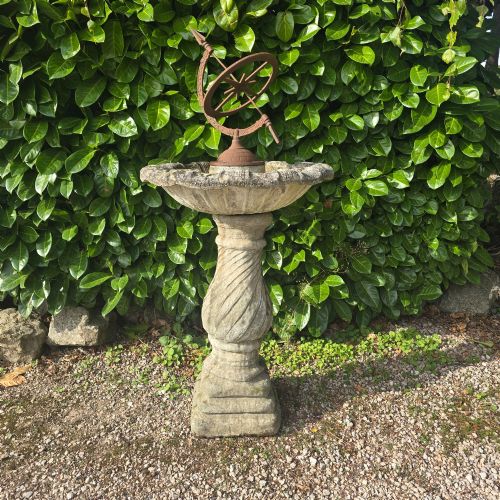
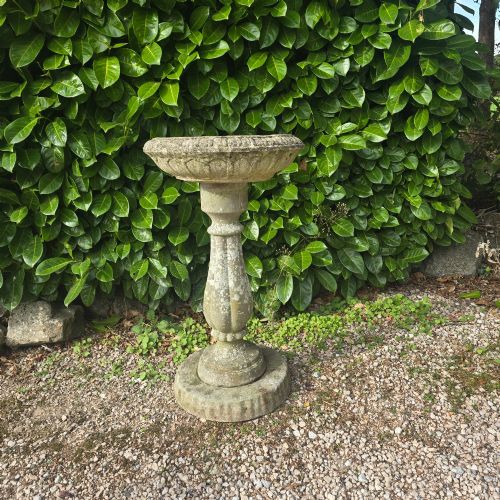
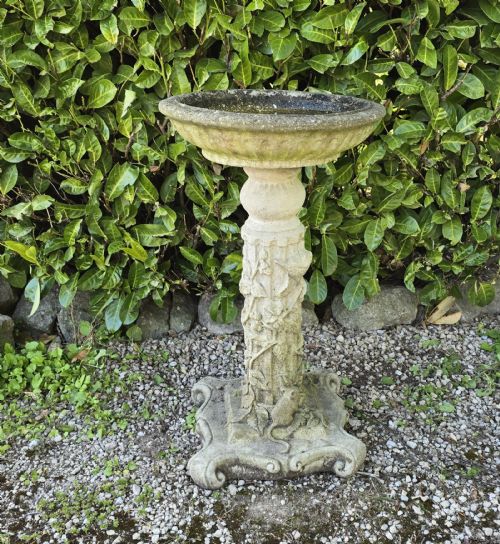
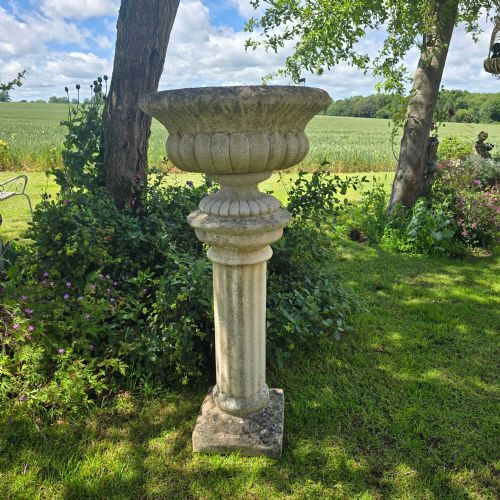
A stone pedestal garden ornament elevates sculptural and functional pieces, including bird baths, sundials, urns and busts, above ground level. These pieces serve as focal points in gardens, patios and courtyards, creating vertical interest among planting schemes.
The selection here encompasses figures, urns and sundials resting upon plinths, columns and pedestals. Pieces range from Victorian campana urns and Edwardian altars to mid-century figures representing mythological subjects and the seasons.
Origins span several centuries, featuring Georgian limestone and sandstone alongside Victorian cast iron and later cast stone creations. Buyers encounter items varying from sturdy staddle stones to ornate classical revivals.
Assessment of quality
The refinement of the carving or casting defines the upper tier of these pieces, where facial expressions on busts and drapery on statues remain crisp and proportionate. Lesser examples exhibit softer lines, shallower relief work and simpler geometric forms.
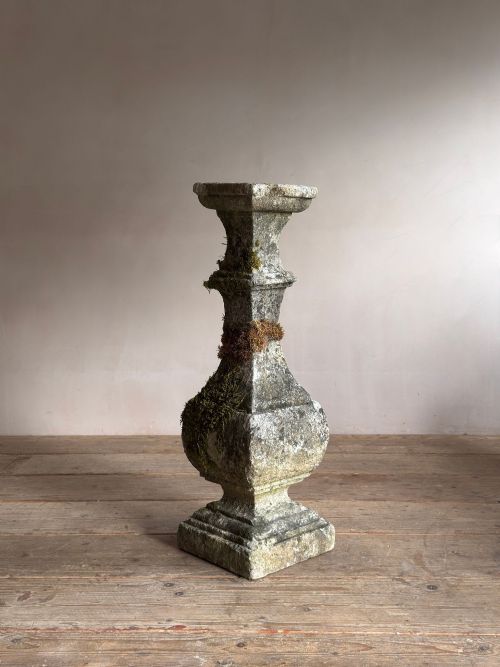
Patination and weathering contribute significantly to the character of outdoor ornaments, with deep lichen growth and natural erosion indicating age and harmonious integration with the garden. The structural integrity of the joint between the ornament and its plinth remains paramount for stability.
Stone Pedestal Garden Ornament Retail Price Guide 2026
Typical asking prices for stone pedestal garden ornament among the pieces listed under this phrase on Sellingantiques today, from the lower quarter to the upper quarter. They describe what is for sale here now, not the wider market.
Object forms on this page include sundials, bird baths, campana urns, staddle stones and figurative busts of historical and mythological subjects.
Andrew Handyside
The Stone Pedestal Garden Ornament Glossary
- Campana urn
- A bell-shaped garden vessel with an everted rim, typically mounted on a stem and plinth base. These classical forms originated in ancient Rome and remained popular throughout the nineteenth century.
- Staddle stone
- A mushroom-shaped stone support originally utilised to elevate granaries above damp ground and deter vermin. In modern gardens, they function as standalone sculptural pedestals.
- Armillary sphere
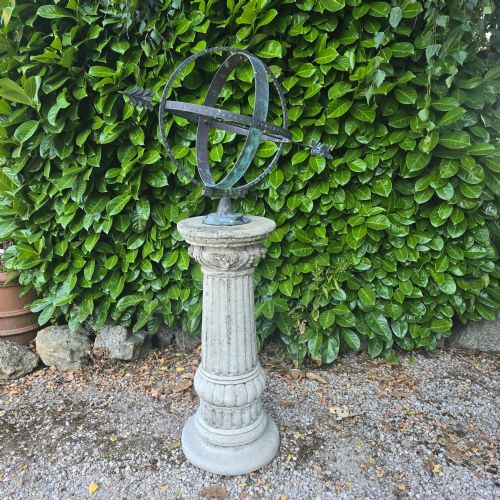
- A model of celestial spheres featuring rings centred on a globe, frequently mounted upon a stone pedestal or sundial plinth. They combine astronomical utility with decorative garden sculpture.
- Plinth
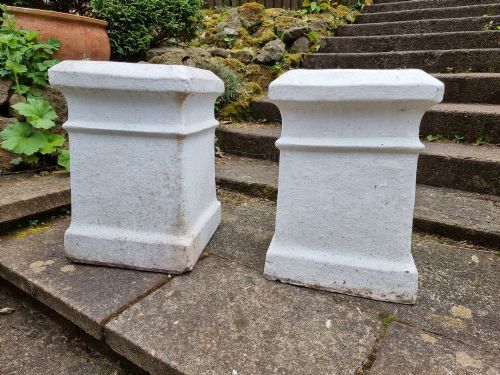
- A heavy base or slab supporting a statue, urn, column or bust. They raise the focal point of the ornament above ground level.
- Reconstituted stone
- A composite material manufactured from crushed natural aggregate and a binder such as cement, cast in moulds to resemble carved stone. It gained widespread popularity in the twentieth century for durable garden statuary.
Stone Pedestal Garden Ornament: Frequently Asked Questions
How do I clean a stone bird bath?
Gentle brushing with water and a soft-bristled brush removes dirt and organic build-up without harming the surface.
Avoid harsh chemical cleaners or pressure washers, as these methods erode soft stone and destroy desirable weathering.
Can stone garden ornaments stay outside in winter?
Most natural and cast stone items withstand frost, provided water does not pool and freeze inside hollow vessels or basins.
Placing pot feet beneath heavy urns and covering or draining sundials prevents cracking caused by expanding ice.
How do I secure a heavy garden statue?
Large pieces require a level, compacted foundation such as paving slabs or a concrete pad to prevent settling and subsequent tipping.
Dowels or exterior-grade mortar anchor the statue firmly to its pedestal when positioned in exposed, windy locations.
How do I date an antique stone ornament?
Tool marks, weathering patterns and material composition offer primary clues to the era of manufacture.
Stylistic indicators, such as Victorian gothic Revival motifs or mid-century casting techniques, help narrow the period of origin.