



Stone Gatepost Ornaments
These stone gatepost ornaments anchor an entrance with architectural presence, offering classical weight and enduring permanence to a boundary wall or driveway.
Stone Gatepost Ornaments
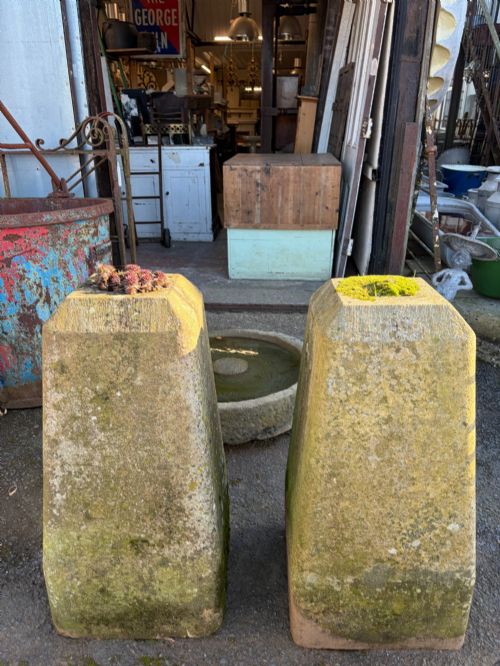
When you search for stone gatepost ornaments, you are looking at architectural masonry designed to mount upon piers, walls, and gateways. The pieces on this page span several centuries and styles, ranging from medieval limestone pinnacles to twentieth-century composition stone castings.
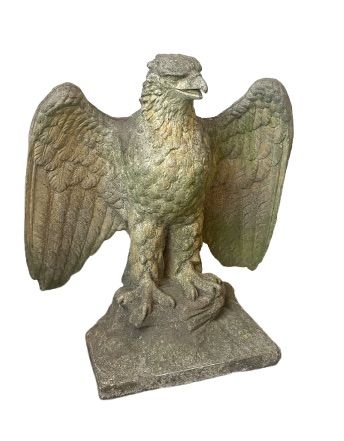
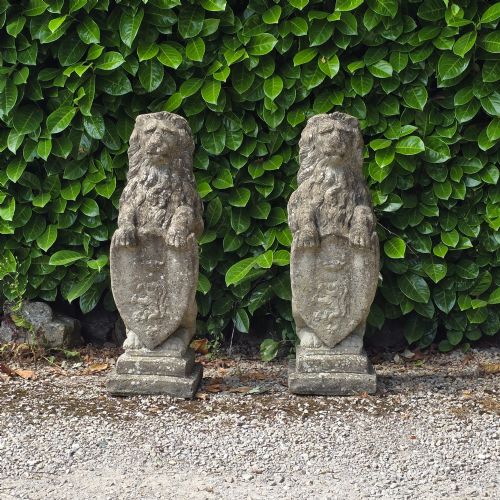
Lions and eagles dominate the forms you will most frequently encounter here, appearing in pairs designed to flank an approach. These figures draw upon neoclassical, Gothic revival, and traditional English country house idioms to punctuate formal landscaping.
The objects also include pier finials and floral baskets, demonstrating how masonry serves as both structural cap and decorative sculpture. Origins stretch from local Yorkshire limestone to industrial salt glazed pottery from Scottish kilns.
Materials and Construction Methods
Masons shaped early examples by hand from natural blocks of sandstone, limestone, and Yorkshire stone. These traditional pieces display the tool marks and gradual weathering characteristic of pre-industrial quarrying.
Later pieces utilise composite, cast, and reconstituted stone poured into moulds to replicate carved detail with uniform consistency. Salt glazed pottery techniques also appear, providing a dense ceramic body resistant to frost.
Surface treatments include remnants of old paint and natural colonisation by moss, recording decades or centuries of exposure to the elements.
Stone Gatepost Ornaments Retail Price Guide 2026
Typical asking prices for stone gatepost ornaments among the pieces listed under this phrase on Sellingantiques today, from the lower quarter to the upper quarter. They describe what is for sale here now, not the wider market.
Listings span periods from pre-sixteenth century medieval limestone up to twentieth-century traditional cast compositions.
Distinctions in Quality and Execution
The sharpness of the original carving or moulding defines the visual success of the piece, separating crisp architectural definition from softened detail. Superior examples retain anatomical clarity in animal subjects and clean lines in architectural finials.
Age and weathering impart a desirable surface patina that lesser or more recent replacements lack. The integration of the sculpture with its matching plinth or base further distinguishes cohesive matched pairs from assembled pairings.
The Stone Gatepost Ornaments Glossary
- Pier finial
- An architectural ornament placed on top of a gate pier or pillar to mark an entrance. These elements provide a vertical punctuation point to boundary walls.
- Reconstituted stone
- A manufactured material made from crushed stone or aggregate mixed with a binder such as cement. It is cast in moulds to imitate natural carved masonry.
- Gothic revival
- An architectural style drawing inspiration from medieval forms. Pieces in this style feature pointed arches and ecclesiastical detailing.
- Salt glazed pottery
- Ceramic ware fired at high temperatures with common salt thrown into the kiln. This process produces a vitreous, glossy finish that withstands outdoor conditions.
- Neoclassical
- A style rooted in the art and architecture of classical antiquity. It emphasises symmetry, proportion, and restrained classical motifs.
Stone Gatepost Ornaments: Frequently Asked Questions
How are stone gatepost ornaments fixed in place?
These heavy masonry pieces typically secure to flat pier caps using strong mortar beds or hidden metal dowels inserted into drilled bases.
Because of their substantial weight, professional placement ensures they remain stable against wind and accidental impact.
Can these ornaments withstand winter frost?
Natural sandstones, limestones, and dense cast compositions handle cold weather well if the stone is sound and free from trapped moisture.
Salt glazed ceramics and well-cured composite stone also resist frost damage effectively over many decades outdoors.
Are most listed pieces sold as pairs?
Many examples on this page are offered as matching pairs designed to balance opposing gatepiers symmetrically. Single items do appear occasionally for wall mounting or standalone display.
Checking the specific title confirms whether an object is part of a matched set.
How do I identify the period of a stone ornament?
Dating relies on tool marks, the choice of raw material, and stylistic traits that correspond to architectural history from the medieval era through the twentieth century.
Natural weathering and historical provenance also help establish the approximate age of older garden statuary.