




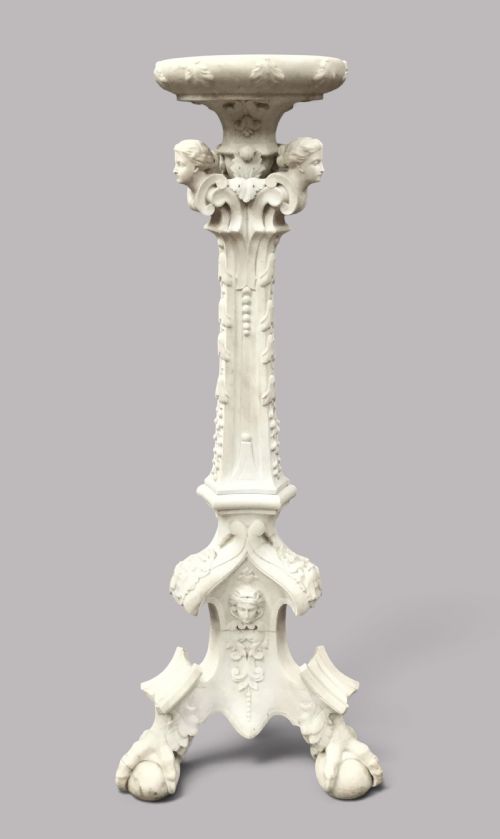
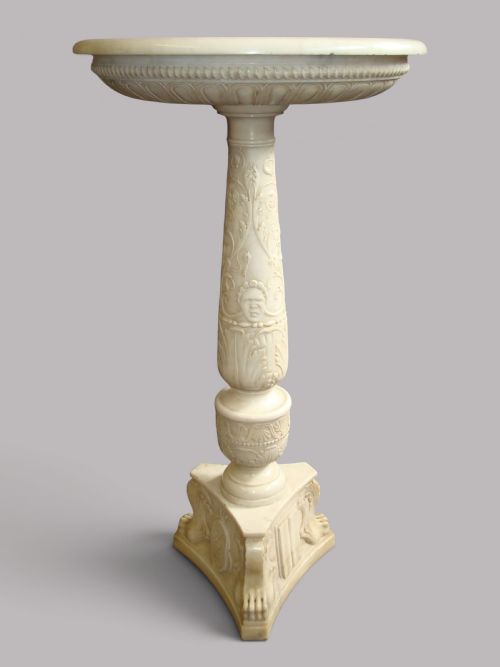

Stone Display Plinth
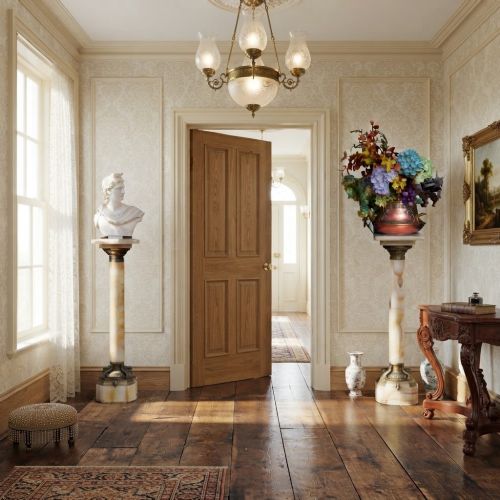
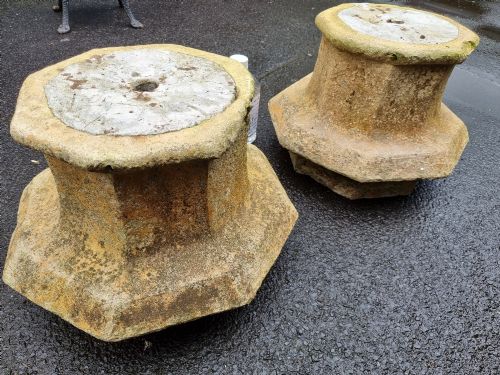
These stone display plinth items are heavy columns, pedestals and plant stands that elevate sculpture, urns and decorative objects.
Stone Display Plinth
A stone display plinth typically takes the form of a column, pedestal, or torchere designed to elevate statues, tazzas, and plants within interior spaces or gardens. When searching for a stone display plinth, buyers frequently encounter nineteenth century examples rendered in various marbles, alabaster, and composite stone.
The inventory on this page spans distinct stylistic revivals, including Neoclassical, Gothic, and French Chateau designs. Forms range from low pedestals and square scagliola columns to tall architectural shafts suitable for displaying statuary.
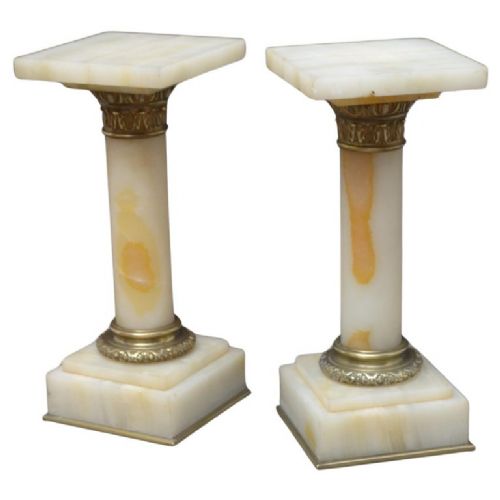
Origins represented in the collection include Italian carved works alongside British and continental pieces. Buyers will find single items as well as matched pairs suited for symmetrical placement in a room or garden.
Materials and construction
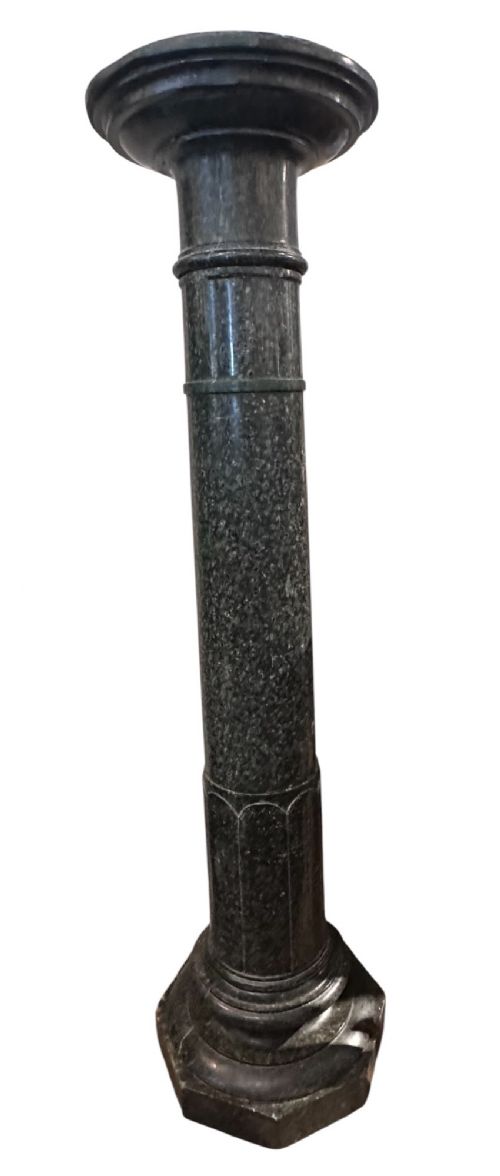
Carved stone and various marbles form the primary substance of these pieces, utilising materials such as Arabescato, Verde Antico, Carrara, serpentine, and green marble. Masons shaped these dense geological materials using chisels and turning lathes to create smooth cylindrical columns and square shafts.
Several examples incorporate decorative metalwork, attaching ormolu collars, gilt bronze mounts, or brass details to the stone structure. Composite stone and scagliola appear as alternative structural materials, utilising moulded compositions to achieve classical architectural profiles.
Stone Display Plinth Retail Price Guide 2026
Typical asking prices for stone display plinth among the pieces listed under this phrase on Sellingantiques today, from the lower quarter to the upper quarter. They describe what is for sale here now, not the wider market.
Materials span natural stones including alabaster, onyx, serpentine, and multiple varieties of marble.
Distinctions in craftsmanship
Quality in a stone display plinth rests upon the precision of the carving and the selection of the geological material. Finer pieces display crisp architectural moulding, well-defined capital details, and harmonious natural veining within the marble or alabaster.
The integration of secondary elements, such as accurately fitted ormolu collars and cast bronze mounts, separates standard architectural columns from high-status decorative works. The overall stability and balance of the shaft relative to its capital and base determine the success of the execution.
The Stone Display Plinth Glossary
- Ormolu
- Gilded bronze mounts applied to furniture and decorative objects. This technique was frequently utilised on nineteenth century French pedestals.
- Scagliola
- A composite material made from pigmented selenite, glue, and plaster, applied to mimic natural marble. It allowed makers to create smooth classical columns without carving solid stone.
- Torchere
- A tall stand or pedestal designed to support a candelabrum or lamp. In stone, these pieces often feature slender shafts.
- Tazza
- A shallow cup or bowl mounted on a stem and foot. Several listings pair this vessel form with a matching stone pedestal.
- Verde Antico
- A dark green serpentine marble breccia prized in classical architecture and Italian carving. It provides a distinct mottled appearance on column shafts.
Stone Display Plinth: Frequently Asked Questions
Can these plinths support heavy sculptures?
Most of these pieces are constructed from solid marble, stone, or alabaster, possessing the structural mass required to bear significant weight. Their primary historic function was supporting heavy bronze and marble statuary.
Buyers should verify the top surface area and ensure the base rests evenly on the floor to maintain stability when displaying weighty items.
Are these items suitable for outdoor use?
Suitability depends entirely on the specific material recorded in the listing. Composite stone and certain stoneware items were designed for garden environments.
Softer materials like alabaster and fine interior marbles such as Carrara or onyx are susceptible to frost and weathering, making them better suited for indoor placement.
How do I distinguish between marble and scagliola?
Natural marble displays cold temperatures to the touch, visible crystalline structures, and continuous veining running through the stone body. Scagliola is a composite mixture applied to a core, which can sometimes reveal a slightly warmer feel and moulded seams.
Examining the underside or unpolished areas often clarifies whether the shaft is carved from a single block.
What periods do these pieces date from?
The pieces collected here primarily date from the nineteenth century, including specific periods like the Victorian era and the early decades of the twentieth century. Makers during these times drew heavily on Neoclassical and Gothic revival styles.
Dates are assigned based on stylistic evidence, material handling, and structural design conventions typical of those decades.