


Still Life Pitcher Painting
A still life pitcher painting brings timeless domestic calm to a room, capturing glazed ceramics and seasonal fruit through the steady lens of oil and watercolour.
Still Life Pitcher Painting
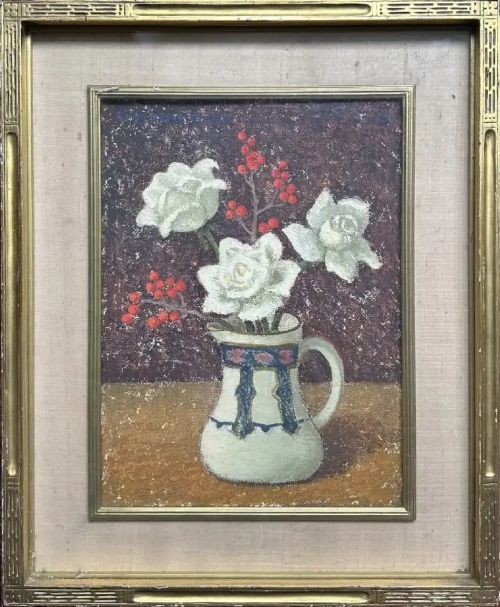
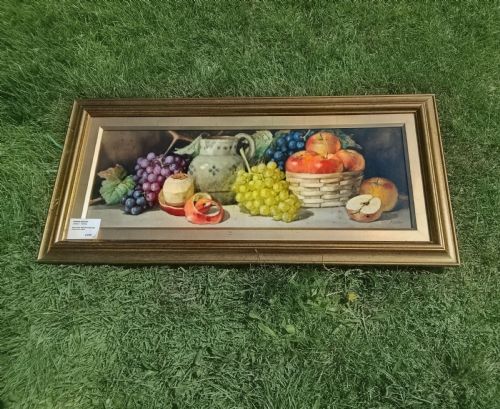
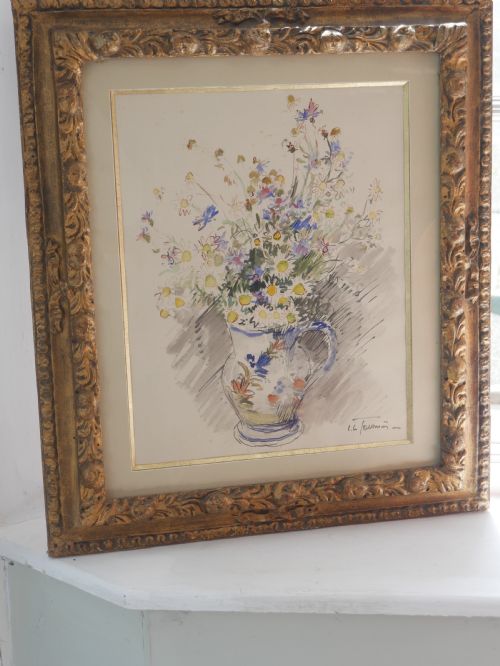
When you search for still life pitcher painting, you encounter compositions focused on jugs, ewers, and vessels alongside fruit, flowers, and tabletop settings.
The pieces appearing here span from the nineteenth century through the mid-twentieth century, encompassing traditional realism, post-impressionism, and mid-century European modernism.
You are most likely to meet mid-century oil paintings on canvas alongside earlier nineteenth-century watercolours and framed works executed by regional and international hands.
How they were made
Artists built these works primarily using oil paint on canvas or watercolour applied to paper, often mounting the finished pieces in wood and gilt frames.
Techniques range from the expressive brushwork of post-impressionism and American impressionism to the precise detail of traditional realism and Victorian execution.
Materials documented across the selection include oil paint, watercolour, canvas, wood, gilt, glass, and paper.
What varies in quality
Quality rests in the confidence of the brushwork and the artist's command of light across the surface of the jug and the surrounding fruit.
The harmony of the palette and the structural integrity of the wood and gilt framing also distinguish the finer examples from standard decorative studies.
Emma Fordyce MacRae·Vladimir Aldoshin·Arthur Dudley·Margaret Laing·Royal Worcester
The Still Life Pitcher Painting Glossary
- Oil on Canvas
- Pigment suspended in drying oil applied to a stretched woven fabric support. This medium allows for rich colour blending and textured brushwork.
- Post-Impressionism
- An artistic movement extending beyond impressionism's naturalism to explore more symbolic content and vivid hues. It values structure and emotional resonance over mere optical realism.
- Watercolour
- A painting method where water-soluble pigments are used on paper. It relies on the white of the paper shining through transparent washes of colour.
- Gilt
- A thin layer of gold leaf applied to wood frames or surfaces. This technique adds warmth and decorative refinement to the presentation of a painting.
Still Life Pitcher Painting: Frequently Asked Questions
How do I hang a still life painting?
Position the piece at eye level in a room with balanced ambient light to appreciate the brushwork on the pitcher and fruit.
Ensure the frame matches the surrounding interior woodwork and avoid direct, harsh sunlight to protect the canvas or paper over time.
What periods do these paintings come from?
The works span from the nineteenth century through the 1920s, 1940s, 1950s, 1960s, and later mid-century periods.
Earlier pieces often lean towards traditional realism or Victorian styles, while later works embrace modernist and European post-impressionist approaches.
Are these paintings supplied with frames?
Many examples arrive set within their original wood frames, some featuring gilt detailing that complements the composition.
Check the individual listing details to confirm whether the specific wood frame or glass protection is included with the artwork.
How do I tell watercolours apart from oils?
Watercolour paintings use paper supports and transparent washes, usually displayed beneath protective glass.
Oil paintings utilise thicker pigments on canvas or wood panels, presenting textured brush marks that do not require glass.