


Sterling Silver Sweetmeat Dish
A sterling silver sweetmeat dish offers refined service for sweet treats, bringing tactile grace to any table.
Sterling Silver Sweetmeat Dish
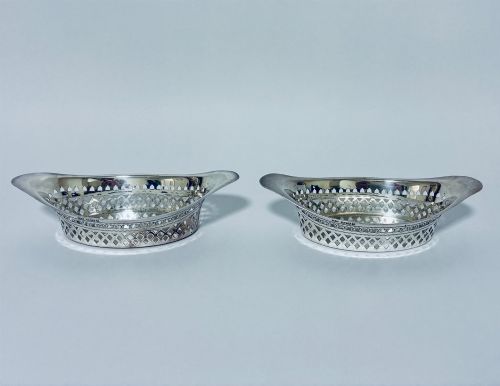
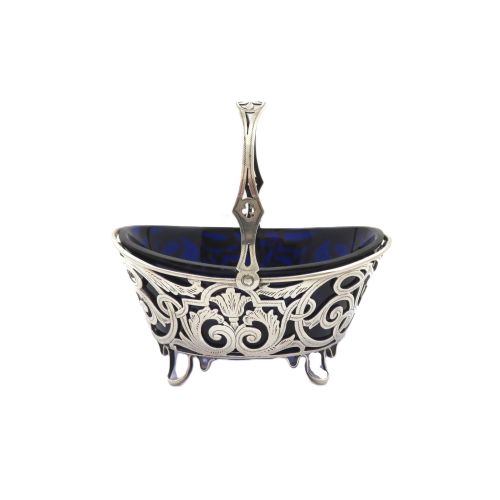
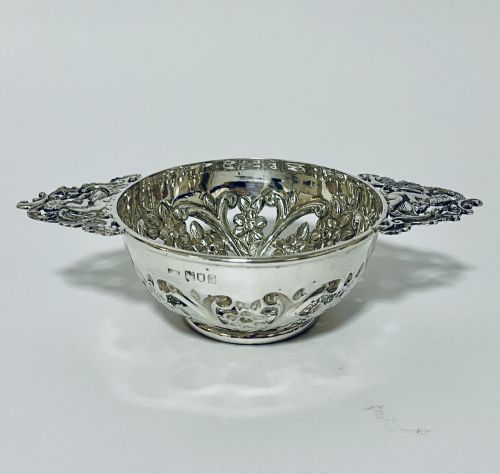
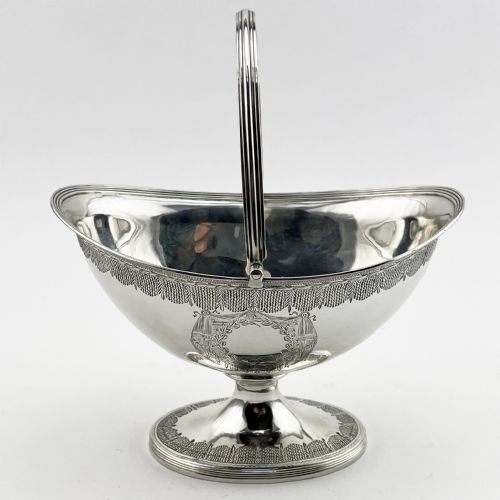
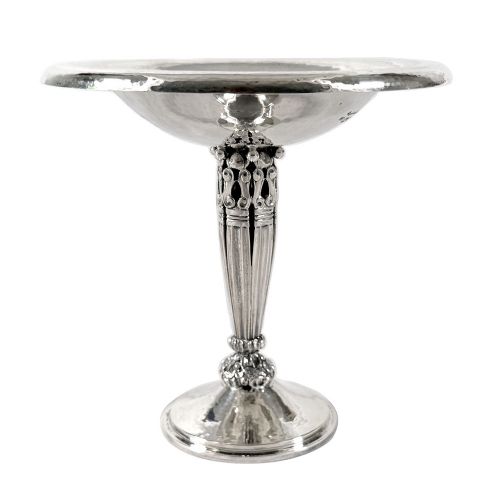
A sterling silver sweetmeat dish encompasses forms designed for serving small confections, nuts, or sugar, spanning sugar baskets, bonbon dishes, and tazze. These tablewares emerge primarily across Victorian, Edwardian, and Georgian periods, alongside Art Deco and Arts and Crafts examples.
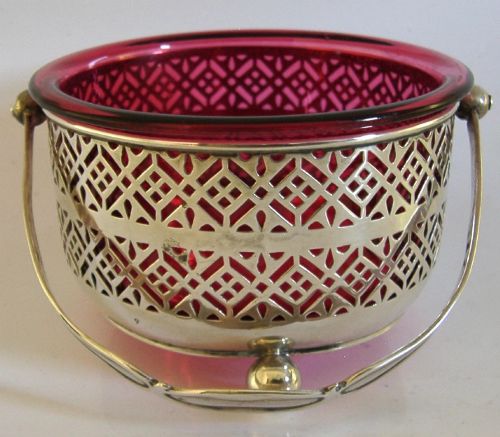
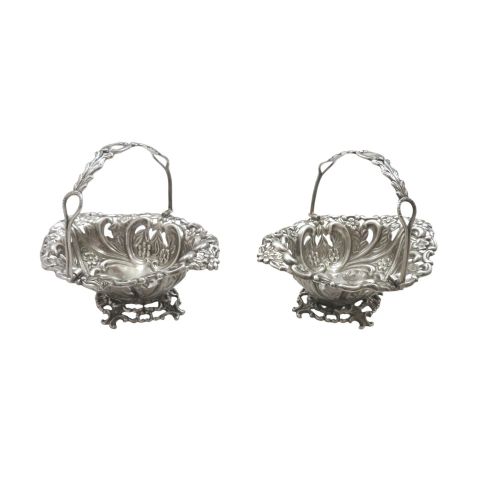
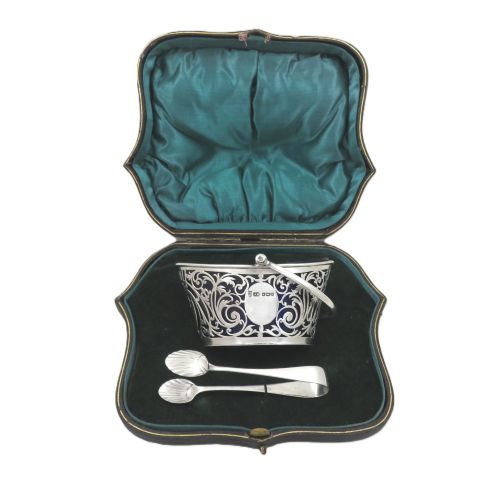
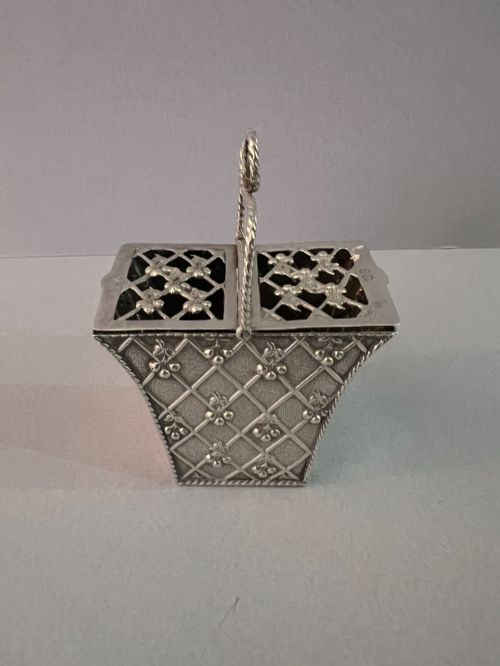
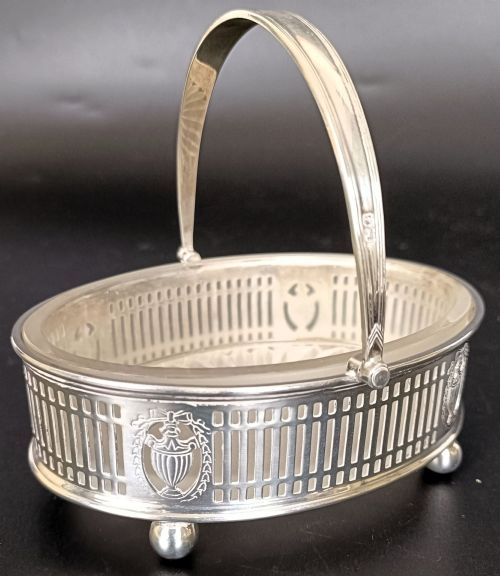
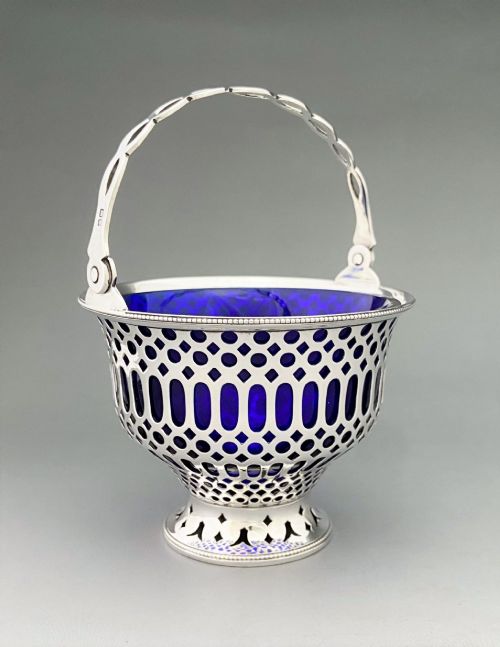
Collectors encounter swing-handled baskets, footed bowls, and pedestal dishes, frequently paired with coloured glass liners in ruby, cranberry, or cobalt hues. The assortment includes miniature sweetmeat baskets and lidded or fitted cases for formal presentation.
Originating largely from British workshops, these pieces reflect domestic dining habits from the eighteenth through the early twentieth century. Each design balances decorative pierced metalwork or embossed detailing with practical utility for the dining room.
Materials and technique
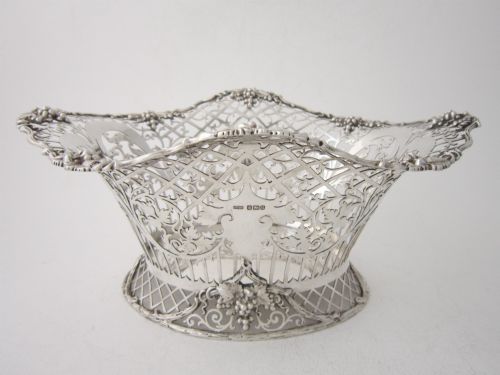
Silversmiths shaped sterling silver and solid silver through casting, piercing, and embossing, creating intricate lattice patterns and cast floral handles. Many vessels integrate coloured glass liners, such as cranberry and cobalt glass, held securely within pierced silver frames.
Makers utilised hammering and soldering techniques to construct swing handles, pedestal feet, and gilt interiors. Hallmarks stamped into the metal record the assay office, date letter, and maker's mark, documenting the origin of each piece.
Several sweetmeat baskets come nestled in their original velvet-lined cases, having safely bypassed a century of sticky fingers.
Distinctions in craftsmanship
Quality rests in the crispness of pierced lattice work, the weight of the solid silver, and the balance of cast handles. Superior examples display refined hand-chased detailing and intact internal gilding rather than mass-produced stamping.
The presence of original coloured glass liners, matching pairs, and legible hallmarks elevate a piece. Pieces retained in fitted cases demonstrate higher original status and preservation.
Henry Chawner·Charles Boyton·Fenton Brothers·Viners·William Comyns·James Deakin & Sons·William Bond·Martin Hall·John Barrett
The Sterling Silver Sweetmeat Dish Glossary
- Sweetmeat dish
- A small vessel designed for serving sweet confections, dry fruits, or sugar at the table. These pieces appear as baskets, bowls, or shallow dishes.
- Bonbon dish
- A small open dish intended for holding sweets or bonbons. They often feature pierced decoration or handles for passing round a table.
- Swing handle
- A movable arched handle attached to the rim of a basket or dish by pivots. This feature allows the handle to lie flat when the vessel rests on the table.
- Quaich
- A traditional two-handled drinking vessel of Scottish origin. In silver form, it serves occasionally as a small presentation bowl.
- Pierced work
- Metal decorated by cutting or piercing open patterns through the silver sheet. This technique lightens the visual weight of baskets and dishes.
Sterling Silver Sweetmeat Dish: Frequently Asked Questions
What were sterling silver sweetmeat dishes used for?
These dishes held small sweet confections, sugar, or nuts served at the conclusion of formal meals or during afternoon tea.
Hosts passed them around the table, utilising the swing handles or open bowls for easy guest access.
How do I identify the date of a silver basket?
Assay office marks and date letters stamped into the sterling silver provide exact verification of the year of manufacture.
Matching these hallmarks against registered records reveals the specific decade and town of origin.
Why do some sweetmeat dishes have glass liners?
Coloured glass liners in cranberry, ruby, or cobalt protected the sterling silver from acidic sticky residues left by preserves or sweets.
They also introduced vibrant colour contrast beneath pierced silver lattice designs.
How should I clean antique silver dishes?
Wash silver gently in warm soapy water using a soft cloth, avoiding harsh abrasive dips that strip natural patination.
Dry thoroughly with a lint-free cloth to maintain the polished finish of the embossed and pierced details.