
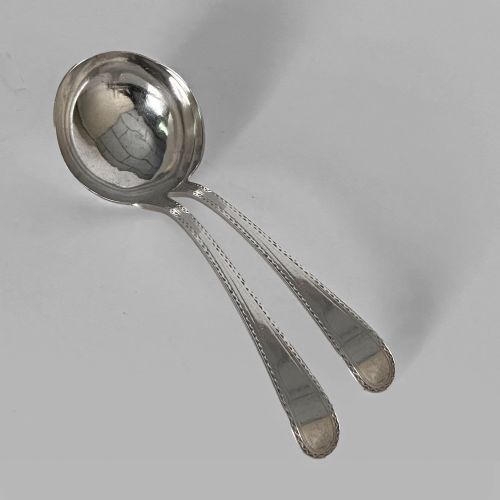
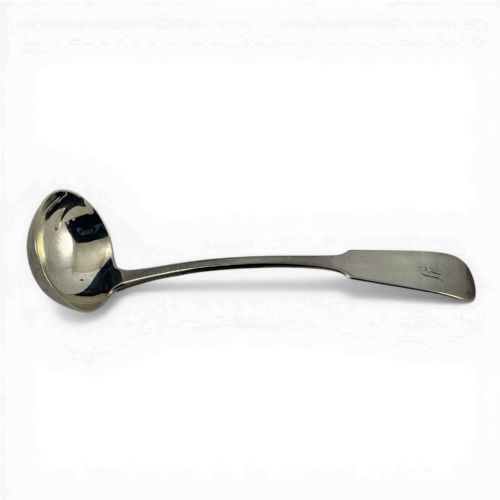


Sterling Silver Soup Ladle
A sterling silver soup ladle brings weight and presence to the table, and these pieces span the Georgian, Victorian, and Edwardian periods.
Sterling Silver Soup Ladle
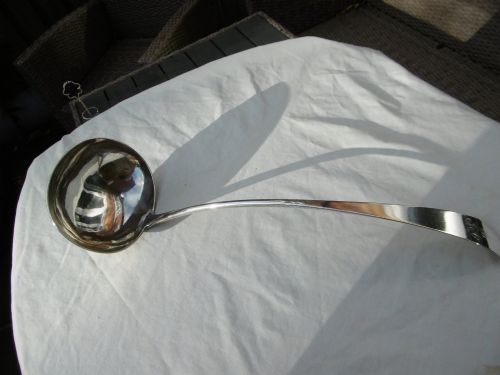
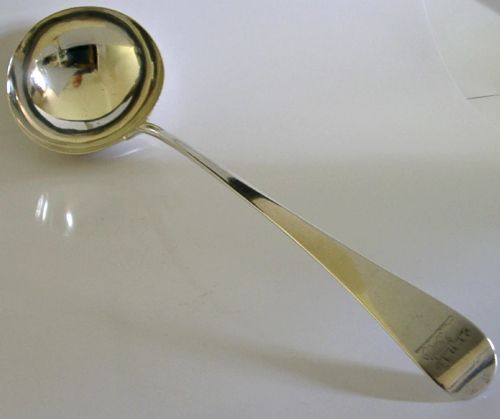
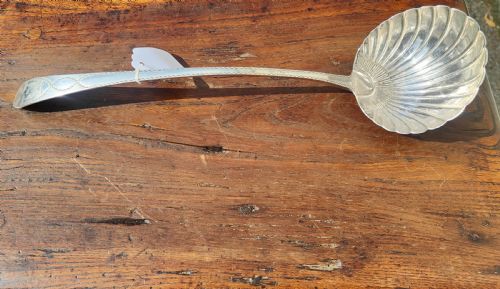
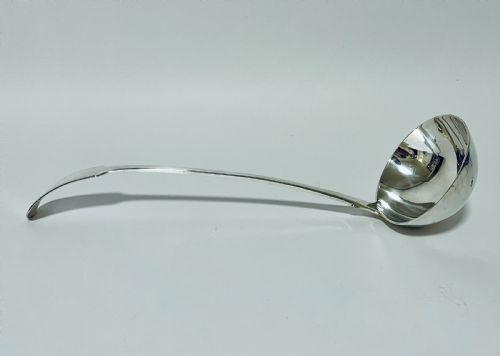
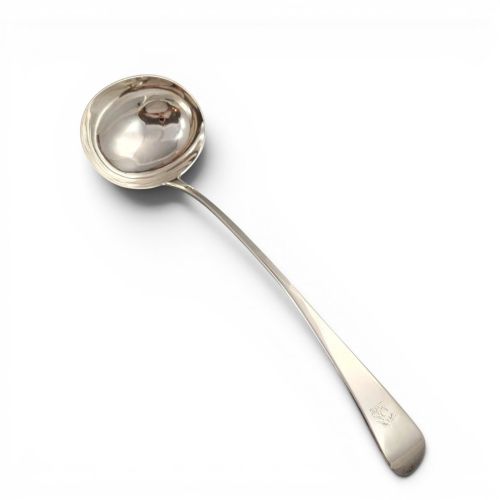
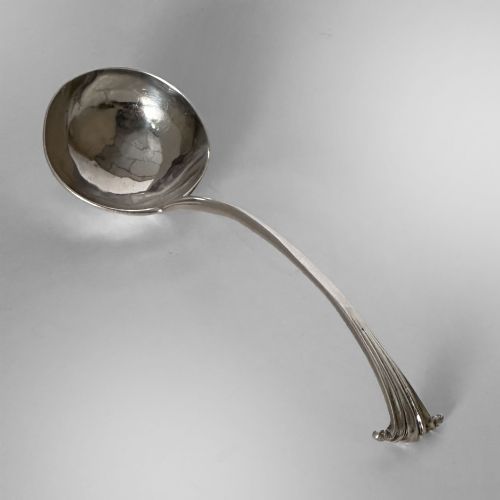
A sterling silver soup ladle serves as the primary implement for portioning liquids from a tureen, combining utility with formal table service. When searching for a sterling silver soup ladle, buyers encounter significant examples from the Georgian and Victorian eras, alongside Edwardian and mid-twentieth century pieces. The selection includes substantial London-made items with crested handles, provincial Scottish pieces, and Continental variants.
Materials and Construction
These items are constructed predominantly from sterling silver and solid silver, occasionally incorporating organic elements like wood and horn for handles or bowl components. Silversmiths utilised heavy-gauge metal to withstand the leverage required when lifting dense stews and broths from deep vessels.
Makers shaped the bowls through hammering and raising, attaching handles via secure joins and reinforcing them with threaded borders or crests. Assay office hallmarks, town marks, and maker stamps were subsequently punched into the metal to certify the silver standard.
Listings feature sterling silver, solid silver, wood, and horn materials across Georgian, Victorian, and Edwardian periods.
Distinctions in Quality
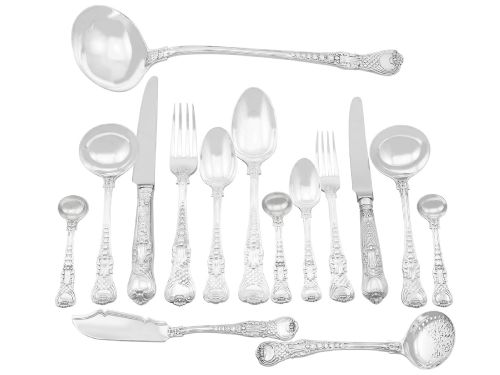
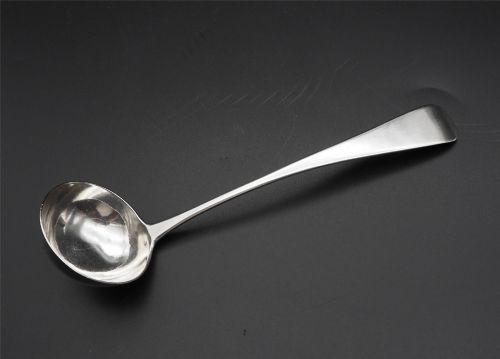
Quality in a sterling silver soup ladle rests on the heft of the silver and the crispness of the handle pattern, whether Old English, Fiddle, or Queen's. Substantial weight prevents bending at the neck during heavy service from a deep tureen.
Superior examples exhibit clear town marks and maker stamps alongside deeply engraved armorial crests that remain sharp after centuries of handling. The balance between bowl capacity and handle length determines the grace of the utensil in practical use.
Milne and Campbell·Hester Bateman·William Ferguson·Jamieson and Naughton·Mary Chawner
The Sterling Silver Soup Ladle Glossary
- Assay office
- An official body that tested precious metals and stamped items with hallmarks to verify the silver standard. London, Dublin, Edinburgh, and various provincial towns maintained distinct marks.
- Crest
- An heraldic design engraved onto the handle to denote the family or estate that originally owned the piece. These often match historical records of the period.
- Old English pattern
- A traditional flatware style featuring a plain, down-turned handle terminal that appeared frequently during the eighteenth century.
- Queen's pattern
- An ornate decorative flatware style distinguished by shell and floral motifs along the handle borders, common in Victorian manufacturing.
- Provincial silver
- Silverware made and marked outside the major capital assay offices, often originating from Scottish or regional English towns with local smiths.
Sterling Silver Soup Ladle: Frequently Asked Questions
How do I identify a Georgian ladle?
Georgian pieces date from the reigns of the Georges between 1714 and 1830, typically carrying monarch profile duty marks alongside city assay letters.
They often display simpler classical patterns like Old English or bright-cut engraving rather than heavy Victorian ornamentation.
Why do some ladles have horn handles?
Organic materials like horn and wood were utilised to prevent heat transfer from hot liquids to the user's hand during prolonged serving.
These materials also provided a contrasting texture against the polished silver bowls.
Are provincial marks harder to trace?
Provincial marks from Scottish and regional English towns often include maker initials combined with unique town symbols rather than standard leopard heads.
Reference texts on provincial silversmiths help identify these rarer regional workshops.