




Sterling Silver Skewer
These sterling silver skewer pieces are robust Georgian tableware items that bring historical heft and gleaming utility to any modern dining setting.
Sterling Silver Skewer
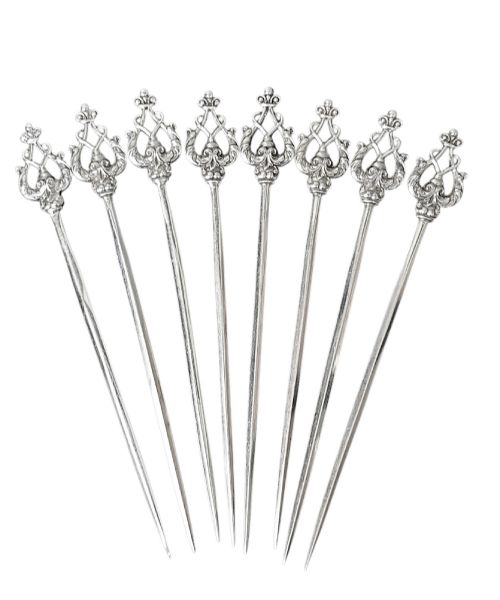
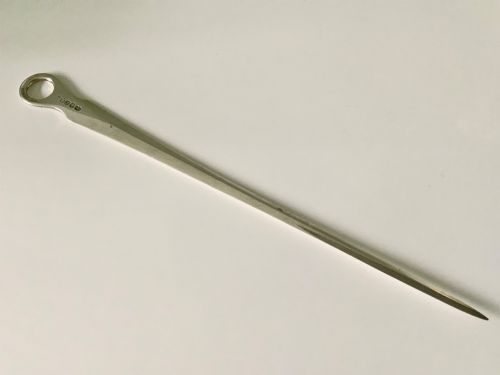
A sterling silver skewer represents a specific category of Georgian tableware designed originally for securing joints of meat during preparation or service. These items survive in forms ranging from standard meat skewers to smaller variants and specialised game skewers.
The pieces listed on this page encompass solid silver iterations from the Georgian era. Buyers encounter individual examples alongside matched sets intended for functional dining use.
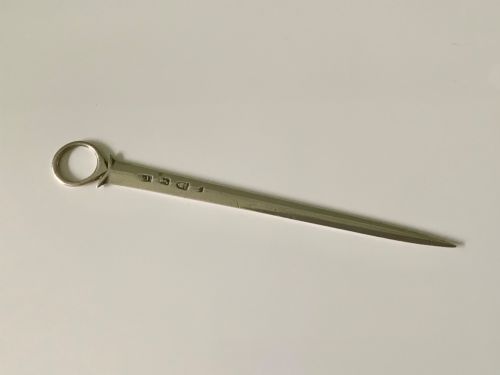
Archival evidence shows that similar forms later found secondary utility as letter openers or desk accessories, often bearing family crests or specific town assay marks such as Dublin.
How they were made
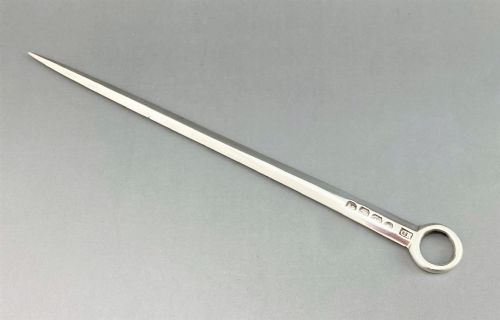
Makers fashioned each sterling silver skewer from solid silver stock, shaping the metal through hammering and drawing to create the tapered shaft. Smiths formed distinct ring or scroll terminals at the upper end to allow a secure grip.
Production techniques relied on traditional silversmithing methods of the period, resulting in durable utensils designed to withstand regular use in elite kitchens and dining rooms.
Sterling Silver Skewer Retail Price Guide 2026
Typical asking prices for sterling silver skewer among the pieces listed under this phrase on Sellingantiques today, from the lower quarter to the upper quarter. They describe what is for sale here now, not the wider market.
At least one massive Georgian skewer weighed over one hundred grams and doubled happily as a heavy-duty desk letter opener.
What varies in quality
Quality in a sterling silver skewer rests upon the weight of the metal and the crispness of any engraved crests or heraldic details. Substantial gauge silver provides greater rigidity along the length of the blade.
The distinction between standard workshop output and premier output often appears in the finesse of the terminal handle and the clarity of the maker and assay stamps struck into the silver.
M Keating·Paul Storr
The Sterling Silver Skewer Glossary
- Sterling silver
- A silver alloy containing 92.5 percent pure silver and 7.5 percent other metals, usually copper, ensuring durability for tableware. This standard has governed British silver production for centuries.
- Meat skewer
- A long, pointed utensil historically used to hold meat together during roasting or to test cooking progress. In silver, these evolved into handsome table implements.
- Game skewer
- A smaller variant of the standard skewer specifically proportioned for securing poultry or game birds. These pieces feature lighter proportions suitable for delicate meats.
- Assay mark
- A stamp applied by an official body to guarantee the purity of the precious metal. These marks often include date letters and city symbols that help identify the origin.
- Crest
- An engraved heraldic device depicting a family symbol or motto. Many silver items carry these personal marks of ownership.
Sterling Silver Skewer: Frequently Asked Questions
What were sterling silver skewers used for?
These utensils served primarily in the kitchen and at the dining table to secure joints of meat and game during roasting and carving.
Over time, many surviving examples transitioned into decorative or multi-purpose items, including heavy desk accessories such as letter openers.
How do I care for antique silver?
Regular gentle cleaning with a soft cloth removes tarnishing without wearing away the underlying metal or softening engraved crests and hallmarks.
Avoiding harsh abrasive dips preserves the natural patina accumulated over centuries of existence.
Are these skewers made of solid silver?
The pieces recorded in the evidence consist of solid sterling silver rather than plated base metals. This ensures substantial weight and lasting durability.
Testing and hallmarks confirm the metal standard used by the original smiths.
How can I date an old silver skewer?
Assay office stamps and date letters struck directly into the silver provide precise information regarding the year and location of manufacture.
Stylistic elements like ring terminals and engraved heraldry also offer strong clues to the period of origin.