



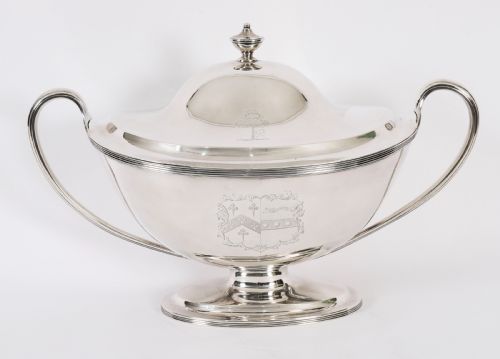


Sterling Silver Serving Dish
A sterling silver serving dish brings substantial weight and gleaming metal to the table, taking forms from George III tureens to Edwardian bread baskets.
Sterling Silver Serving Dish
A sterling silver serving dish represents the heavy metal tableware used for presenting food across Georgian, Victorian, and Edwardian dining rooms. When searching for a sterling silver serving dish, buyers encounter forms ranging from deep tureens and large platters to open bowls, bonbon dishes, and bread baskets.
The pieces appearing here span centuries of domestic dining, touching periods from the eighteenth century through to twentieth-century modern designs. Alongside standard British items, the selection includes regional pieces such as Irish work, Chinese export silver, and Indian colonial pieces.
Tureens complete with covers and lampstands sit alongside simple rimmed glass bowls mounted in silver rims, centrepiece bowls, and paired entree dishes. This variety reflects the changing needs of formal dining tables through the reigns of George III, George IV, and George V.
How they were made
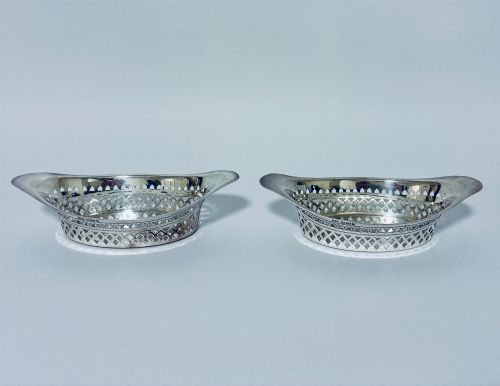
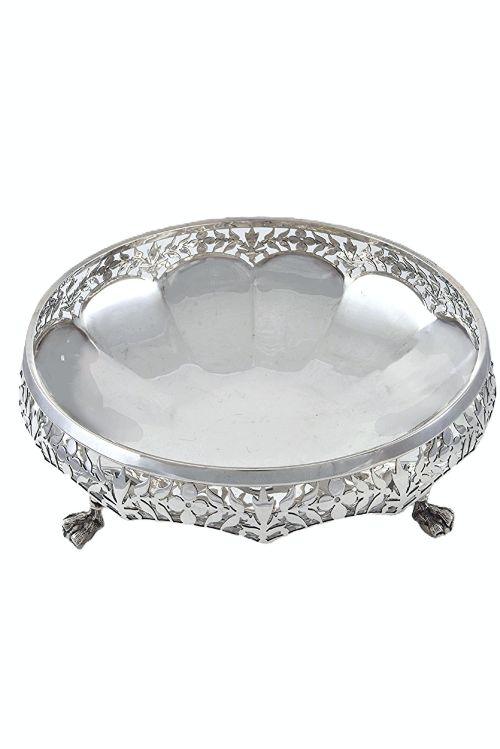
Silversmiths constructed these vessels primarily in sterling silver, utilising hammering, casting, and piercing techniques to shape heavy metal sheets into functional forms. Pierced oval serving dishes demonstrate intricate hand-cut openwork across the silver body, while cast elements form sturdy handles and decorative feet.
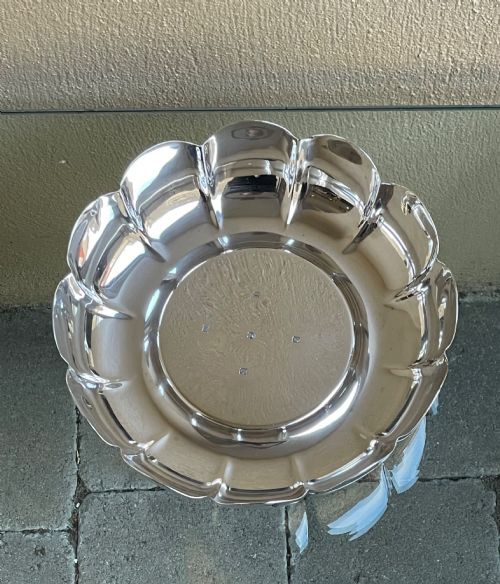
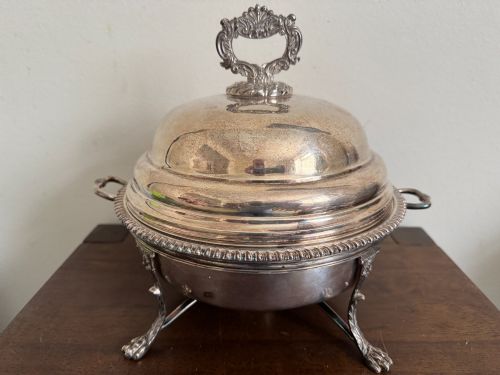
Certain items combine sterling silver with other media, mounting silver rims onto glass bowls to contrast the reflective metal with transparent material. Makers also incorporated complex internal elements, such as lampstands fitted beneath supper dish covers to keep food warm at the table.
Sterling Silver Serving Dish Retail Price Guide 2026
Typical asking prices for sterling silver serving dish among the pieces listed under this phrase on Sellingantiques today, from the lower quarter to the upper quarter. They describe what is for sale here now, not the wider market.
Materials across these listings are restricted to sterling silver, silver, and glass.
What varies in quality
Quality rests upon the weight of the silver used in construction and the crispness of any chased or pierced ornamentation. Heavy metal gauges and solid casting distinguish substantial tureens and platters from lighter domestic bowls.
The prestige of the silversmith workshop significantly influences the standing of a piece, with prominent names commanding attention for their design ambition and clean execution. Well-preserved maker marks and clear city assay stamps confirm the origin and standard of the silver.
William Bennett·Robert Breading·John Hunt·Martin Hall·Elkington & Co·Edward & John Barnard·S Kirk & Son Company·Paul Storr·Harrison Brothers & Howson·Tiffany & Co
The Sterling Silver Serving Dish Glossary
- Sterling silver
- A standard alloy consisting of 92.5 percent silver and 7.5 percent other metals, typically copper, chosen for durability in tableware. This composition forms the material basis for the majority of these dishes.
- Tureen
- A deep covered bowl used for serving soups, stews, or vegetables at the table. George III and Victorian examples often include matching stands or heating lamps.
- Bonbon dish
- A small, decorative open vessel designed to hold sweets or confectionery. Pairs of these dishes frequently appear from the Victorian era.
- Centrepiece bowl
- A large, prominent vessel placed in the middle of a dining table for display or fruit service. These items demonstrate substantial weight and ambitious styling.
- Entree dish
- A shallow covered dish intended for serving individual courses during formal multi-course meals. They are often found as matched pairs bearing mid-nineteenth-century hallmarks.
Sterling Silver Serving Dish: Frequently Asked Questions
What is a sterling silver serving dish used for?
These vessels served meals on formal dining tables, holding everything from meats and vegetables to bread, soups, and sweet confectionery.
Larger items like tureens and platters managed main courses, while smaller bowls and baskets held side dishes or bread.
How can I tell the age of a silver dish?
Assay office marks, maker stamps, and date letters stamped directly into the silver provide the most reliable guide to a piece's production period. Style details, such as Georgian neoclassical lines or Art Deco geometry, also point toward specific decades.
Are these dishes safe to use for food today?
Solid silver possesses natural antimicrobial properties, making these historical dishes suitable for serving dry foods, bread, or fruit at modern gatherings.
Careful hand washing with mild soap protects the antique metal surfaces from harsh detergents and modern dishwashers.
What is the difference between a bowl and a tureen?
A bowl is an open vessel designed for general food presentation, fruit, or side dishes without any matching lid.
A tureen is specifically built with a fitted cover and often includes handles or a base stand to keep hot food insulated.