


Sterling Silver Photo Locket
A sterling silver photo locket holds a miniature portrait close, and the pieces here bring Victorian and Edwardian sentiment straight to the neck.
Sterling Silver Photo Locket
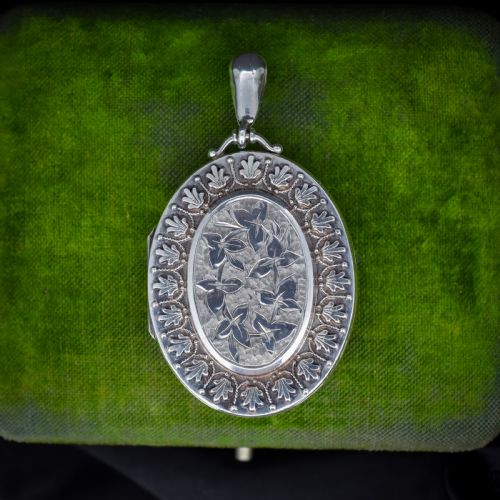
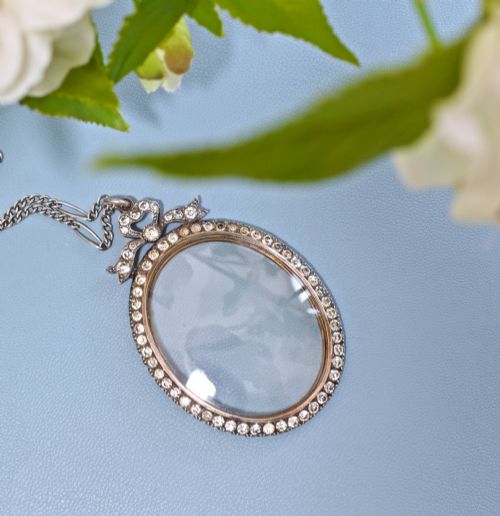
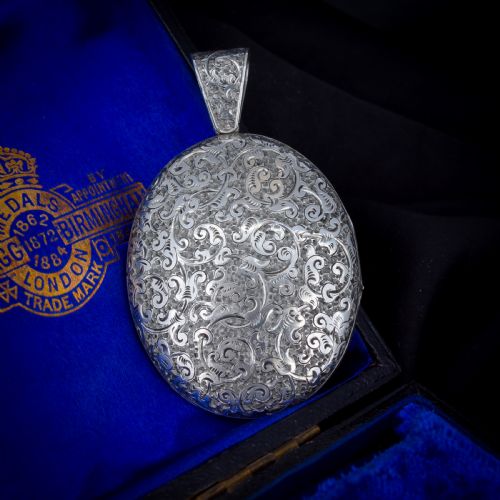
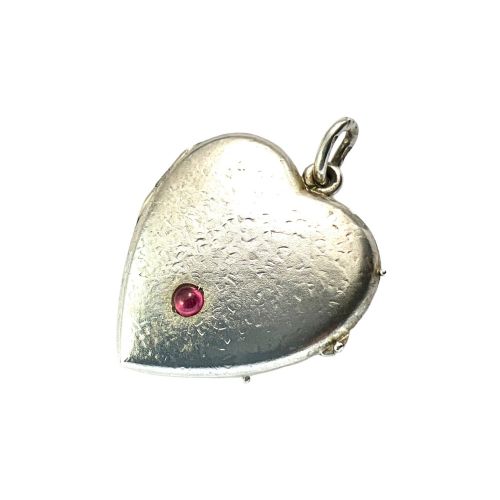
A sterling silver photo locket is a hinged pendant designed to hold a small photograph or keepsake, most frequently encountered here in Victorian and Edwardian iterations. The selection spans oval, heart, and crucifix forms, alongside rarer hybrids such as vesta case combinations and miniature photo frames. Engraving dominates the surface work, ranging from geometric Aesthetic Period motifs to naturalistic ivy, flower, and swallow designs.
Most examples hail from the nineteenth century, including specific dates such as eighteen-eighty-seven, eighteen-ninety, and eighteen-ninety-eight. Buyers will encounter both standalone pendant lockets and those paired with matching silver chains. The pieces function simultaneously as wearable jewellery and portable portrait galleries.
How they were made
Makers fashioned these pieces from sterling silver, occasionally incorporating gold, paste, gemstones, seed pearls, and glass for decorative contrast. Surfaces were hand-engraved with floral and avian subjects, or worked into intricate wirework filigree patterns.
Hinges and snap closures were engineered to secure the internal photograph frames safely behind glass. Hallmarking stamps applied by assay offices, such as Birmingham, certified the metal standard.
Some Victorians carried matches and portraits simultaneously in combination vesta case lockets.
What varies in quality
Quality rests upon the crispness of the hand-engraving and the structural integrity of the delicate hinge mechanism. Pieces that retain their original glass inserts and internal photograph bezels stand apart from those stripped of their fittings.
The choice of materials introduces further distinction, particularly where gold highlights, seed pearls, or paste stones elevate plain silver work. Heavier solid silver examples and those bearing clear hallmarks demonstrate superior original manufacture.
Minshull and Latimer
The Sterling Silver Photo Locket Glossary
- Sterling silver
- A silver alloy containing ninety-two point five percent pure silver by mass, providing the durable foundation for these lockets.
- Aesthetic Movement
- A late nineteenth-century design style focusing on visual beauty rather than narrative meaning, visible in swallow and geometric engravings.
- Vesta case
- A small pocket box for matches, occasionally combined with a photo frame or locket function in Victorian hybrids.
- Paste
- Hand-cut glass used to imitate gemstones, set into Edwardian pieces for sparkle without precious stones.
- Filigree
- Delicate jewellery work formed from fine twisted silver threads soldered together into intricate openwork patterns.
Sterling Silver Photo Locket: Frequently Asked Questions
How do I open an antique locket?
Most pieces feature a tiny thumbnail notch on the side edge. Press your fingernail gently into the slot while pulling the halves apart.
Avoid forcing the hinge, as antique silver can bend under uneven pressure.
Can I put modern photos inside?
Yes, though you will need to trim modern paper prints to fit the exact interior shape. Use a small template cut from paper to test the dimensions first.
Old lockets rarely use standard photo sizes, requiring careful manual cutting.
Are these lockets heavy to wear?
Weight varies considerably across the selection, from light filigree pendants to substantial solid silver pieces weighing over twenty grams. Larger Victorian examples make a distinct statement on the chest.
Check the listed weight if you prefer a lighter daily pendant.
How do I date an unmarked locket?
Examine the decorative motifs, such as swallows or ivy, which align with specific nineteenth-century design periods. The style of engraving and the shape of the suspension loop often provide clues.
Birmingham hallmarked pieces offer precise date letters when stamps remain legible.