
Sterling Silver Fob Chain
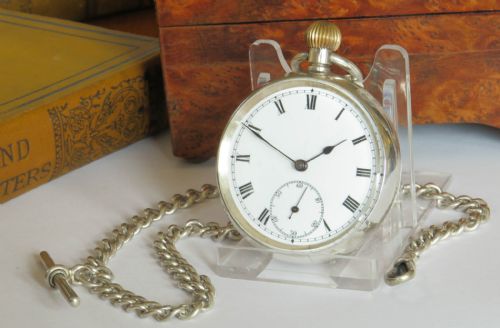
A sterling silver fob chain is a sturdy link length once worn to secure a pocket watch, prized today for its craftsmanship and historical weight.
Sterling Silver Fob Chain
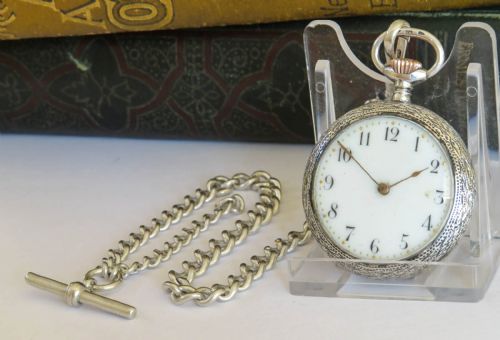
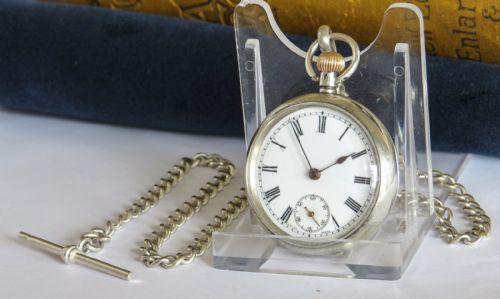
A sterling silver fob chain functions primarily as a wearable piece of history originating from the Victorian, Edwardian, and Art Deco periods. Buyers search for these items to wear as necklaces or bracelets, or to pair with traditional timepieces.
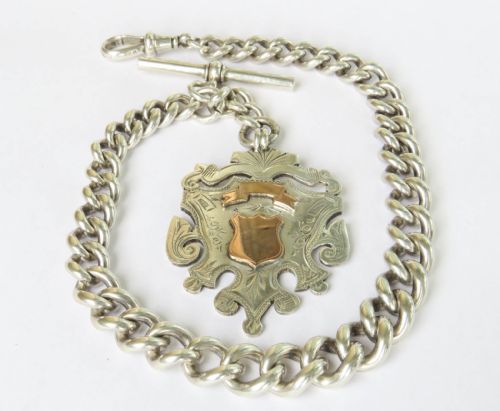
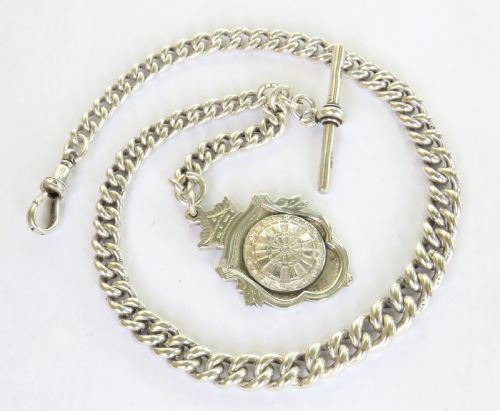
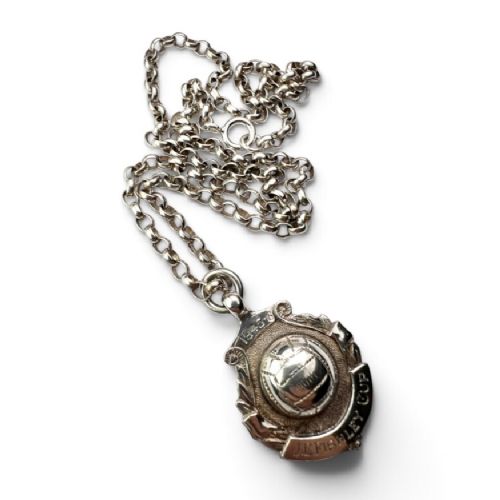
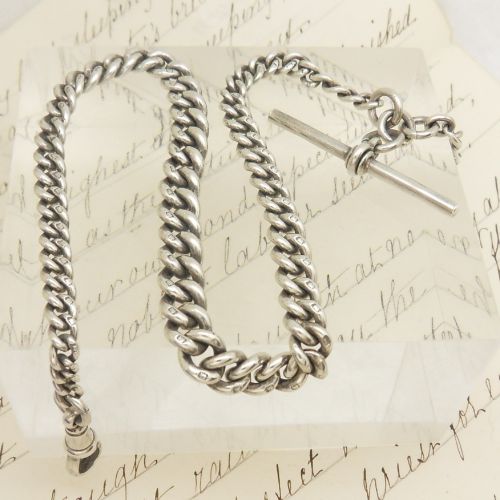
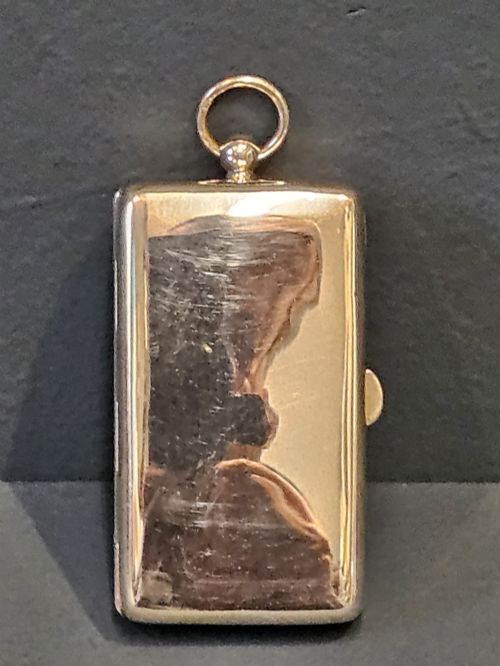
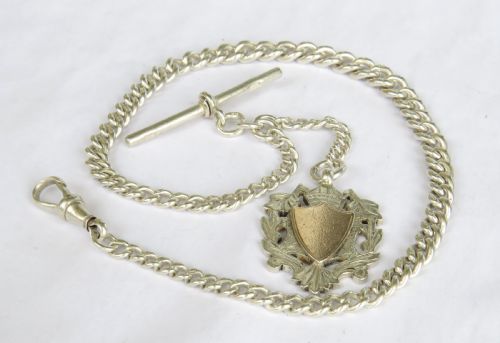
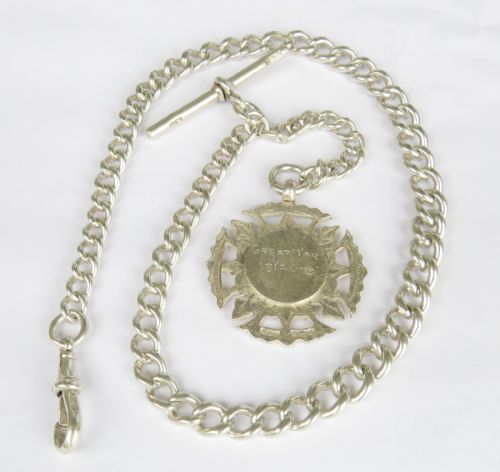
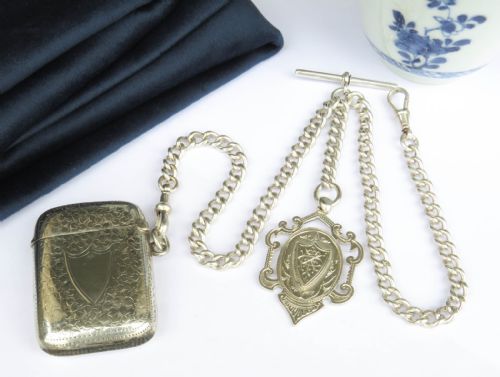
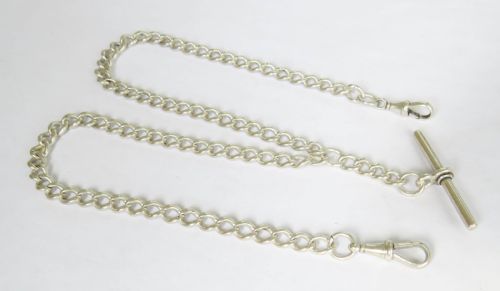
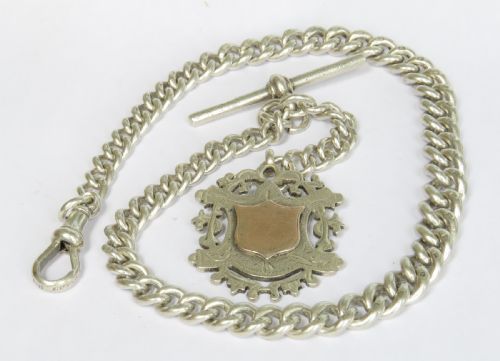
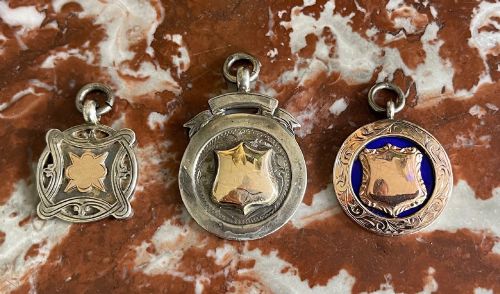
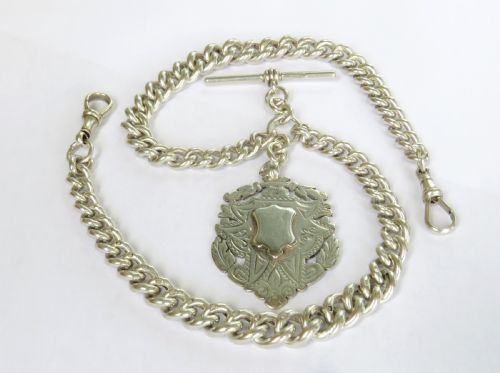
The most common versions met on this page are double and single albert chains equipped with T-bars and dog clips. Many include associated pendants such as shield fobs, football medals, and vesta cases from various British Assay offices.
Manufacturing and Materials
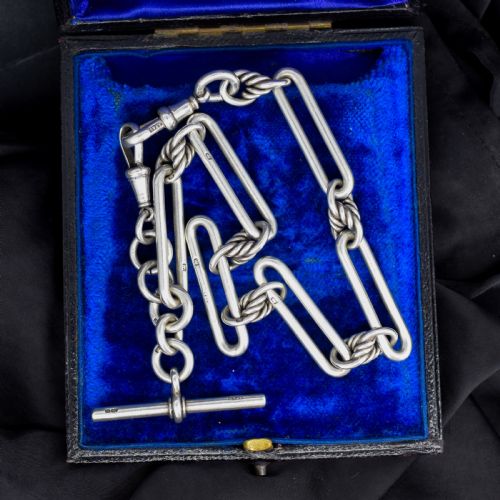
Items in this category are fashioned predominantly from solid sterling silver, occasionally accented with rose gold details, gold accents, or glass components. Individual links - whether curb, trombone, or figaro - are formed by hand or early industrial machinery before being assembled into flexible lengths.
Makers integrated functional components like swivel dog clips, T-bars, and spring rings into the design. Decorative elements such as enamel shields and engraved stamp cases were frequently attached to the central drop.
Materials extend beyond plain sterling silver to include rose gold accents, coloured enamel, and glass striker boxes.
Assessing Quality and Construction
Quality rests heavily on the weight of the silver and the crispness of the hallmarks stamped on individual links and T-bars. Substantial, heavy-duty chains demonstrate superior durability and metal content compared to lighter variants.
The degree of preservation in specialised links, love knots, and attached fobs dictates overall desirability. Pieces retaining clear engraved dates, intact enamel, and original swivel clasps hold greater integrity.
Crisford & Norris
The Sterling Silver Fob Chain Glossary
- T-bar
- The crossbar attached to the centre of a watch chain, used to secure the chain through a waistcoat buttonhole. It is frequently stamped with silver hallmarks.
- Dog clip
- A spring-loaded swivel clasp attached to the end of a watch chain for securing a pocket watch or pendant. The swivel mechanism prevents the chain from twisting during wear.
- Vesta case
- A small matchbox, often made of sterling silver and decorated with engravings, designed to be carried on a watch chain. These cases kept matches dry and accessible.
- Fob
- An ornamental medallion, seal, or stamp case suspended from a short drop chain attached to the main watch chain. They often commemorate sports clubs, societies, or personal milestones.
Sterling Silver Fob Chain: Frequently Asked Questions
How do I wear a fob chain today?
Many buyers wear these chains as necklaces or bracelets by clasping the ends together or utilising the dog clips. They adapt well to modern necklines while retaining their historical character.
Heavier double albert chains provide a substantial look when worn doubled around the neck or draped across clothing as originally intended.
How do I read the hallmarks?
British silver hallmarks typically include a maker's mark, a standard mark such as the lion passant indicating sterling silver, an assay office mark, and a date letter. These stamps verify the year and location of manufacture.
Individual links, T-bars, and fobs are often marked separately. Finding matching hallmarks across multiple components indicates an original, cohesive set.
What were fobs originally used for?
Fobs served practical and decorative functions, ranging from wax seals for correspondence to lockets containing hair. They acted as personal identifiers and markers of achievement.
Many fobs on these chains commemorate sporting victories, such as football matches, or feature inscribed dates from the late Victorian and Edwardian eras.