

Sterling Silver Cream
These sterling silver cream jugs and milk vessels are domestic table accessories designed to serve dairy with tea and coffee.
Sterling Silver Cream
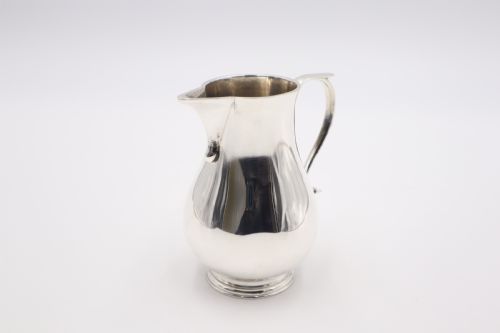
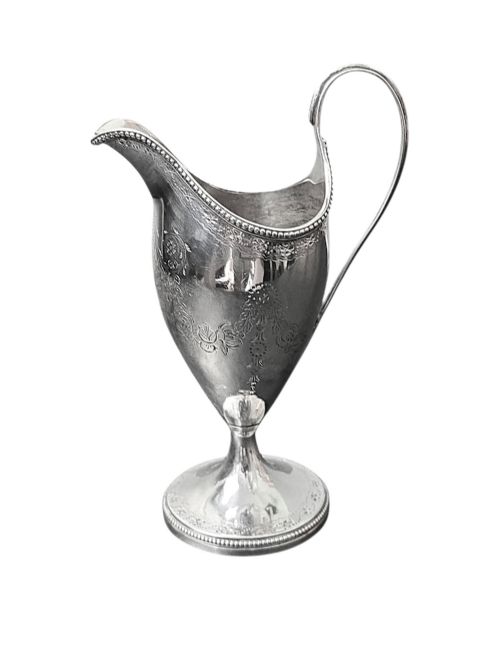
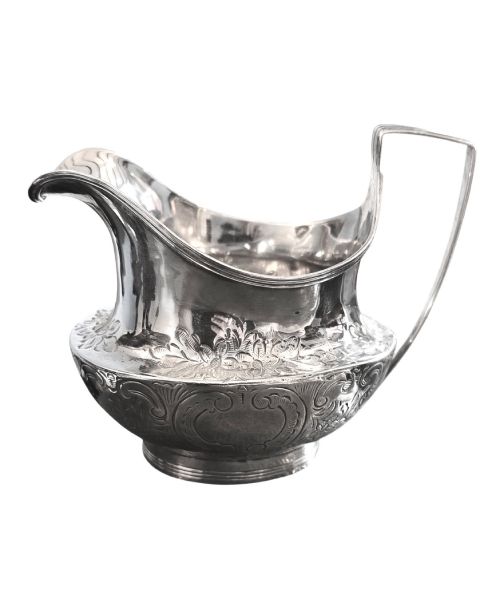
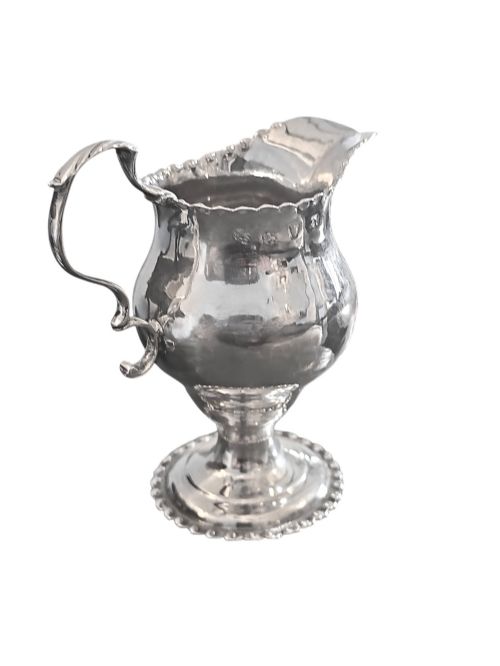
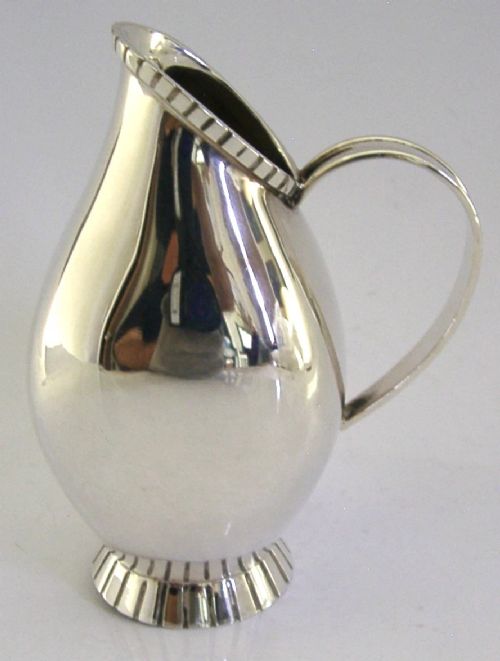
When you search for sterling silver cream, you find holloware vessels intended for pouring dairy at the tea table. The most frequent forms on this page are handled cream jugs and milk jugs originating in the Georgian and Victorian periods.
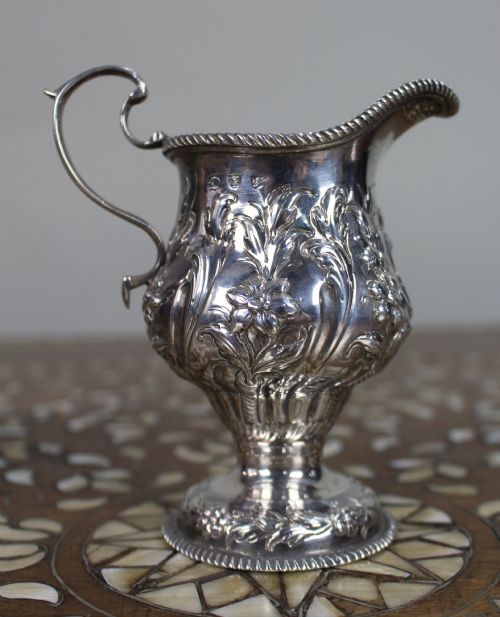
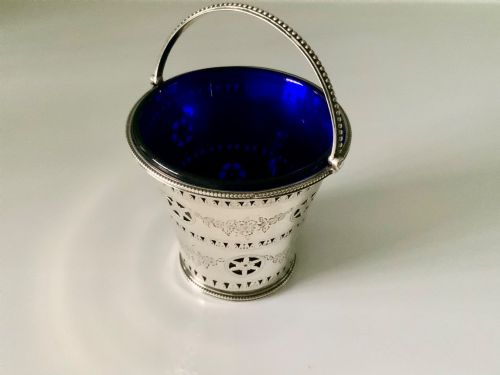
Makers shaped these utilitarian containers in distinct regional styles, ranging from helmet profiles to pedestal ewers and open pails. Examples span the eighteenth century through the Edwardian era, showing domestic evolution in tableware.
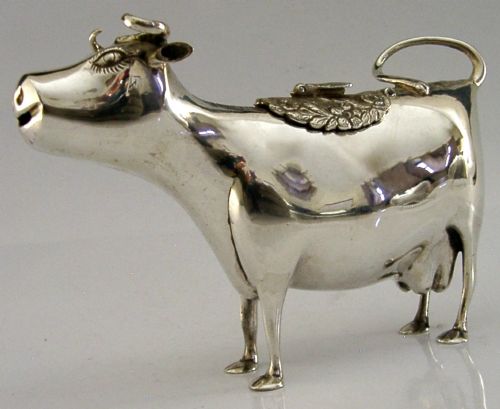
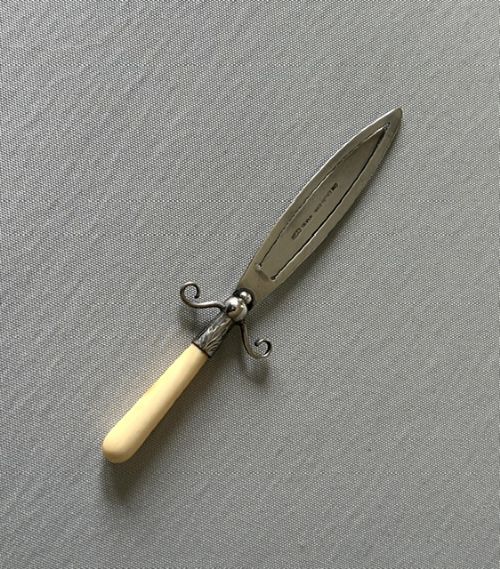
Alongside standard jugs, the selection includes related accessories like cream ladles, milk jugs and creamers, alongside occasional novelty forms such as cow creamers.
Materials and technique
Silversmiths formed these vessels primarily from sterling silver, shaping sheet metal through raising and hammering techniques. Certain iterations incorporate applied components like cast handles, feet, and intricate rims.
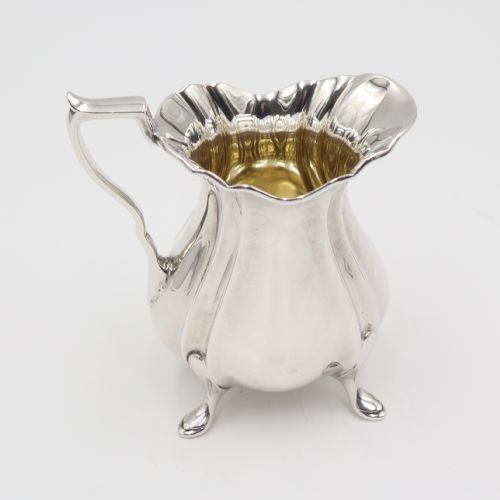
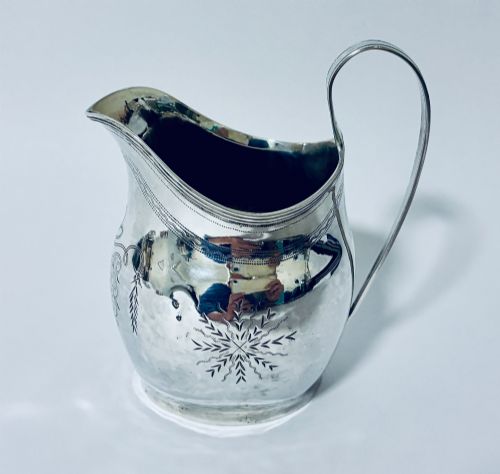
Surface decoration relies on hand engraving, bright cutting, and piercing, particularly visible on eighteenth-century pails and helmet jugs. Interior surfaces occasionally feature gilt finishes, known as silver-gilt, applied to protect the silver from dairy acids.
Sterling Silver Cream Retail Price Guide 2026
Typical asking prices for sterling silver cream among the pieces listed under this phrase on Sellingantiques today, from the lower quarter to the upper quarter. They describe what is for sale here now, not the wider market.
A cow-shaped creamer from around nineteen hundred offers a whimsical domestic pouring experience.
Judging quality in silver cream vessels
Quality rests upon the weight of the metal and the crispness of the silversmith's hand shaping. Heavier gauge silver provides structural rigidity and prevents distortion at the rim and handle junction.
The finesse of the chasing, piercing, and engraving distinguishes standard production from superior workshop output. Well-executed pieces display sharp, clean lines in bright-cut patterns and securely fitted handles without visible solder bleed.
George Burrows·Nathaniel Appleton & Ann Smith·Stalker & Mitchison·Aldridge & Green·James Gordon·John Emes·Peter & Ann Bateman·John Rawlings·George Unite
The Sterling Silver Cream Glossary
- Helmet jug
- A cream jug shaped with a flared lip and foot resembling a classical helmet, common in the Georgian period.
- Silver-gilt
- Sterling silver that has been coated with a thin layer of gold on the interior or exterior surfaces.
- Bright cut
- An engraving technique using faceted cuts to create reflective, geometric patterns across the silver surface.
- Sparrow beak
- An early eighteenth-century form of small cream jug featuring a distinctive short, pinched spout.
- Cream pail
- An open cylindrical or bucket-formed vessel, often featuring pierced sides and a swing handle.
Sterling Silver Cream: Frequently Asked Questions
How do I identify a Georgian cream jug?
Georgian cream jugs display period-specific forms such as sparrow beak bodies, helmet profiles, or bright-cut engraving. Hallmarks stamped on the exterior or base provide the definitive assay office and date letter.
Examine the handle construction and foot form, as Georgian silversmiths utilised cast elements soldered to hand-raised bodies rather than modern machine stamping.
What is a silver-gilt interior?
A silver-gilt interior is a gold wash applied over the sterling silver inside the jug. Silversmiths added this layer to prevent the lactic acid in cream and milk from tarnishing or reacting with the silver.
This treatment appears frequently on eighteenth and nineteenth-century tableware designed for daily domestic use.
Were these jugs used only for cream?
While primarily termed cream jugs or milk jugs, these vessels served various pouring functions at the tea table. Their capacity accommodated milk or cream depending on household preferences during tea service.
Some larger forms double as milk jugs, whereas smaller sparrow beak examples suit concentrated cream.
How should I clean antique silver cream jugs?
Clean antique silver using a non-abrasive silver polish and a soft cloth to preserve the original hallmarks and surface detail. Avoid harsh dips that strip patination and damage the highlights of engraved decoration.
Wash the piece gently in warm soapy water afterwards and dry thoroughly with a lint-free cloth.