

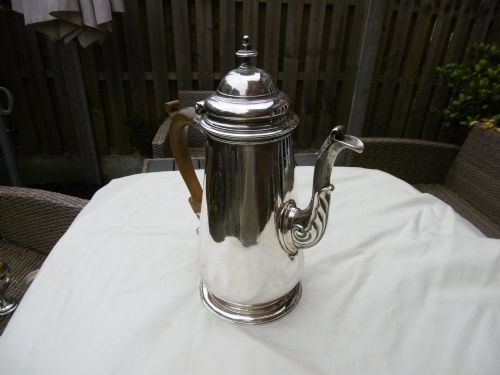


Sterling Silver Coffee
Sterling silver coffee pieces range from grand Georgian pots to boxed sets of twentieth-century spoons, bringing solid metalwork and historic utility to the table.
Sterling Silver Coffee
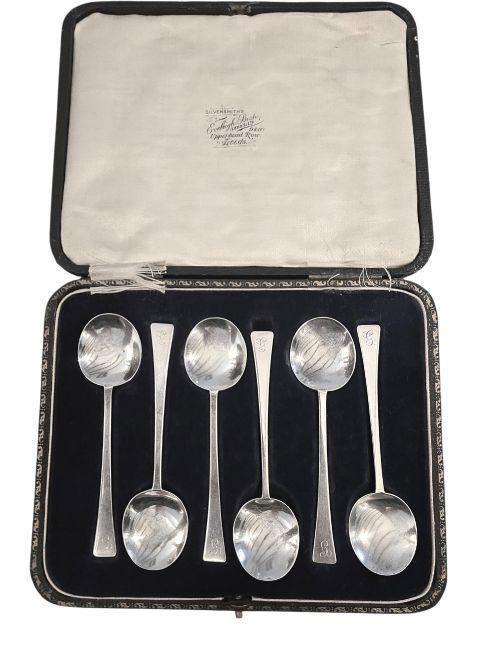
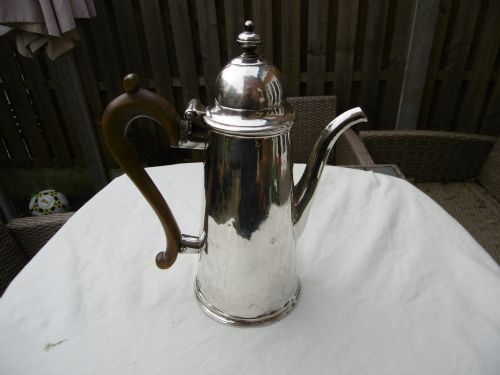
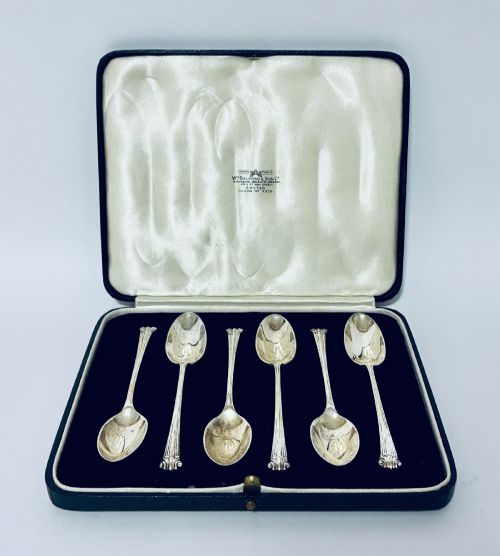
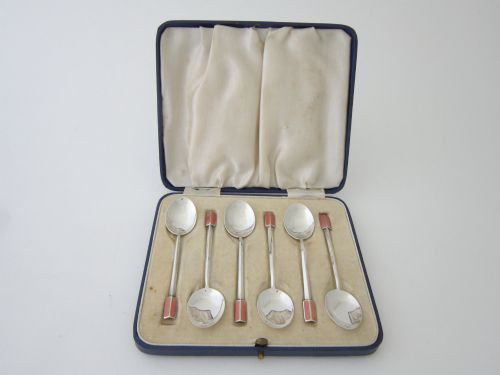
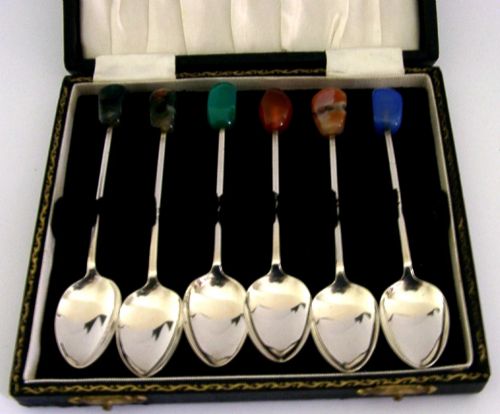
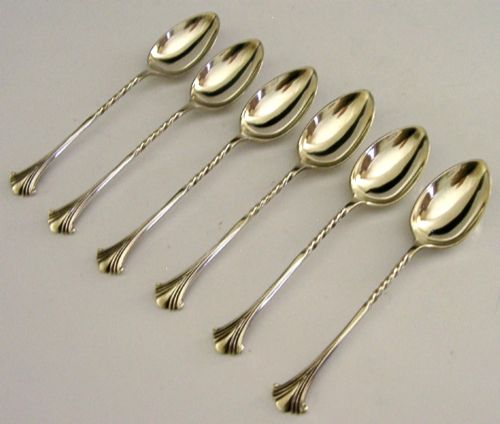
When you search for sterling silver coffee, you encounter a mix of large hollowware vessels and small matching sets designed for serving hot drinks. The selection includes tall pots from the eighteenth and nineteenth centuries alongside cased sets of spoons from the Edwardian and Art Deco eras.
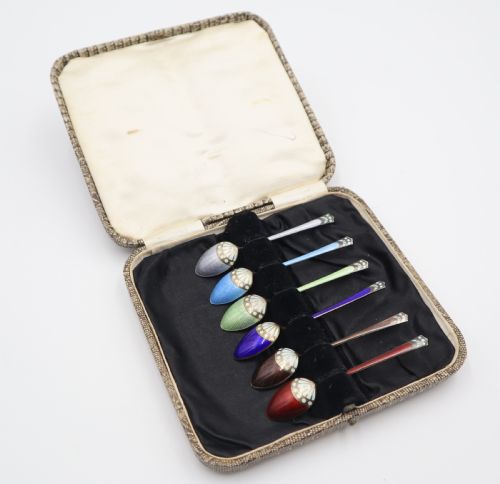
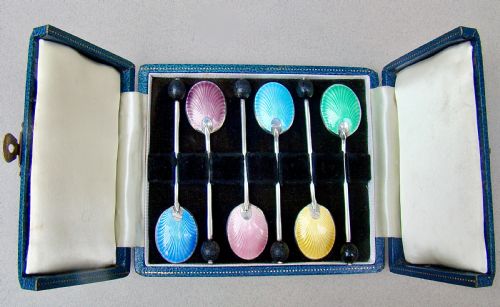
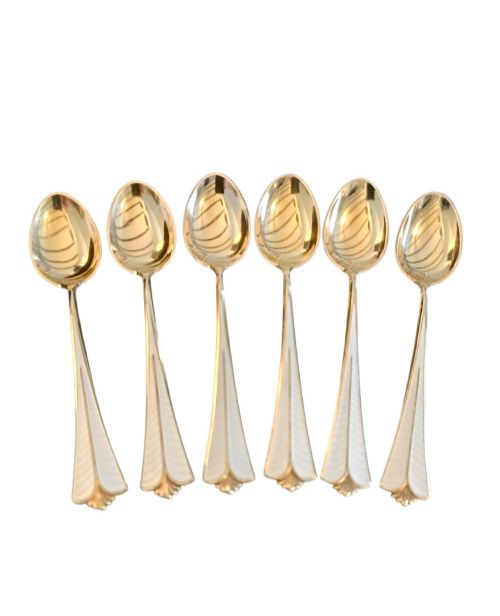
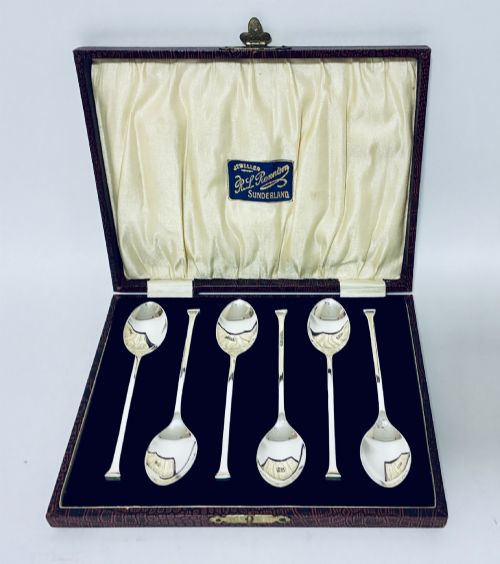
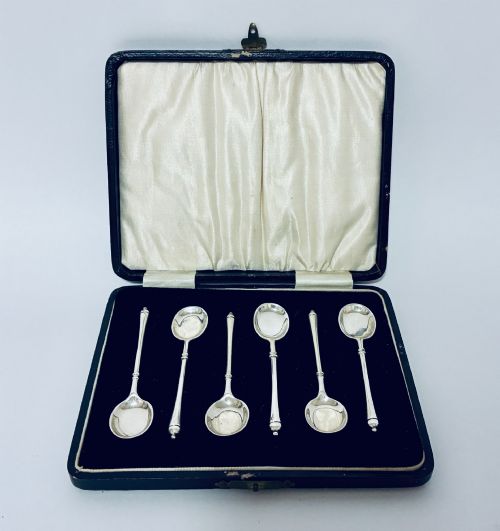
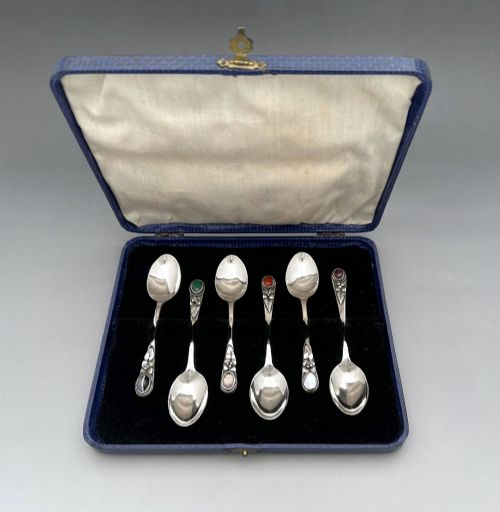
The material forms span standard coffee pots, side-handled chocolate pots, biggins on stands, and various spoon sets including coffee bean and guilloche enamel designs. These objects reflect domestic rituals across Georgian, Victorian, and mid-century periods.
You will most frequently meet boxed sets of spoons alongside substantial pots bearing hallmarks from London, Birmingham, Sheffield, and international makers like Georg Jensen or David Andersen.
How they were made
Silversmiths utilised sterling silver alongside materials such as wood for insulating handles, velvet and satin linings in presentation cases, and applied enamel for coloured decoration. Many spoons feature gilt finishes or semi-precious stones set into the metal.
Hollowware pots were typically raised from sheet metal or cast in sections before being soldered and finished with hand-engraved or chased details. Spoons and smaller implements were cast, stamped, and hand-finished with specific knops or decorative terminals.
Sterling Silver Coffee Retail Price Guide 2026
Typical asking prices for sterling silver coffee among the pieces listed under this phrase on Sellingantiques today, from the lower quarter to the upper quarter. They describe what is for sale here now, not the wider market.
Listings feature sterling silver objects spanning the Georgian era through the mid-twentieth century, incorporating wood, enamel, and semi-precious stones.
What varies in quality
The distinction between ordinary production and superior work lies in the crispness of the hallmarks, the weight of the silver, and the finesse of any applied enamel or stone setting. Heavier hollowware exhibits balanced proportions and securely fitted insulating elements.
Cased spoon sets demonstrate quality through the intactness of the original presentation box, matching assay marks across all items, and the precision of decorative guilloche work or hand-painting on the enamel surfaces.
Richard Gurney·Edward Power·Joseph Craddock·Harrison Brothers & Howson·Paul Storr·Evald Nielsen·Walker and Hall·Robert Stebbings
The Sterling Silver Coffee Glossary
- Biggin
- A tall coffee pot fitted with a removable internal wire basket or bag for holding coffee grounds during brewing.
- Guilloche
- A decorative mechanical technique whereby intricate geometric patterns are engraved beneath translucent enamel.
- Knop
- A decorative knob or swelling protuberance on the handle or terminal of a spoon.
- Hollowware
- Tableware items such as pots, jugs, and vessels created by raising or shaping sheet metal.
- Demi-tasse
- A small cup used for serving strong black coffee, accompanied by appropriately proportioned spoons.
Sterling Silver Coffee: Frequently Asked Questions
What is a coffee biggin?
A coffee biggin is a tall pot designed specifically for brewing coffee using an internal fabric bag or wire mesh basket.
These pieces often stand on dedicated metal frames with space underneath for a heating lamp or burner.
How do I identify a chocolate pot?
Chocolate pots frequently feature a side handle placed at a ninety-degree angle to the spout rather than the rear handle typical of tea or coffee pots.
They also often include a small removable lid at the top of the main cover to accommodate a stirring stick.
Are enamel spoons fragile?
Enamel spoons require careful handling because the fused glass surface can chip or crack if dropped against hard surfaces.
Keeping them in their original fitted boxes helps protect the delicate guilloche work and coloured decoration from impact.
How do I date silver items?
British silver incorporates formal hallmarks that include a date letter indicating the specific year the piece was assayed and tested.
Additional marks show the manufacturer's stamp and the standard of purity for the sterling silver.