




Sterling Silver Buttons
Sterling silver buttons are decorative fastening pieces prized for their intricate metalwork and historical charm.
Sterling silver buttons
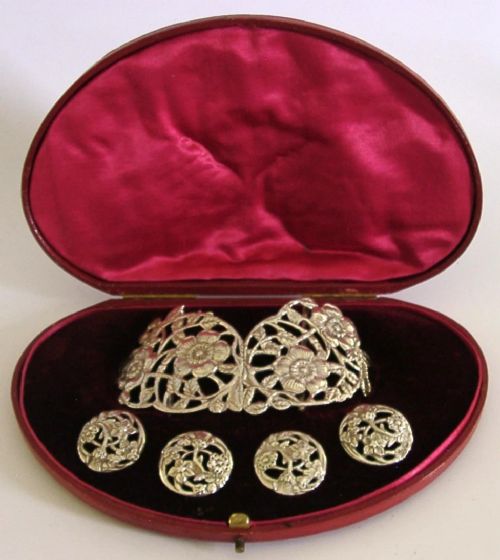
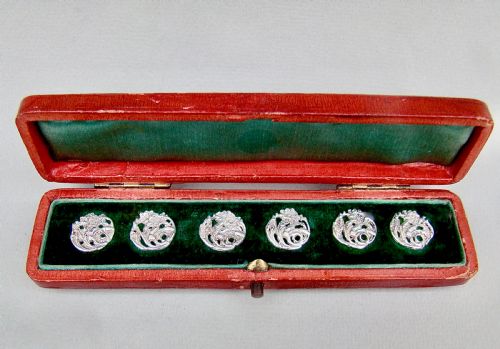
Sterling silver buttons appear primarily as cased sets featuring figural, floral, or geometric motifs from the turn of the twentieth century. Common forms depict mythological figures, maidens, angels, and botanical subjects including iris, poppy, and water lily designs.
The pieces on this page span the Edwardian period and the late Victorian era, with specific production dates clustering around nineteen hundred. Most examples originate from English assay offices and arrive accompanied by their original fitted presentation boxes lined with velvet, silk, or leatherette.
Collectors encounter these items arranged in matching sets of six or eight pieces, intended originally for ladies' garments and waistbands. Individual pieces and larger groupings also surface, capturing the decorative spirit of the Art Nouveau movement alongside classical themes.
Materials and technique
Production techniques combined casting with detailed surface chasing and repoussé work, allowing makers to achieve high relief on small button surfaces. Finished pieces received hallmarks from English assay offices, stamping sterling standards directly onto the metal.
Retail Price Guide 2026
Typical UK retail prices for sterling silver buttons, calculated from the Sellingantiques database of over a million retail prices indexed since 2003. This retail price guide relies exclusively on Sellingantiques data; no external sources or auction records are used, so the figures do not describe the wider market.
Listings feature solid sterling silver buttons incorporating Edwardian and Art Nouveau styles, frequently accompanied by velvet or silk lined presentation cases.
Standards of execution
The preservation of original coloured enamel and the survival of matching fitted presentation cases influence the desirability of a set. Complete cased groupings with intact linings retain a higher degree of their original period context.
James Deakin & Sons
The Sterling Silver Buttons Glossary
- Sterling silver
- An alloy comprising ninety-two point five percent silver and seven point five percent other metals, typically copper. This standard composition provides the durability required for detailed button manufacture.
- Repoussé
- A metalworking technique where the smith hammers the metal from the reverse side to form a raised design in relief. It allows for expressive three-dimensional imagery on small objects.
- Art Nouveau
- An international style of art and design that flourished between eighteen ninety and the First World War. Characterised by organic forms, fluid lines, and stylized floral motifs.
- Hallmark
- A official mark stamped onto precious metals to indicate the standard of purity and the assay office of origin. English pieces frequently display date letters and maker's marks.
- Cased set
- A matching collection of items housed in a custom-fitted presentation box lined with materials such as velvet or silk. These boxes protect the pieces and indicate luxury manufacture.
Frequently Asked Questions
What were sterling silver buttons used for?
These pieces served as functional and ornamental fasteners on fashionable garments, bodices, and waistcoats during the late Victorian and Edwardian eras. Wealthy wearers utilised matched sets to elevate the appearance of formal attire.
Many sets were sold as gifts in presentation boxes, reflecting their status as luxury accessories rather than everyday utility items.
How do I date sterling silver buttons?
Dating relies upon the hallmarks stamped into the silver, which indicate the assay office and the specific year of testing. English pieces from this era frequently carry date letters corresponding to the turn of the twentieth century.
Stylistic indicators also help, as distinct Art Nouveau designs and classical figural motifs align closely with production trends between eighteen ninety and nineteen ten.
How should I store cased button sets?
Keep the pieces inside their original fitted presentation boxes to protect the delicate silver relief and any applied enamel work from friction. Store them in a dry environment away from direct sunlight to prevent tarnishing and degradation of the internal silk or velvet linings.
Avoid harsh chemical cleaning agents that can strip the natural patina and damage vulnerable enamel surfaces.
Are these buttons meant for modern wear?
While structurally robust, most collectors preserve these antique pieces as display items or mount them in frames rather than subjecting them to daily garment use. The original shank mechanisms on the reverse remain intact on many examples.
Attaching them to modern clothing requires care to avoid stressing the delicate silver shanks or losing components from a matched set.