


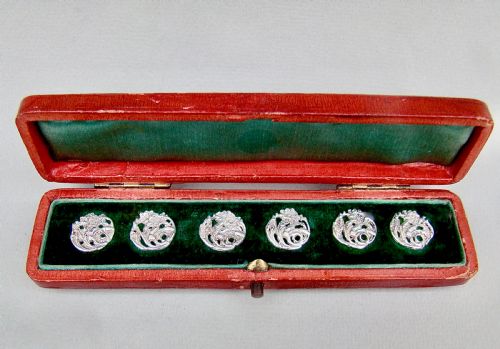


Silver Dress Buttons
Silver dress buttons are small fastenings made for garments, offering a flash of polished metal or enamel from the Victorian era onwards.
Silver Dress Buttons
Silver dress buttons appear in sets designed for formal attire or as single items mounted on cards and in fitted cases. The pieces on this page span the Victorian, Edwardian, and Art Deco periods, encompassing individual fasteners alongside matched boxed sets.
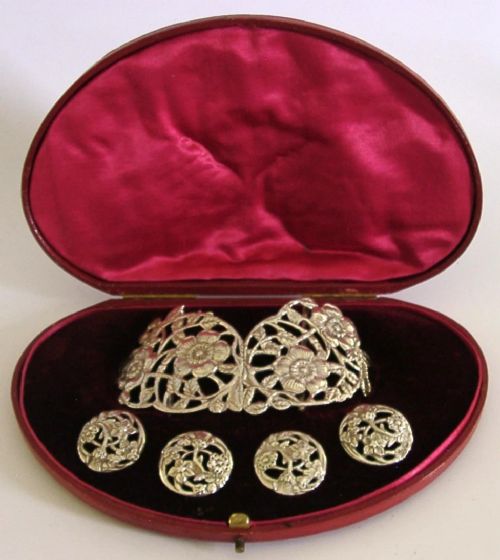
Most examples you encounter here belong to the Edwardian period or the late Victorian decades, often shaped as floral motifs, shamrocks, or geometric forms. Makers also produced complementary pieces such as button hooks, belt buckles, and cufflinks alongside the buttons themselves.
Maltese and modernist designs sit alongside traditional cast silver work, reflecting varied regional tastes across the nineteenth and twentieth centuries. Buyers find both loose buttons and complete sets housed in original velvet or leatherette presentation boxes.
How they were made
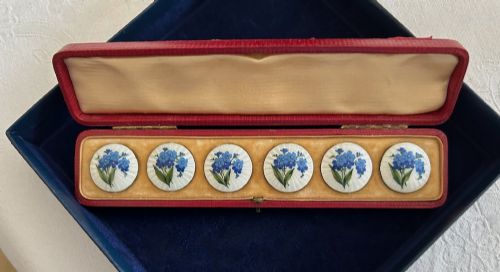
Silversmiths utilised sterling silver and lower-grade silver alloys, casting and stamping the metal to form the domed or flat button faces. Many pieces incorporate vitreous enamel in colours such as blue or green, fused to the silver base by heat.
Makers applied surface decoration through hand-chasing, engraving, and casting, sometimes combining silver with steel or mounting components on silk and velvet backings. Boxed sets typically feature satin and velvet linings tailored to hold each button securely in place.
Object forms include toggle buttons, cuff links, belt buckles, and matching button hooks housed in velvet-lined cases.
What varies in quality
Quality depends upon the crispness of the cast detail and the preservation of the original surface finish, whether bright polished or oxidised. Sets that retain their original fitted leatherette or velvet cases command greater interest than loose components.
The presence of undamaged enamel work and clear hallmarks indicating maker, town, and date elevates a piece. Cast silver items with deep relief and sharp contours represent the finer end of production compared to lighter, stamped alternatives.
James Deakin And Sons
The Silver Dress Buttons Glossary
- Sterling silver
- An alloy of silver containing 92.5 percent pure silver and 7.5 percent other metals, usually copper. This standard composition is frequently stamped with hallmarks on British items.
- Enamel
- A glassy substance fused to the surface of metal through firing for decoration and colour. It appears on numerous Edwardian and Art Deco button faces.
- Hallmark
- An official mark stamped on precious metals indicating the standard of purity, the assay office, and the year of manufacture. Chester and other cities recorded silver production through these stamps.
- Cast silver
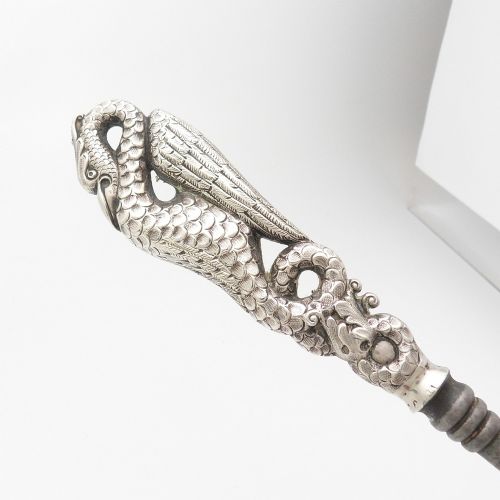
- Metal poured into a mould to shape three-dimensional designs such as floral motifs or animal figures. This method creates heavier and more tactile buttons than stamping from sheet metal.
- Button hook
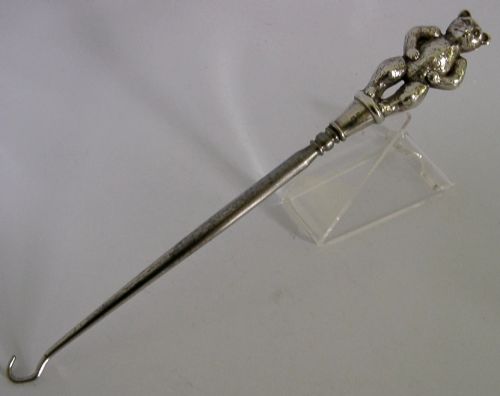
- A long-handled tool with a small hook at the end, used for fastening tight boots and garments with fabric loops. Examples in silver often match the design of the accompanying buttons.
Silver Dress Buttons: Frequently Asked Questions
How were silver dress buttons used?
Silver dress buttons functioned as decorative fastenings on cuffs, collars, and formal garments during the Victorian and Edwardian eras. They were often sewn onto removable panels or directly onto clothing for special occasions.
Complete sets were designed to match uniformly across a bodice or vest. Owners kept these sets in fitted boxes when not adorning garments to prevent loss or tarnish.
How do I care for antique silver buttons?
Antique silver benefits from gentle dusting with a soft cloth to remove surface grime without damaging the delicate metalwork. Avoid abrasive dips that strip away patination or harm enamel insets.
Store pieces in dry conditions away from direct sunlight, particularly items mounted on original silk or velvet backings. Acid-free tissue paper helps protect cased sets while in storage.
Are these buttons meant to be worn?
Many collectors wear silver dress buttons on contemporary garments by attaching them securely or mounting them on removable bars. Their sturdy sterling silver construction makes them suitable for careful occasional use.
Enamelled or cased sets are frequently preserved purely as display objects or collector items rather than attached to clothing. The fragile nature of old enamel requires extra caution if chosen for daily wear.
How do I distinguish Edwardian buttons from Victorian ones?
Edwardian silver buttons often display lighter Art Nouveau curves, floral garlands, and brighter enamel work typical of the early twentieth century. Victorian pieces tend toward heavier cast motifs, Gothic influences, and deep relief work.
Hallmarks provide the most reliable dating method, showing specific assay letters for the year of manufacture. Stylistic shifts from ornate Victorian designs to simpler modernist lines also help separate the periods.