

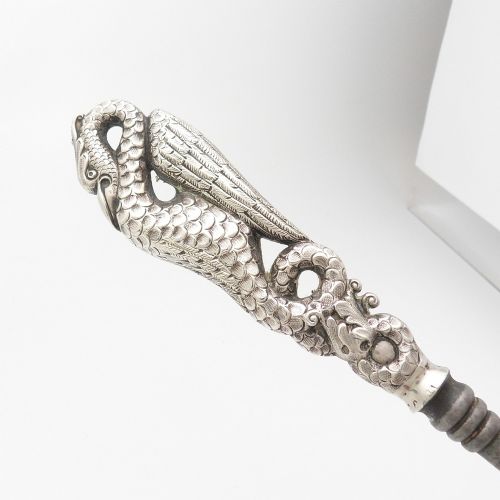


Victorian Silver Buttons
Victorian silver buttons are small fastening accessories from the nineteenth century cast in solid silver, offering collectors ornate figural and botanical metalwork.
Victorian Silver Buttons
Victorian silver buttons encompass individual pieces and matched boxed sets dating from the nineteenth century, including specific designs such as cherubs, Roman goddesses, and shamrocks. These items frequently appear as cased sets of multiple buttons intended for period garments.
The evidence shows these buttons span the Victorian and Edwardian periods, reflecting the late nineteenth-century preference for decorative fastening. Buyers encounter both individual cast pieces and complete cased sets preserved from the era.
How they were made
These pieces are manufactured primarily through metal casting using sterling silver or solid silver, creating three-dimensional motifs like winged creatures and classical figures. The technique allows for sharp relief work on the face of each button.
Makers utilised solid silver and sterling silver standards, occasionally pairing the metal with velvet backing or presenting them in fitted boxes. The construction focuses on durability while maintaining intricate surface detail.
Roman goddesses and cherubs stare out from buttons smaller than a thumbprint, proving the Victorians wanted their waistcoats guarded by Olympus.
What varies in quality
The completeness of a matched set influences distinction, with original boxed sets of multiple buttons representing a more cohesive survival than scattered individual items. Preserved uniformity across all pieces in a set demonstrates greater initial care and desirability.
The Victorian Silver Buttons Glossary
- Cast silver
- Silver shaped by pouring molten metal into a mould. This technique permits intricate figural and decorative designs to be rendered in high relief.
- Sterling silver
- A silver alloy containing ninety-two point five percent pure silver by mass. It provides the standard durable material for quality nineteenth-century smallwares.
- Cased set
- A matched group of items housed in a fitted presentation box. Such packaging indicates items originally retailed together for formal dress.
- Toggle buttons
- Fasteners secured by passing a bar through a loop rather than a standard hole. They appear in nineteenth-century Maltese silver examples.
- Victorian
- The period of Queen Victoria's reign from eighteen thirty-seven to nineteen oh one. Items from this era reflect distinct historical revival styles.
Victorian Silver Buttons: Frequently Asked Questions
How were Victorian silver buttons used?
These pieces served as functional garment fastenings on cuffs, collars, and waistcoats during the nineteenth century. They were frequently manufactured in matched sets to secure formal wear.
Over time, many surviving sets transitioned into collector's cabinets or were preserved in their original presentation boxes rather than remaining on clothing.
How do I know if a set is complete?
Original cased sets usually feature fitted slots within the box matching the exact count of the enclosed buttons. Comparing the individual motifs helps confirm uniformity across the group.
Sets found in original packaging offer the clearest indication of an intact original grouping.
What motifs appear on these buttons?
Common decorative themes include figural subjects such as cherubs and Roman goddesses, alongside botanical designs like shamrocks. Winged creatures and classical figures reflect the Victorian taste for narrative metalwork.
Designs vary from simple cast patterns to detailed high-relief sculptural faces.
How do I care for silver buttons?
Maintenance involves gentle dusting and minimal intervention to preserve the original metal surface and any historic patina. Avoiding harsh chemical dips protects the fine cast details.
Storing pieces in dry conditions prevents tarnishing and protects any associated velvet or presentation boxes.