


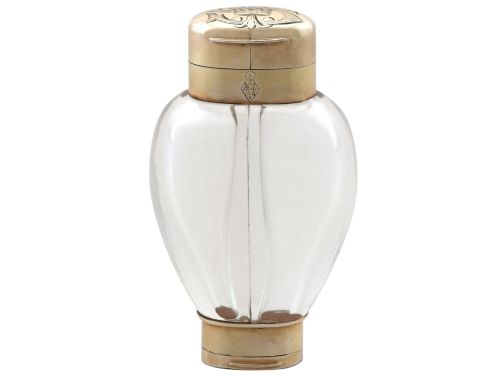
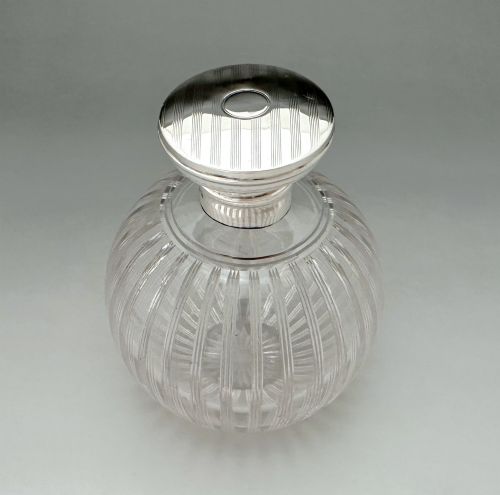
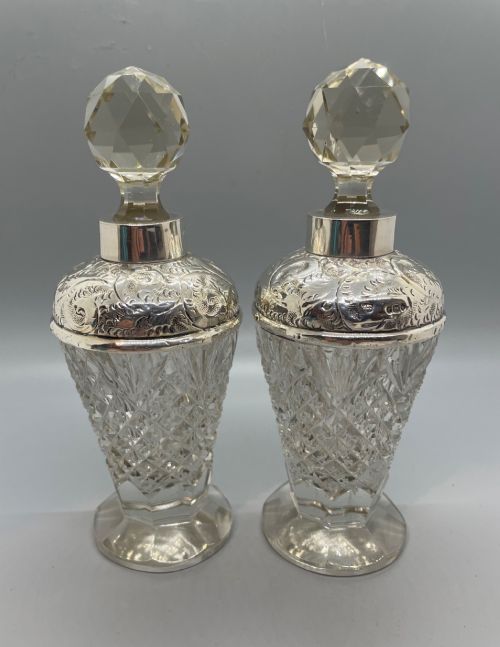
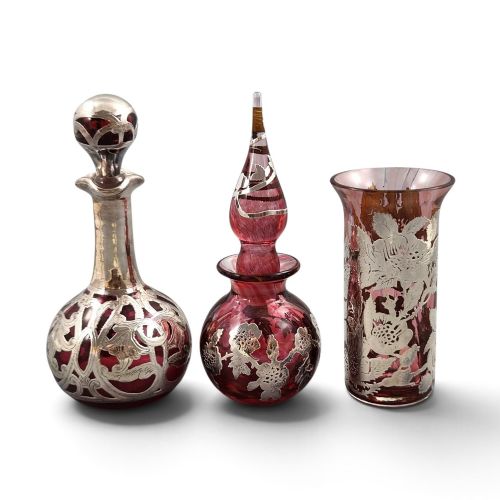
Sterling Scent Bottle
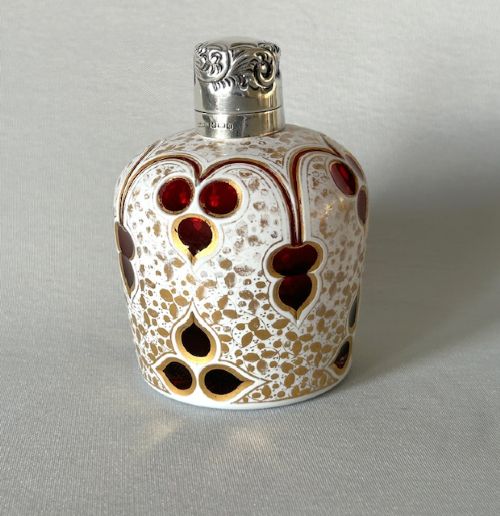
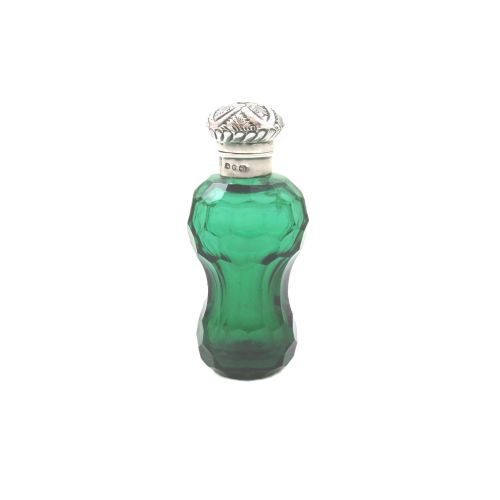
A sterling scent bottle delivers pocket-sized luxury from the Victorian, Edwardian, and Art Deco eras, combining precious silver with cut or coloured glass.
Sterling Scent Bottle
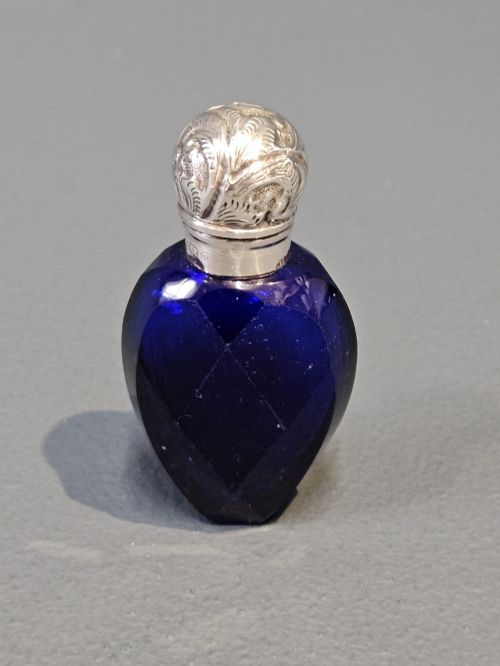
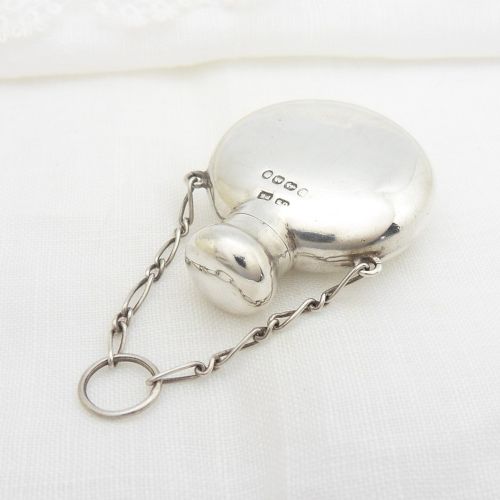
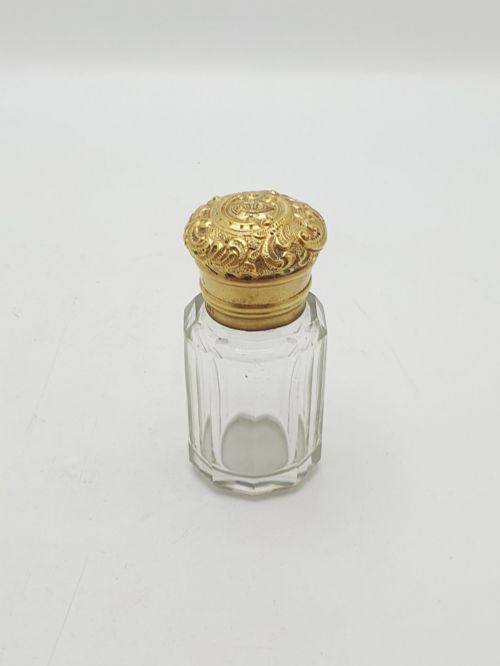
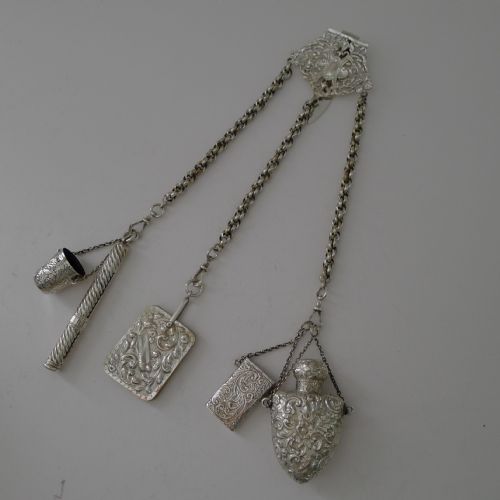
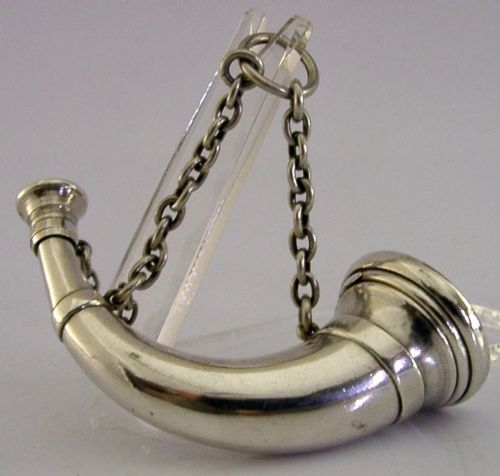
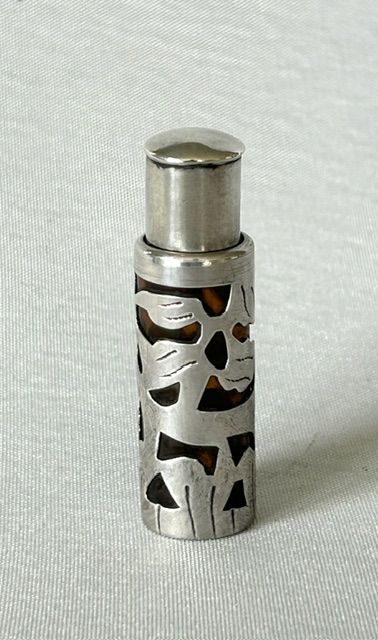
When you search for a sterling scent bottle, you encounter portable personal containers designed for perfume, cologne, or aromatic salts. The selection spans distinct forms, from miniature silver flasks and chatelaine accessories to cut glass vessels with substantial silver collars and lids.
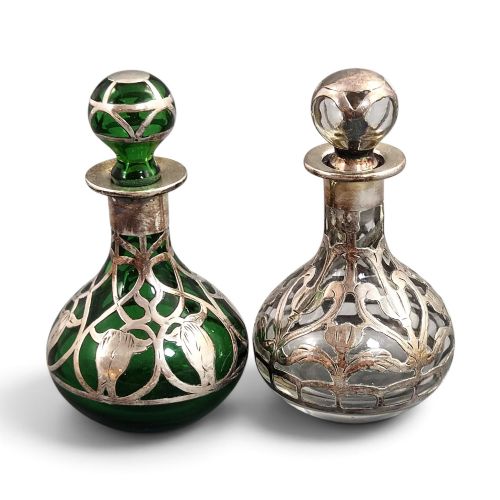
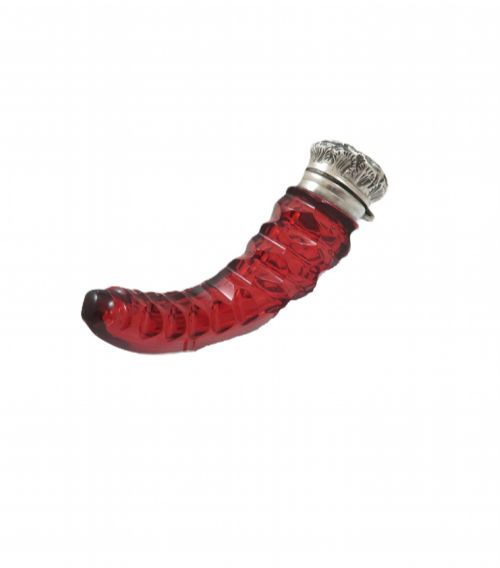
Victorian and Edwardian examples dominate the offerings, frequently rendered in ruby glass, green glass, or heavy lead crystal encased in intricate silver mounts. Pieces range from simple cylindrical pocket bottles to elaborate novelty shapes and paired sets intended for dressing tables.
How they were made
Silversmiths utilised stamping, chasing, and piercing techniques to create hinged lids, collars, and decorative silver overlays. Molten glass was blown into moulds or free-blown before being deeply cut, etched, or combined with coloured minerals like cobalt and cranberry glass.
Enamelling techniques, including guilloché work, added vibrant colour panels to silver caps during the early twentieth century. Internal glass stoppers were carefully ground to fit individual bottle necks, ensuring a tight seal for volatile perfumes.
Sterling Scent Bottle Retail Price Guide 2026
Typical asking prices for sterling scent bottle among the pieces listed under this phrase on Sellingantiques today, from the lower quarter to the upper quarter. They describe what is for sale here now, not the wider market.
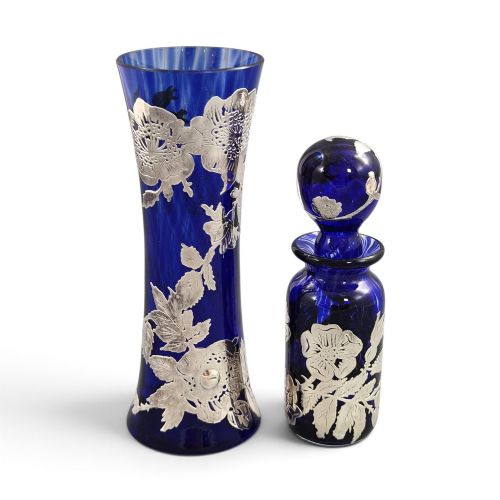
Listings feature multiple glass colours, including ruby, green, cobalt, cranberry, and opaline glass, paired with sterling silver mounts.
What varies in quality
The distinction between standard utility items and finer examples rests on the crispness of the silver maker marks, the weight of the metal, and the depth of hand-cutting on the glass body. Thicker silver gauge prevents denting, while clean, sharp facets on crystal catch light evenly.
Maker reputation elevates specific pieces, particularly those bearing the stamps of distinguished silversmiths or specialist container makers. The preservation of original internal stoppers and undamaged enamel panels further distinguishes superior survivals from ordinary ones.
William Comyns & Sons·Saunders & Shepherd·Gorham·Edward Smith·Henry Perkins·George Unite
The Sterling Scent Bottle Glossary
- Sterling silver
- A silver alloy containing 92.5 percent pure silver and 7.5 percent other metals, usually copper, ensuring structural durability for small containers.
- Vinaigrette
- A small ornamental box or bottle containing a perforated grille, originally holding a sponge soaked in aromatic vinegar.
- Chatelaine
- A decorative belt hook worn to suspend everyday household and personal accessories, including scent bottles and vinaigrettes.
- Guilloché
- A decorative technique where a precise, intricate pattern is mechanically engraved into a metal surface beneath translucent enamel.
- Silver-gilt
- Sterling silver that has been coated with a thin layer of gold, often applied to the interior necks of perfume bottles to prevent corrosion.
Sterling Scent Bottle: Frequently Asked Questions
Were these bottles meant to be carried?
Many smaller Victorian and Edwardian examples were designed specifically for pocket transport or suspension from a chatelaine belt. Heavy cut glass vanity bottles remained stationary on dressing tables and washstands.
Portable flasks typically feature secure screw caps or tightly fitted spring hinges to prevent leakage during travel.
How do I identify the period of a silver mount?
British hallmarking provides the most reliable date evidence, incorporating town marks, date letters, and the sterling lion passant. Stylistic cues such as Art Nouveau floral motifs or Art Deco geometric enamel work also point to specific decades.
Comparing the manufacturing technique of the glass body alongside the silver hallmarks helps confirm the production era.
Can I still use these bottles for perfume?
Most antique bottles function adequately for modern fragrance if the interior is thoroughly cleaned and the ground glass stopper remains intact. Old perfume residue should be dissolved gently with warm water and alcohol.
Check that internal seals or corks have not degraded into the bottle cavity before adding fresh liquid.