



Sterling Coffee Spoons
Sterling coffee spoons bring a distinct small scale and bright metal finish to the table, often arriving in fitted presentation boxes.
Sterling Coffee Spoons
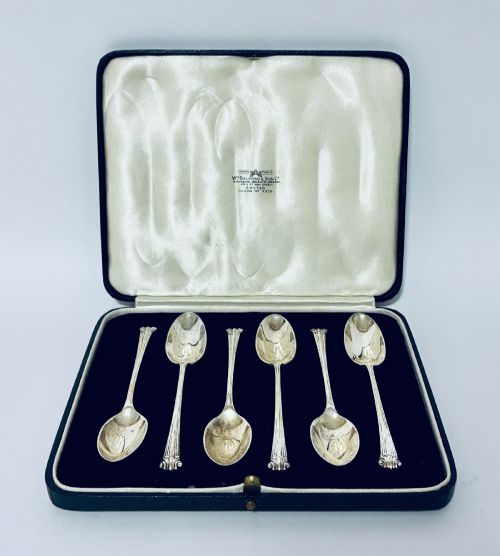
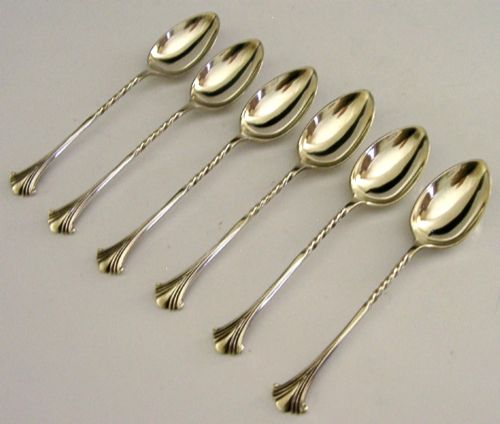
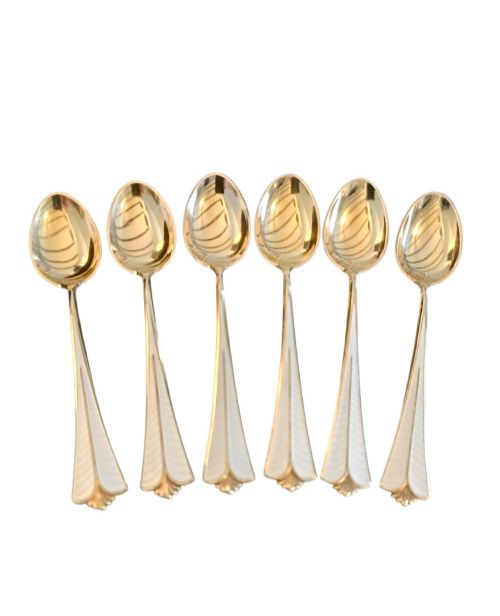
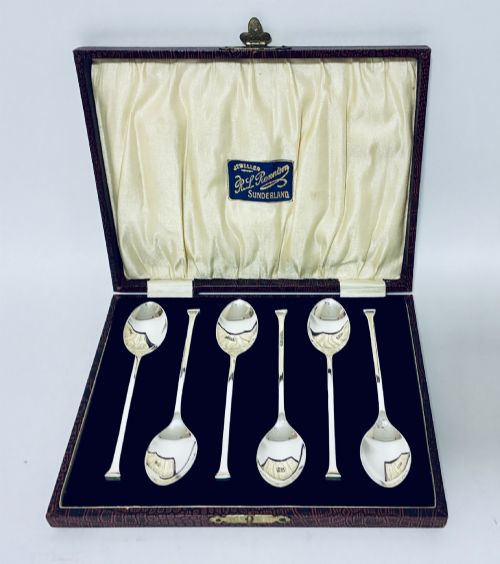
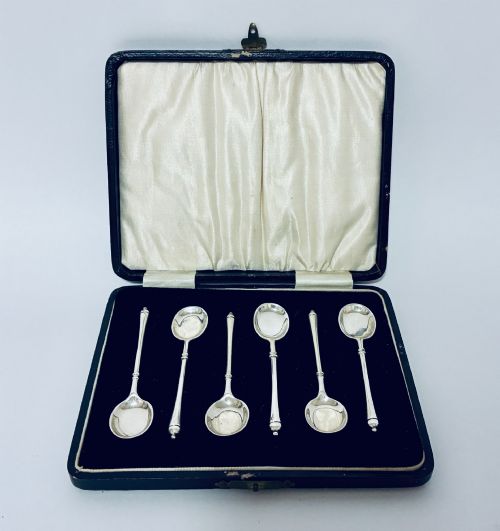
When you search for sterling coffee spoons, you encounter small-scale tableware designed specifically for demi-tasse cups after dinner. Most examples appear as sets housed within fitted cases lined with materials such as satin, silk, or velvet.
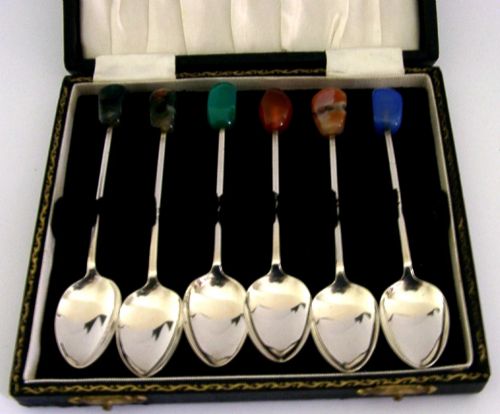
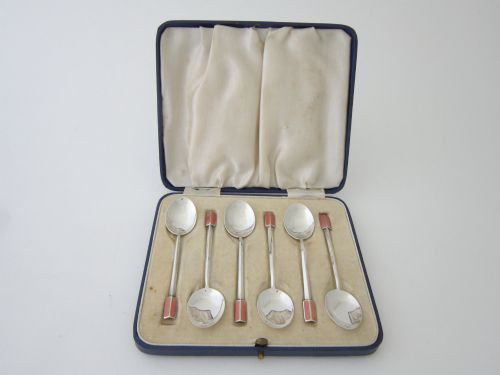
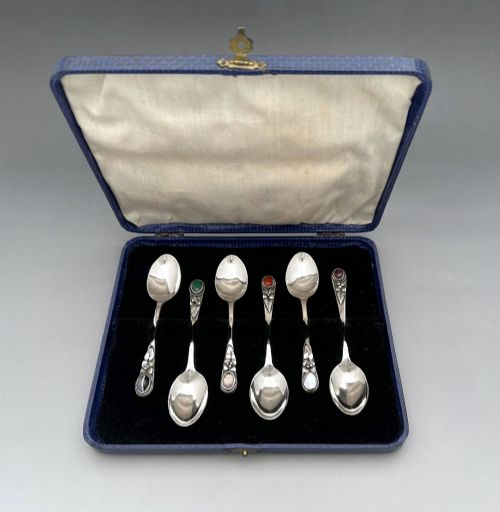
The selections available span periods from the Victorian era through the Edwardian years and into the Art Deco, Arts & Crafts, and Mid-Century Modern movements. Alongside plain sterling silver variants, many incorporate coloured enamel, semi-precious stones, agate, or gilt finishes.
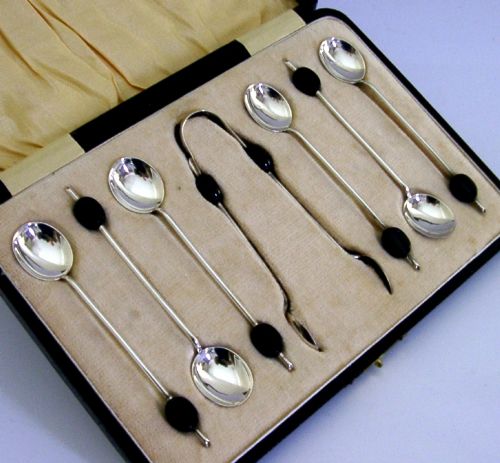
Makers and retailers represented across the pieces include established firms like Turner & Simpson, Walker and Hall, Cooper Brothers and Sons, Robert Stebbings, Liberty & Co, David Andersen, and Evald Nielsen. Forms range from simple bowls with bean knops to seal top designs and specialised bridge spoons.
Materials and construction
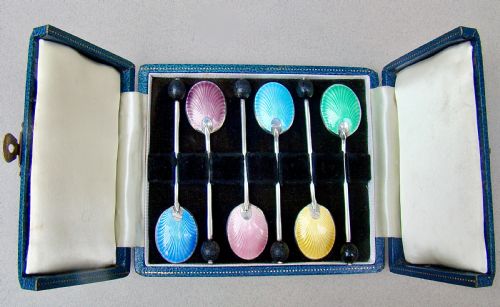
The pieces rely primarily on sterling silver and silver-gilt, shaped into diminutive bowls and slender stems. Many incorporate applied decorative elements such as guilloche enamel work in vivid colours.
Makers occasionally set semi-precious stones or agate into the terminals, or attach moulded Bakelite details for a modern contrast. Fitted presentation boxes often feature interior linings of velvet, satin, or silk to protect the metalwork.
Sterling Coffee Spoons Retail Price Guide 2026
Typical asking prices for sterling coffee spoons among the pieces listed under this phrase on Sellingantiques today, from the lower quarter to the upper quarter. They describe what is for sale here now, not the wider market.
The listings here feature sterling coffee spoons spanning from Victorian and Edwardian periods through Art Deco and Mid-Century Modern styles.
Distinctions in quality
Quality rests upon the crispness of the chasing, the precision of the hallmark stamping, and the integrity of any applied enamel or stonework. Complete, matching sets housed in their original fitted presentation cases command particular attention.
Turner and Simpson·David Andersen·Evald Nielsen·Walker and Hall·Liberty and Co·Robert Stebbings·Cooper Brothers and Sons
The Sterling Coffee Spoons Glossary
- Demi-tasse
- A small cup used for serving strong black coffee after a meal. Coffee spoons are scaled precisely to fit these compact vessels.
- Guilloche enamel
- Decorative metalwork coated with transparent enamel over an engine-turned background. This technique creates geometric patterns beneath the coloured surface.
- Bean knop
- A terminal shaped like a coffee bean, commonly found on the handles of twentieth-century coffee spoons. It forms a distinct botanical motif at the end of the stem.
- Silver-gilt
- Silver that has been coated with a thin layer of gold on its surface. This finish provides a warm, rich hue to the spoon bowl and stem.
- Seal top
- A spoon handle ending in a flat, circular disc resembling a signet seal. This traditional form harks back to earlier centuries of silver smithing.
Sterling Coffee Spoons: Frequently Asked Questions
What are sterling coffee spoons used for?
These small spoons serve after-dinner coffee in demi-tasse cups, primarily for stirring sugar or milk.
Their diminutive size distinguishes them from standard teaspoons, allowing them to rest comfortably beside smaller coffee cups.
How are cased spoon sets stored?
Many sets survive in their original fitted presentation boxes lined with velvet, satin, or silk.
Keeping the spoons inside these dedicated slots protects the sterling silver and any delicate enamel from surface scratches.
What styles do these spoons appear in?
The selections span Victorian, Edwardian, Art Nouveau, Arts & Crafts, and Art Deco designs.
Some pieces embrace clean Mid-Century Modern lines or incorporate colourful enamel and semi-precious stones.
How do you identify the maker?
Maker marks and town assay office stamps appear struck directly onto the reverse of the spoon stems or bowls.
These hallmarks indicate the specific workshop, such as Walker and Hall or Turner & Simpson, alongside the year of production.