

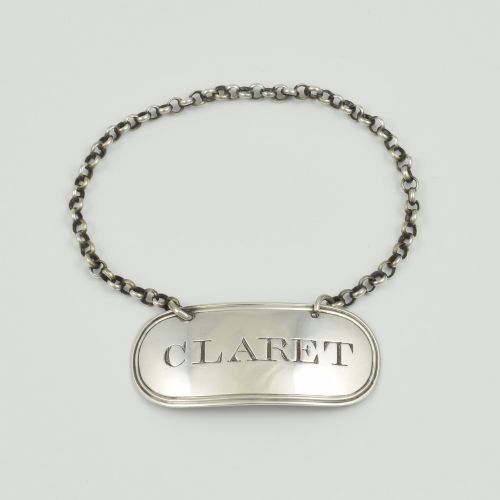
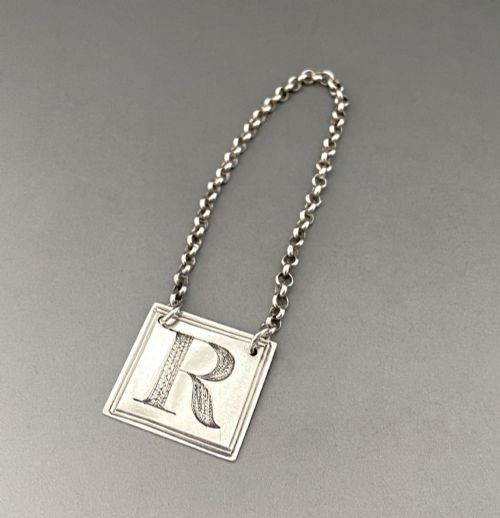
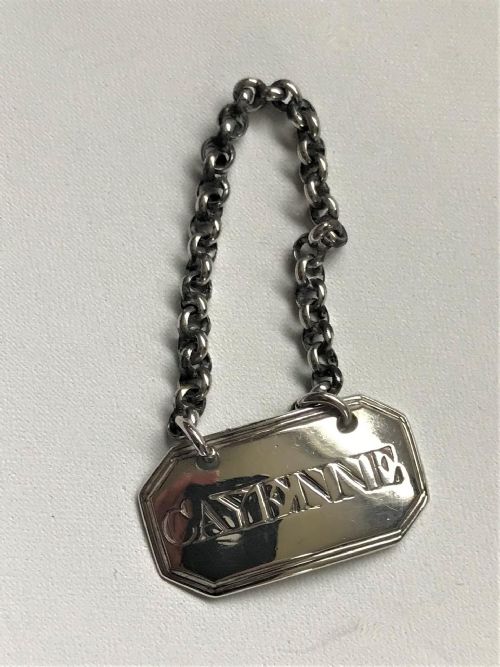


Sterling Bottle Label
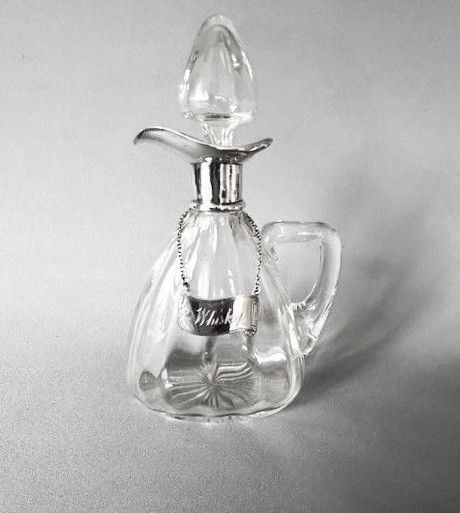
A sterling bottle label sits upon a decanter neck, identifying spirits and wines in silver.
Sterling Bottle Label
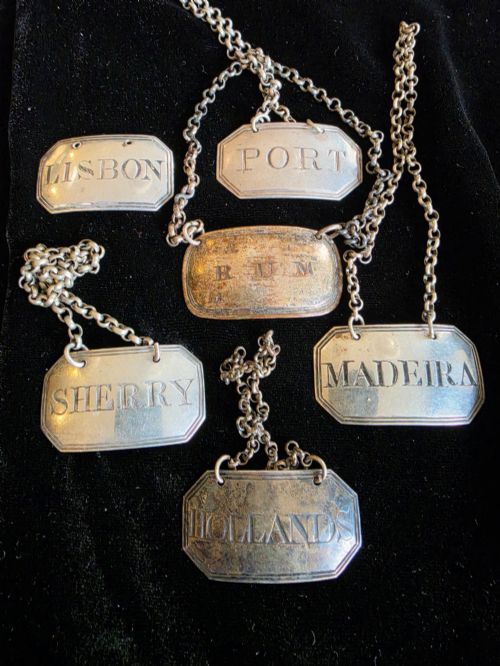
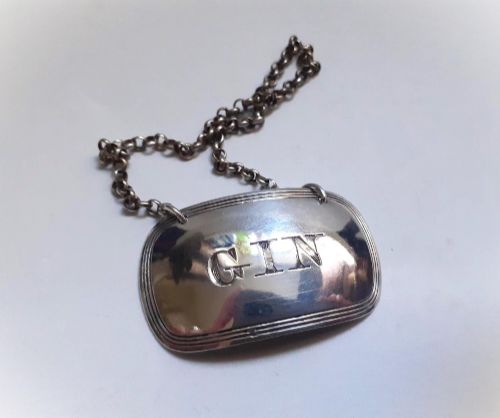
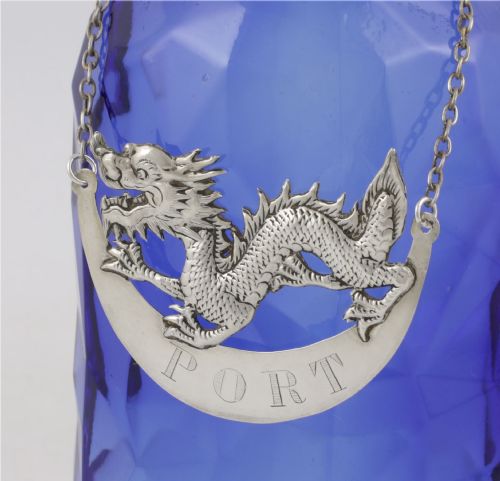
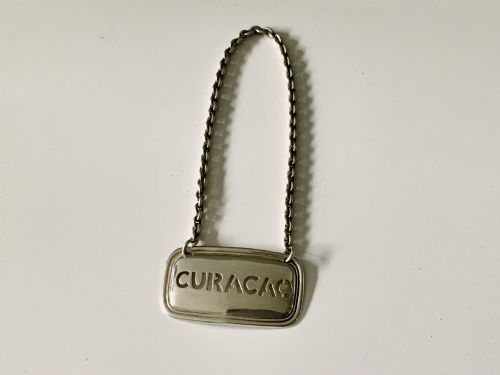
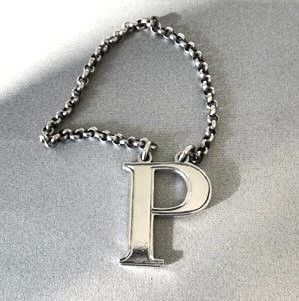
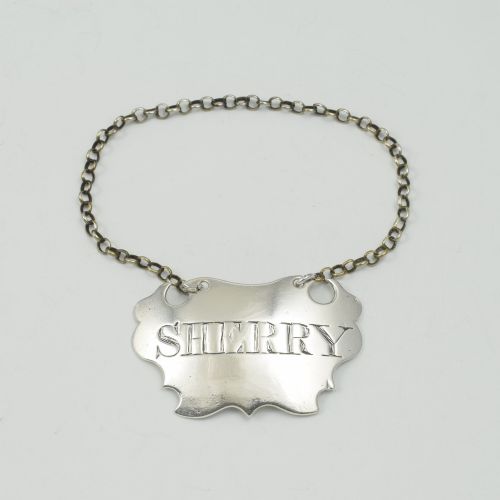
A sterling bottle label hangs by a chain around the neck of a decanter to name the spirit or wine held within. When you search for a sterling bottle label, you encounter small pierced or engraved tags bearing titles such as Sherry, Port, Claret, Madeira, Rum, Gin, Whisky, Brandy, and even Cayenne.
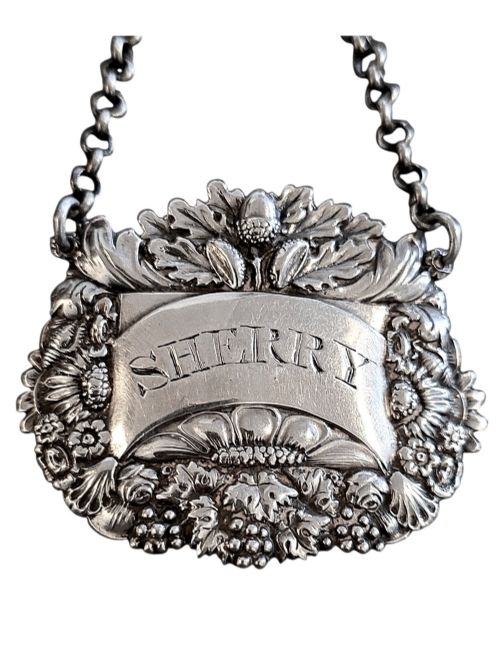
The pieces appearing on this page span the Georgian, Regency, William IV, Victorian, Edwardian, and mid-century periods. You meet escutcheon shapes, vine leaves, crescent plates, and rectangular plaques, originating from London, Edinburgh, Birmingham, and Chinese export workshops.
Georgian and Victorian examples dominate the selection, often produced by notable silversmiths working in traditional British styles. Alongside individual tags, you find matched sets of three designed for side-by-side decanters on a dining table.
How they were made
Silversmiths fashioned these items primarily from sterling silver and solid silver, employing sheet metal cutting, piercing, and chased decoration. Many incorporate silver chains for suspension around glass decanter necks.
Certain pieces introduce contrasting materials, pairing sterling silver with vitreous enamel for colour or mounting silver labels onto glass spirit jugs. Makers utilised punches to stamp town marks, date letters, and maker initials directly onto the metal surface.
Sterling Bottle Label Retail Price Guide 2026
Typical asking prices for sterling bottle label among the pieces listed under this phrase on Sellingantiques today, from the lower quarter to the upper quarter. They describe what is for sale here now, not the wider market.
Some nineteenth-century labels identify unusual contents like cayenne pepper, proving our ancestors liked their condiments locked in silver.
What varies in quality
Quality rests upon the crispness of the pierced lettering, the weight of the silver gauge, and the sophistication of the border ornamentation. Early hand-cut vine leaves and deeply chased escutcheons display greater artistic intent than later stamped alternatives.
The presence of clear hallmarks adds significant weight to a piece, confirming the maker and date of production. Matching sets that retain their original chains and retain legibility across multiple spirit titles represent the upper tier of the craft.
William Barrett II·Elizabeth Morley·John Reily·Thomas Wallis II·Peter and Anne Bateman·Mappin and Webb
The Sterling Bottle Label Glossary
- Escutcheon
- A shield-shaped plate used as a base for engraving or piercing titles on wine labels. This form is common in Georgian and Victorian examples.
- Bottle ticket
- An alternative historical term for a decanter label or wine tag. These items hang from chains around the necks of glass decanters.
- Hallmark
- A series of official marks stamped into silver indicating the maker, assay office, and year of production. British pieces typically show a lion passant and town mark.
- Piercing
- A technique where metal is cut through to create openwork designs such as vines, grapes, or letters. It requires steady hand craftsmanship with a piercing saw.
- Chasing
- A method of hammering silver from the front to raise decorative surface patterns in relief without removing metal. This gives depth to fruit and leaf motifs.
Sterling Bottle Label: Frequently Asked Questions
What is a sterling bottle label?
A sterling bottle label is a small piece of silver suspended by a chain around the neck of a decanter. It serves to identify the specific wine or spirit contained inside.
These items have been produced in various decorative styles for centuries, ranging from plain rectangular tags to elaborate pierced vine leaves.
How were bottle labels used?
Hosts placed them around crystal decanters on the dining table so guests could identify the drink being poured without lifting the stopper.
They became particularly popular during the Georgian and Victorian eras when dining customs involved serving multiple wines throughout a meal.
How do I date a silver label?
You date a silver label by examining the hallmarks stamped onto the reverse or edge of the metal. These small symbols reveal the assay office, the year of manufacture, and the silversmith.
Stylistic details like chasing work and lettering styles also help narrow down the period of production.
Are these labels always found individually?
While many survive as single pieces, you also encounter matched sets of three or more designed to fit a trio of matching decanters. Sets often carry the same maker mark and date letter.
Finding a complete matching set with original chains is less common than finding lone examples.