


Stepped Emerald Ring
These stepped emerald rings are striking finger ornaments defined by geometric tiering, offering buyers an authentic piece of early-to-mid twentieth-century design.
Stepped Emerald Ring
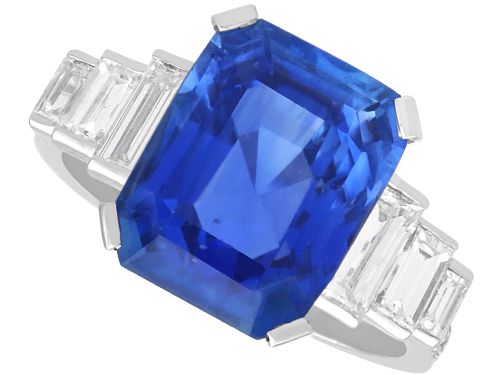
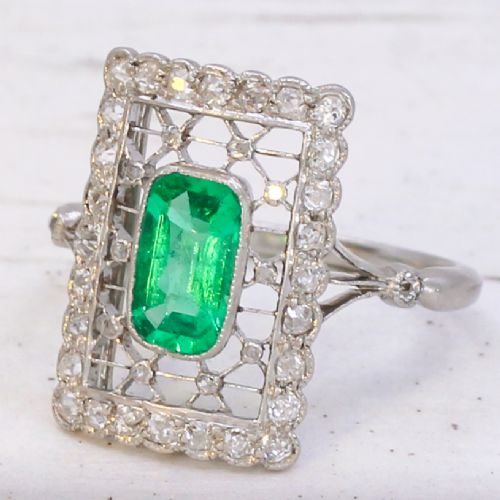
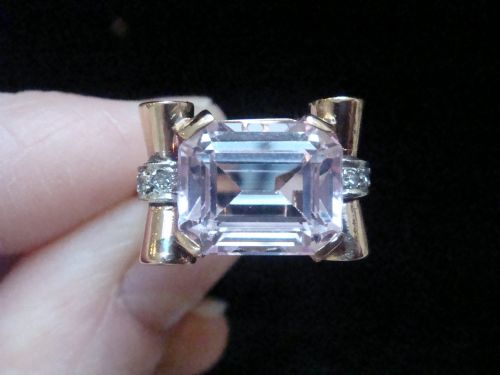
A stepped emerald ring typically presents a structured, geometric silhouette that reflects the prevailing design movements of the early twentieth century. When exploring this selection, buyers frequently encounter pieces originating from the Art Deco, Edwardian, and Retro Modern periods, spanning from the nineteen-tens through to the mid-century decades.
The physical form relies heavily on tiered mounting, often pairing a central emerald-cut stone with surrounding diamond accents in platinum or various gold settings. While emeralds remain a central focus, the inventory also showcases related gemstones such as kunzite, tanzanite, zircon, and diamond solitaires mounted in similar stepped or clustered configurations.
Materials and construction methods
Makers utilised durable precious metals including platinum, white gold, eighteen-carat gold, eighteen-carat yellow gold, and fourteen-carat white gold to build secure structural frameworks for these stones. These metals provided the necessary strength to support intricate geometric cluster arrangements and heavy diamond pavé or solitaire settings.
Goldsmiths combined traditional claw settings with precision channel and bezel work to achieve the characteristic stepped profiles seen in the period pieces. Natural emeralds and diamonds were carefully cut and arranged to maximise light play across the tiered metal planes.
The documented periods span from nineteen-ten through to nineteen-sixty, encompassing Edwardian, Art Deco, Retro Modern, and Mid-Century Modern styles.
Distinguishing quality across the range
The upper tier of these rings is distinguished by superior gemstone provenance, such as Colombian emeralds accompanied by specific oil treatment grading, matched with substantial diamond carat weights in heavy platinum mountings. These superior examples display meticulous metal fabrication and precise symmetry within their stepped architectural tiers.
Lower variations in the range typically feature simpler gold alloys or alternative centre stones like zircon and kunzite, alongside lighter metal weight and less complex stone configurations. The overall finish and the clarity of the primary gems dictate the standing of each piece within the broader spectrum.
The Stepped Emerald Ring Glossary
- Platinum
- A dense, strong, and corrosion-resistant precious metal frequently utilised in high-value twentieth-century jewellery settings. It holds small gemstones securely in fine, delicate claws without adding excessive weight.
- Art Deco
- A design style spanning the nineteen-twenties and nineteen-thirties characterised by geometric symmetry, clean lines, and stylised motifs. This aesthetic heavily influences the stepped architectural profiles of the rings.
- Emerald cut
- A rectangular or square gemstone cut featuring stepped facets and clipped corners designed to highlight the clarity of the material. It serves as the visual centrepiece for many tiered ring designs.
- Trilogy ring
- A ring featuring three primary gemstones set in a row, often symbolising the past, present, and future. These settings appear alongside single-stone solitaires and multi-stone clusters.
- Colombian emerald
- An emerald originating from the mines of Colombia, historically prized for its rich, saturated green colour and specific inclusion profile. These stones often command significant attention when documented with minimal oil treatment.
Stepped Emerald Ring: Frequently Asked Questions
What periods do these rings come from?
The pieces span several decades of the twentieth century, with examples originating from the Edwardian era, the nineteen-twenties, the nineteen-thirties, and the mid-century period.
Design characteristics shift visibly across these eras, moving from delicate Edwardian work to the bold geometric structures of Art Deco and the later styles of the nineteen-fifties and sixties.
Which metals are most common?
Platinum is frequently encountered, particularly among pieces from the Art Deco and Edwardian periods, valued for its strength in fine detail work.
White gold, yellow gold in eighteen-carat and fourteen-carat purity, and two-tone combinations also appear across the inventory to support various coloured stones and diamonds.
How do I care for an emerald ring?
Emeralds are a softer gemstone relative to diamonds and require gentle cleaning using warm water and a soft brush, avoiding harsh chemical ultrasonic cleaners.
Regular inspection of the settings helps ensure the stones remain secure within their platinum or gold mountings over years of wear.
Are all the emeralds natural?
The listings document natural emerald specimens, with specific examples noting Colombian origin and varying degrees of oil treatment.
Documentation often details the specific geological nature and enhancement level of the central green stone for prospective buyers.