





Stencilled Trunk
A stencilled antique trunk brings utilitarian history into a modern room, offering robust storage built for travel.
Stencilled Trunk
A stencilled antique trunk serves as a practical storage box that displays original painted lettering, numbers, or decorative motifs from its working life. These pieces primarily date from the nineteenth century through the early twentieth century, encompassing Victorian and Edwardian periods.
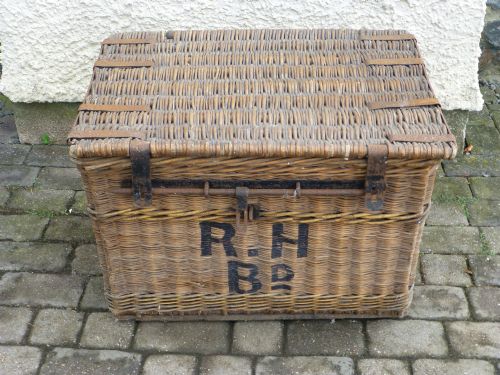
Buyers frequently encounter travelling chests, campaign packing cases, and storage hampers constructed for military use or global transit. The selection ranges from scumble pine and camphorwood boxes to leather suitcases and industrial wicker baskets.
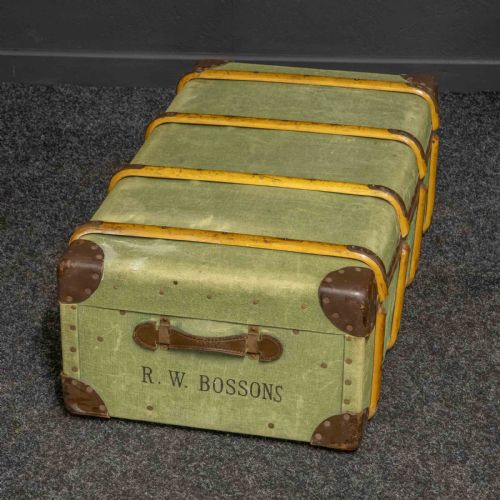
Origin details often appear directly on the exterior through painted initials, regiment names, or destination cities applied by stencil. This lettering provides a direct link to the original owner, transport route, or military unit associated with the piece.
Materials and construction methods
Makers utilised durable timbers such as pine, camphorwood, and wood frames reinforced with brass corners, iron bands, and leather straps. These robust materials were selected to withstand rough handling during long-distance shipping and military deployment.
Surface treatments included scumble painting over pine, canvas coverings, and protective varnish applied across the wooden panels. Stencilled inscriptions were then painted directly onto the exterior using durable pigments designed to resist fading and abrasion.
Stencilled Trunk Retail Price Guide 2026
Typical asking prices for stencilled trunk among the pieces listed under this phrase on Sellingantiques today, from the lower quarter to the upper quarter. They describe what is for sale here now, not the wider market.
One listed box once stored aeroplane engine tools before finding a second life as a stencilled antique trunk.
Factors determining quality and distinction
Quality rests upon the originality of the stencilled markings, the integrity of the primary wood or leather structure, and the survival of working brass or iron hardware. Pieces retaining clear regimental or maker inscriptions hold distinct historical weight.
The sophistication of the internal compartments, lining materials, and exterior reinforcements separates standard utility boxes from high-grade military campaign equipment or bespoke travel luggage.
Gnome Et Le Rhone Engine Company·Allen of London·Louis Vuitton France
The Stencilled Trunk Glossary
- Campaign chest
- A portable storage box designed to break down or withstand military transport during active service. These pieces usually feature recessed brass handles and reinforced corners.
- Scumble pine
- A timber finish created by dragging or combing a translucent glaze over a painted base coat to imitate the grain of more expensive hardwoods. This decorative technique appears frequently on nineteenth-century domestic furniture.
- Camphorwood
- An aromatic timber utilised for travel trunks because its natural scent deters insects and protects stored textiles. It remains recognisable by its distinct fragrance decades after manufacture.
- Steamer trunk
- A lower-profile luggage case designed to fit beneath a passenger ship berth during ocean liner travel. These items often incorporate reinforced wooden slats and robust metal latches.
Stencilled Trunk: Frequently Asked Questions
What were stencilled trunks used for originally?
These trunks transported personal belongings, military equipment, and official documents during nineteenth and early twentieth-century travel. Owners used stencils to clearly mark ownership, destination ports, or military regiments on the exterior.
Over time, these utilitarian boxes transitioned from active luggage to household storage and display pieces.
How do I date a stencilled antique trunk?
Dating relies on examining the construction materials, hardware types, and style markers present in the piece. Victorian examples often display scumble pine or camphorwood, while Edwardian and 1920s versions include canvas-covered luggage and fitted wardrobe trunks.
Associated stencilled names or dates can also anchor the object to a specific conflict or era.
Where can I place a trunk in my home?
These chests function effectively as living room coffee tables, bedroom blanket boxes, or hallway storage solutions. Their sturdy flat tops accommodate books and decorative objects while concealing clutter inside.
Placing them away from direct heat sources helps preserve the dry timber and original stencilled exterior.
Are the stencilled letters original to the piece?
Original stencilling typically shows natural wear, fading, and integration with the surrounding surface patina. These markings usually denote transport destinations, family names, or military unit designations.
Careful inspection reveals whether the paint sits naturally within the historic surface layers of the wood or canvas.