
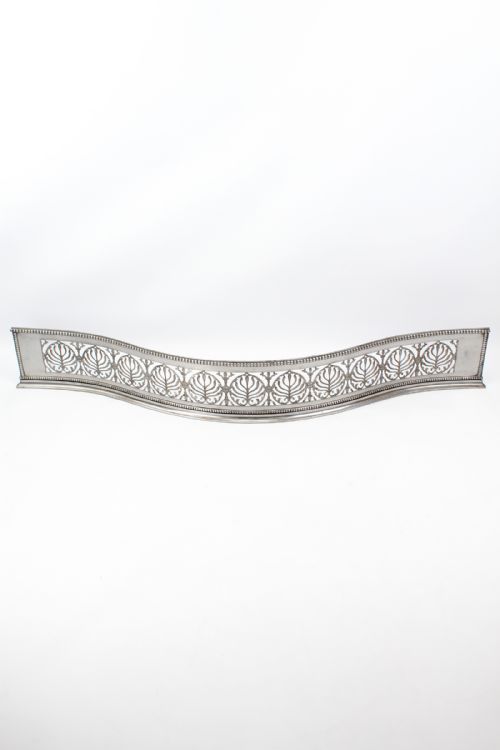


Steel Fireplace Surround Guard
A steel fireplace surround guard secures the hearth while framing the fire with functional metalwork.
Steel Fireplace Surround Guard
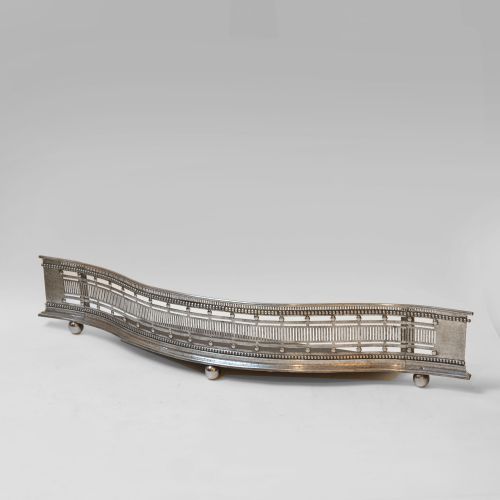
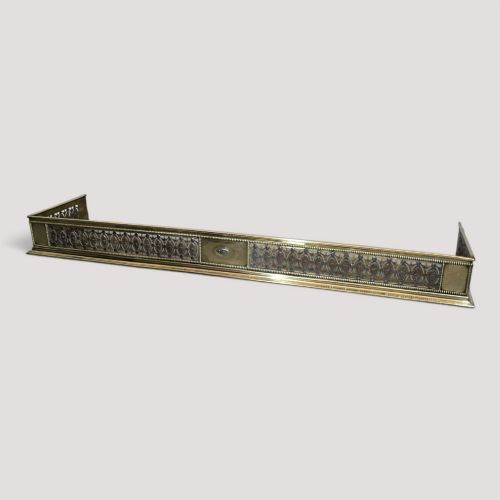
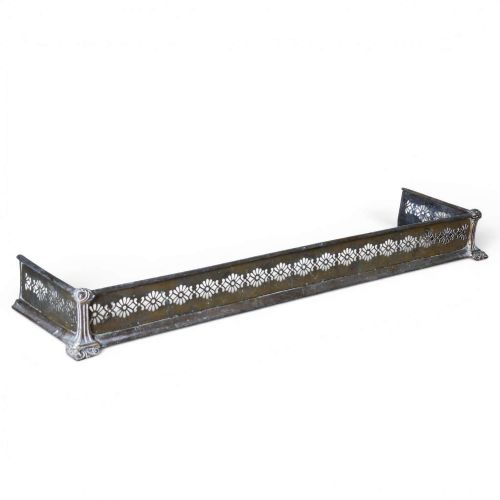
A steel fireplace surround guard sits at the hearth to protect the room from stray embers while defining the fireplace opening. These pieces appear most frequently in Georgian, Victorian, and Edwardian styles, spanning forms from simple bows to expansive club fenders.
The objects take various designations in the records, including fireplace fenders, hearth fenders, and club fenders. Buyers encounter straightforward low metal barriers alongside substantial examples featuring integrated seats or elaborate brass mounts.
Originating largely from British houses, these hearth accessories reflect the changing domestic habits of the eighteenth, nineteenth, and early twentieth centuries. The selection ranges from compact hearth guards to grand room-scale installations.
Materials and construction methods
Makers utilised structural steel and iron as the primary framework, often combining polished steel surfaces with contrasting cast brass ornaments, bronze details, or copper accents. Pierced sheet metal and cut steel components provide intricate surface patterning.
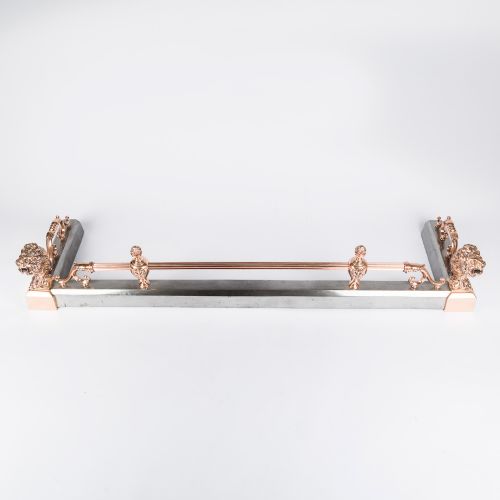
Many nineteenth-century examples incorporate upholstered leather squab seats into club fender designs, supported by oak or metal frames. Engraved serpentine profiles and applied lions or floral motifs demonstrate specialised metalworking techniques.
Some nineteenth-century steel guards feature unexpected floral, dragon, and lion details keeping watch over the hearth.
Factors determining quality
Quality rests on the crispness of the original engraving, the precision of the piercing work, and the integration of mixed metals like brass and polished steel. Superior examples maintain intact patination and robust structural joints across complex serpentine or bowfront shapes.
The presence of specialised additions, such as detailed animal castings or fitted leather seats, elevates the status of a piece. Fenders displaying unified design between the iron framework and applied brass mounts represent the high standard of the maker's art.
George Bullock·The In And Out Club
The Steel Fireplace Surround Guard Glossary
- Club fender
- A low hearth guard featuring upholstered corner or top seats, originally designed to provide extra seating close to the fire. These often incorporate steel frames with leather squab cushions.
- Serpentine
- A sweeping, undulating curved shape characteristic of refined eighteenth and nineteenth-century furniture and metalwork. This profile allows the fender to curve outward symmetrically.
- Cut steel
- Small faceted steel studs riveted individually to a backing plate to catch and reflect firelight. This labour-intensive technique creates a brilliant sparkle akin to cut gemstones.
- Pierced
- Metal sheet decorated by punching or cutting out decorative patterns such as lattices or foliage. This process lightens the visual weight of the heavy steel barrier.
Steel Fireplace Surround Guard: Frequently Asked Questions
How do I clean a steel guard?
Maintenance requires gentle dusting and careful treatment to preserve the historic surface patination. Avoid harsh chemical cleaners that strip the aged character from the metal.
Polished steel components benefit from light application of specialist protective wax where appropriate, whilst leather seats require standard conditioning suited to antique hides.
How old is my fireplace fender?
Dating relies on observing structural fasteners, material combinations, and stylistic motifs associated with periods like the Georgian, Victorian, and Edwardian eras. Earlier pieces often display hand-engraved serpentine forms and polished steel surfaces.
Later nineteenth and twentieth-century examples frequently introduce cast iron elements, distinct brass mounts, or integrated leather-upholstered seating structures.
Where were these guards used?
These metal guards stood directly on the hearth floor in principal reception rooms, libraries, and drawing houses. They acted as a physical barrier between open coal or wood fires and domestic interiors.
Larger versions with integrated seats served as social hubs within the room, bringing family and guests into close proximity with the hearth.