



Wrought Iron Fireplace Fender
These wrought iron fireplace fender examples bring tactile warmth and period character to a hearth.
Wrought Iron Fireplace Fender
A wrought iron fireplace fender sits before the hearth to protect the room from stray embers while defining the fireplace centrepiece. When you search for a wrought iron fireplace fender, you encounter forms ranging from simple nursery guards to substantial club designs.
The pieces listed on this page span the nineteenth century, the Regency era, Victorian and Edwardian periods, and the Art Deco style of the nineteen-twenties. Club versions often incorporate padded seats upholstered in leather, whilst nursery variants utilise wire mesh.
You meet straightforward iron and steel configurations alongside examples featuring brass, mahogany tops, or oak structures. Each object serves to contain the fire and provides practical utility alongside decorative presence.
Materials and construction methods
Makers shaped iron, steel, and wrought iron through blacksmithing techniques, hammering and bending metal to form rigid frames and decorative scrollwork. Wire mesh was woven or secured tightly across frames to create protective nursery guards.
Seated club variations combine metal frames with upholstered leather tops or occasionally timber surfaces in mahogany and oak. These materials were chosen for durability and heat resistance near the hearth.
Several nursery examples include built-in clothes rails, proving that Victorians used the hearth as a multi-tasking laundry dryer.
Distinctions in quality and execution
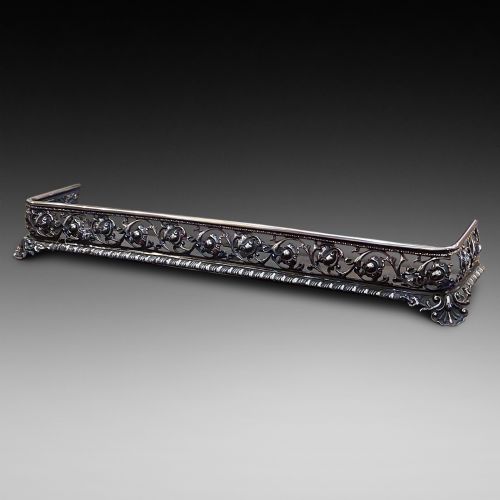
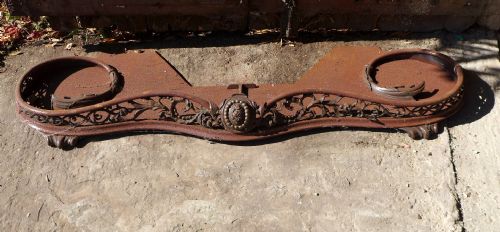
The standard of a wrought iron fireplace fender rests on the crispness of the blacksmith's work and the proportion of the metal elements. Heavier ironwork and cleanly forged joints distinguish finer examples from standard production pieces.
Upholstered club models depend heavily on the quality of the leather and the execution of the padding, where well-finished hides and sturdy wooden or metal subframes elevate the piece.
The Wrought Iron Fireplace Fender Glossary
- Club Fender
- A low seat placed around a fireplace with a padded top, usually upholstered in leather, allowing people to sit close to the fire. These originated in gentleman's clubs and country houses.
- Nursery Fender
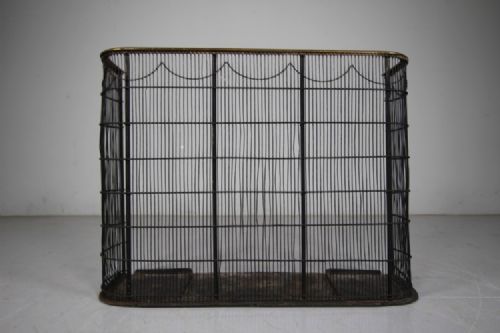
- A protective guard enclosed in wire mesh designed to keep children and pets at a safe distance from open flames. They often include integrated rails for airing clothes.
- Wirework
- Metal shaped into open mesh or intricate patterns using wire. This technique provides visibility of the fire whilst maintaining a physical barrier.
- Wrought Iron
- Iron that has been heated and shaped with tools by a blacksmith, characterised by its fibrous texture and resilience. It differs from cast iron by being malleable.
Wrought Iron Fireplace Fender: Frequently Asked Questions
What is a club fender?
A club fender is a low metal hearth surround featuring upholstered seats on top. It provides a warm place to sit directly beside the fire.
These pieces combine functional metalwork with comfortable leather padding, making them a sociable feature of historic sitting rooms.
How do nursery fenders differ?
Nursery fenders are taller protective guards enclosed in wire mesh. They are designed specifically to shield children and pets from sparks.
Many examples also include built-in rails for drying garments or warming clothes near the hearth.
What materials are used?
These hearth guards are constructed primarily from iron, steel, and wrought iron. Some incorporate brass details, wire mesh, or leather and timber top surfaces.
The combination of metal frames and upholstered leather creates a sturdy yet comfortable fireside accessory.
How do I date a fender?
Dating relies on stylistic clues, materials, and construction techniques associated with periods such as Regency, Victorian, Edwardian, and Art Deco. Heavier cast elements and specific upholstery styles offer further context.
Examining the metalworking methods helps place the piece within its historical manufacturing era.