


Traditional Leather Club Fender
A traditional leather club fender brings fireside seating and robust metal framing into the room, grounding the hearth with period weight.
Traditional Leather Club Fender
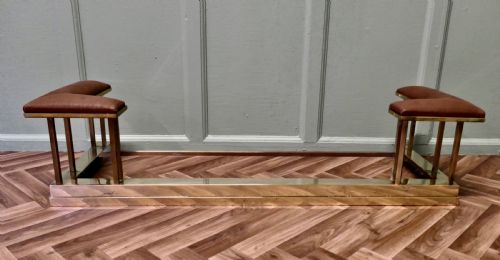
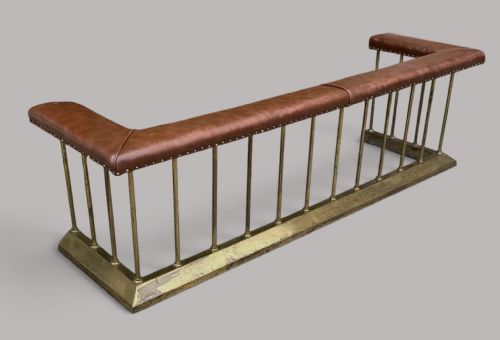
A traditional leather club fender combines a low metal framework with cushioned seating designed to fit around a fireplace hearth. These pieces originated in gentlemen's clubs to allow comfortable fireside conversation without blocking the warmth.
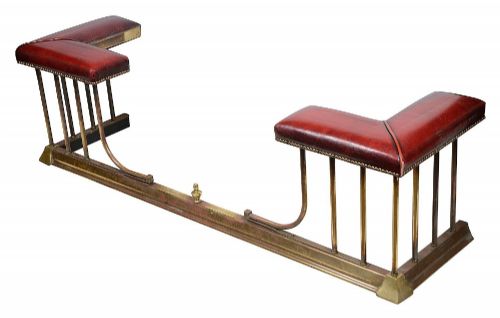
The versions met most frequently on this page date from the nineteenth century and the Edwardian period, often constructed with sturdy uprights and corner supports. They serve both as a protective barrier for the hearth and as additional low seating within a room.
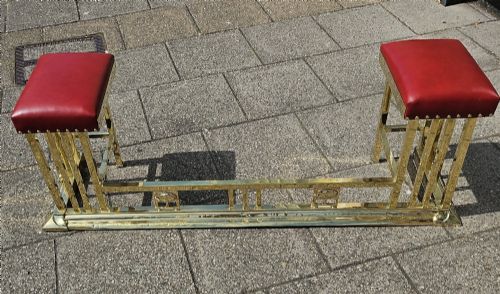
Makers utilised brass, steel, iron, and copper to build the underlying structures, pairing them with durable upholstered leather seats. Examples range from simple nineteenth century steel designs to elaborate Victorian brass configurations and later Art Deco interpretations.
Construction and materials
Makers built the frames primarily from metals such as brass, steel, iron, and copper, using cast or wrought techniques to ensure structural rigidity around the hearth. These metal skeletons handle the daily wear of feet resting against the base and the radiant heat from the fire.
The seats feature leather upholstery, frequently styled in the Chesterfield manner with buttoning or simple padded edges bolted directly to the metal frame. This combination of heavy metalwork and durable leather created a resilient piece of furniture built to withstand decades of heavy use.
Listings span the nineteenth century through the 1940s, featuring brass, steel, iron, and copper alongside leather upholstery.
Judging the work
Quality rests in the substantial gauge of the metal framework and the integrity of the joinery connecting the corner uprights to the base. Heavier brass and cast steel components indicate a sturdier build designed for longevity.
The execution of the leather upholstery and the quality of the padding dictate the refinement of the piece. Superior examples show careful attention to buttoning, neat stitching, and leather that has matured gracefully over time.
The Traditional Leather Club Fender Glossary
- Club fender
- A low, upholstered seating structure placed around a fireplace hearth. It allows occupants to sit close to the fire.
- Chesterfield seat
- A style of deeply buttoned leather upholstery commonly found on the top rails of these fenders. It provides a firm yet comfortable cushion.
- Uprights
- The vertical metal pillars or balustrades supporting the seat frame above the hearth base. They define the visual rhythm of the metalwork.
Traditional Leather Club Fender: Frequently Asked Questions
How do I measure for a club fender?
Measure the width and depth of your fireplace hearth to ensure the internal dimensions of the fender fit around it comfortably.
Account for the clearance needed around the fire surround so the metal frame sits squarely without obstructing the opening.
Can these fenders be used with modern fires?
Yes, they suit both traditional open hearths and modern inset stoves, provided the heat output does not damage the leather.
Ensure there is adequate distance between the metalwork and the heat source to protect the upholstery over time.
What metals were commonly used?
Brass, steel, iron, and copper appear frequently across the available inventory, sometimes in combination on a single piece.
Each metal offers a distinct visual weight, from polished brass to industrial cast steel and dark wrought iron.
How should I care for the leather?
Treat the leather periodically with appropriate conditioning balms to maintain flexibility and prevent drying out from hearth heat.
Dust the metal framework gently with a dry cloth to preserve the finish without stripping the natural patina.