


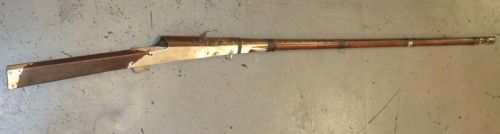

Steel Barrel Rifle
These steel barrel antique rifle examples combine functional martial history with exquisite period craftsmanship across global traditions.
Steel Barrel Rifle
A steel barrel antique rifle encompasses historical long arms spanning the eighteenth and nineteenth centuries, featuring significant martial and sporting heritage. When examining these pieces, buyers encounter diverse regional traditions ranging from European military models to Indo-Persian matchlock muskets.
The selection on this page frequently includes domestic and colonial firearms such as flintlocks, percussion sporting rifles, and matchlock muskets. These arms reflect distinct periods including Georgian, Victorian, and Mughal influences.
Common forms on display include the traditional Toradar musket and military cavalry variations. Each item demonstrates the distinct technological stages of early firearms development.
Materials and construction methods
Makers constructed these firearms using durable metals such as steel and iron for barrels alongside robust stocks carved from walnut and hardwood. Artisans frequently enhanced these foundational materials with decorative inlays of mother-of-pearl and bone.
Craftsmen applied specialised mechanical systems including matchlock, miquelet, flintlock, and percussion mechanisms to ignite black powder. These intricate assemblies required precise metalworking and woodwork to function correctly.
Steel Barrel Rifle Retail Price Guide 2026
Typical asking prices for steel barrel rifle among the pieces listed under this phrase on Sellingantiques today, from the lower quarter to the upper quarter. They describe what is for sale here now, not the wider market.
The inventory spans the eighteenth and nineteenth centuries, incorporating Georgian, Victorian, and Mughal styles.
Assessing quality in historical firearms
Quality diverges notably between standard military issue arms and bespoke sporting pieces decorated with elaborate inlays. The finesse of the stock carving and the complexity of the ignition mechanism dictate the tier of the piece.
Preservation of the original metal surfaces and decorative elements significantly influences the standing of an item. Pieces retaining intact mother-of-pearl embellishments or clear regional styling represent the upper echelon of the category.
The Steel Barrel Rifle Glossary
- Matchlock
- An early type of gun lock that used a burning slow match to ignite the powder charge. This ignition system predates flintlock mechanisms.
- Flintlock
- A firearm ignition mechanism that uses a flint striking against a steel frizzen to create sparks. It dominated firearm technology for centuries.
- Miquelet
- A form of snaplock firearm mechanism originating in the Mediterranean region. It utilises an external mainspring and a combined steel and pan cover.
- Percussion
- A firearm system employing a percussion cap struck by a hammer to ignite the powder. This innovation replaced flintlock technology in the nineteenth century.
- Toradar
- A traditional South Asian matchlock musket characterised by a fully enclosed wooden stock and distinctive barrel bands. These arms often display refined regional ornamentation.
Steel Barrel Rifle: Frequently Asked Questions
What is a steel barrel antique rifle?
A steel barrel antique rifle is a historical firearm produced before the modern era, utilising black powder and early ignition systems like matchlock or flintlock.
These pieces encompass military muskets, cavalry variations, and sporting guns originating from various global empires and conflicts.
How do I date a historical rifle?
Dating relies on identifying the ignition mechanism, the prevailing style, and any recorded military patterns from periods such as the eighteenth or nineteenth century.
Specific design variations and material choices often point to particular decades or manufacturing traditions.
Were these arms used in combat?
Many examples served active military roles in conflicts like the Revolutionary Wars or colonial engagements.
Others functioned primarily as sporting arms or prestige pieces commissioned by rulers and wealthy patrons.
How should I display my firearm?
Displaying these items requires a stable environment away from excessive humidity and direct sunlight to protect the wood and metal.
Secure wall mounts or dedicated cabinetry allow the intricate details and overall form to be appreciated safely.