
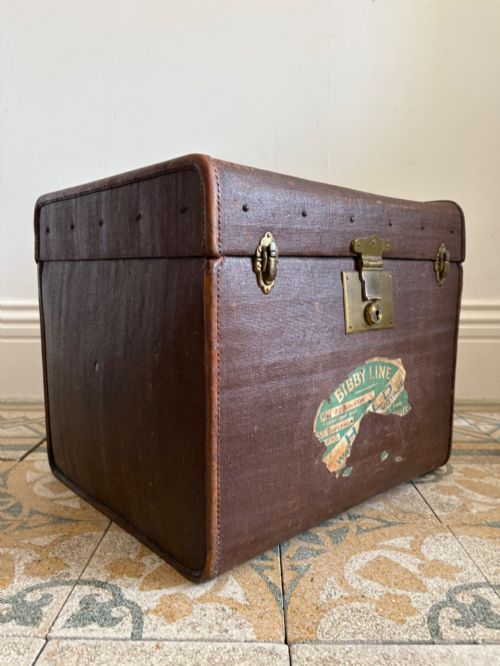


Steamer Trunk Chest
Steamer trunk chest examples combine rugged practicality with heritage style, offering versatile storage and historic character for modern interiors.
Steamer Trunk Chest
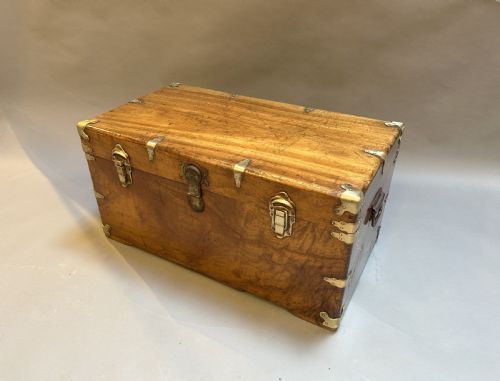
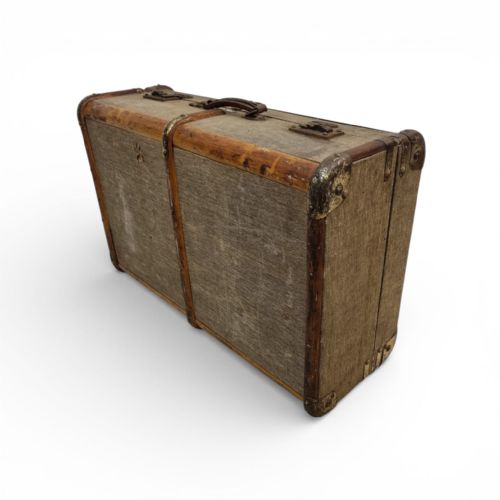
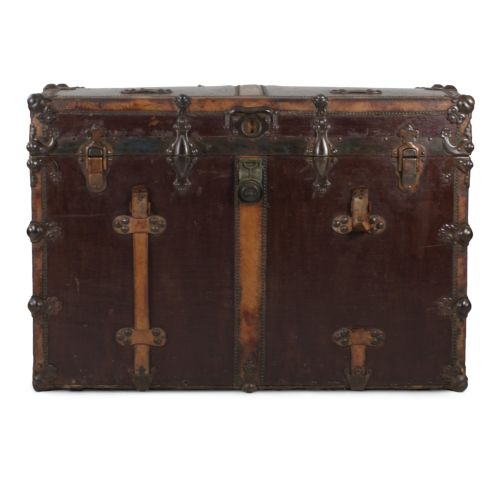
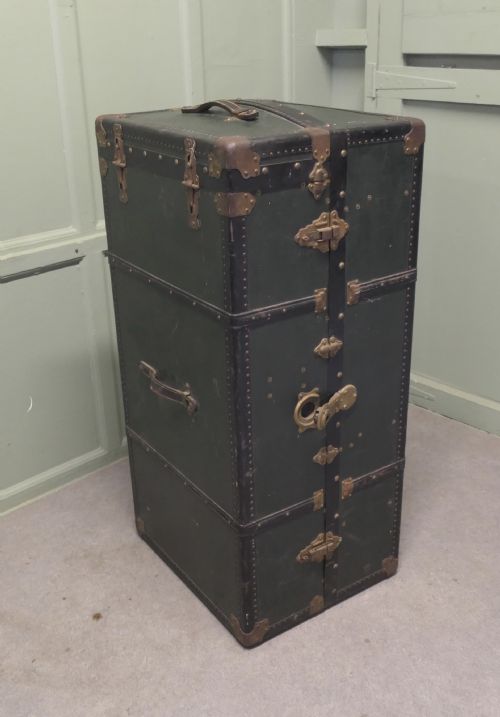
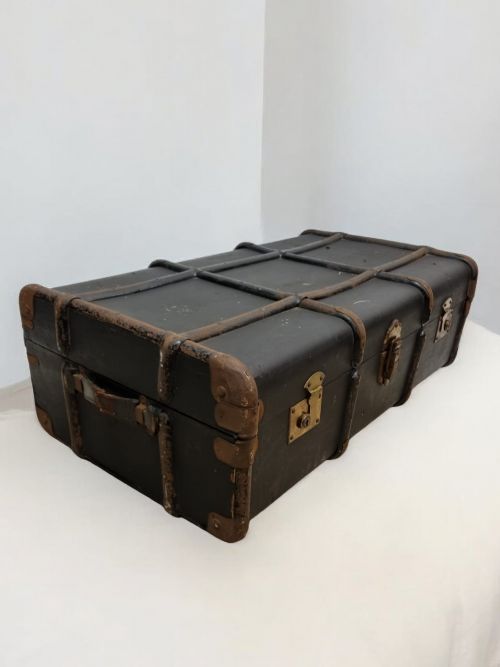
A steamer trunk chest serves as a robust portable wardrobe or shipping container designed for long-distance travel by sea and rail during the nineteenth and early twentieth centuries. These vessels accommodate clothing, hats, and personal belongings within compartmentalised interiors or simple storage cavities. Buyers encounter standard flat-topped travel chests alongside upright wardrobe trunks equipped with hangers and drawers.
The selection ranges from Victorian pine and camphor wood boxes to Edwardian canvas-covered examples and Art Deco creations. Maker-stamped French pieces from renowned luggage houses appear alongside British campaign chests and American cabin trunks. These items function in contemporary spaces as coffee tables, blanket boxes, and prominent storage furniture.
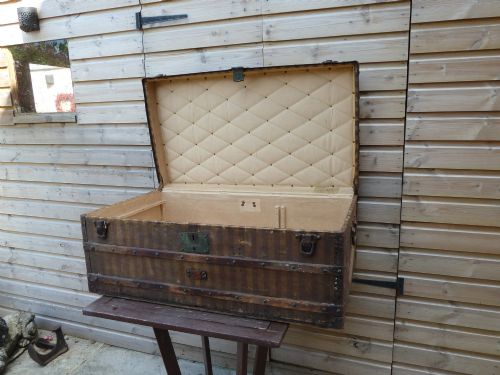
Makers construct these pieces to withstand the rigours of international transit through durable wooden carcasses wrapped in protective materials. Metal bands, reinforced corners, and secure latches protect the contents against heavy handling and damp conditions aboard ships. Interior fittings often include trays, smaller hat boxes, and silk or linen linings.
Materials and Construction
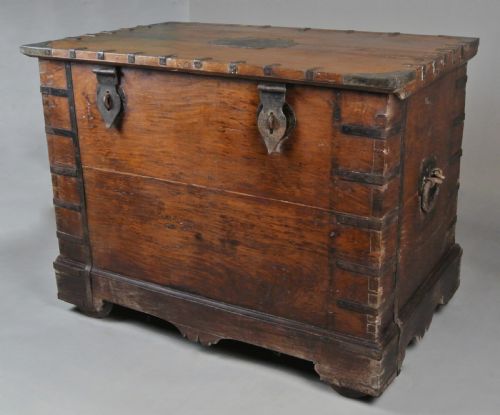
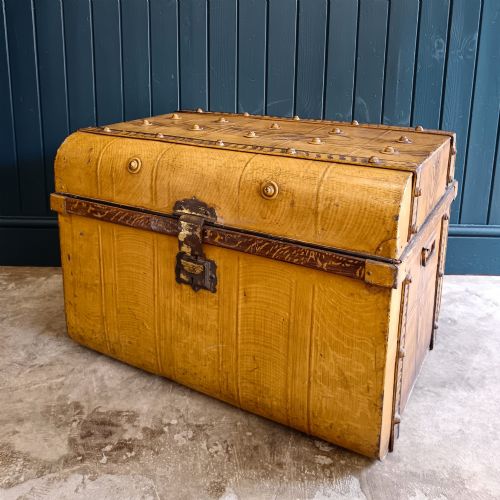
Carpenters build the internal framework using timbers such as pine, oak, teak, cedar, and camphor wood, joined for structural strength. Artisans then wrap these wooden bodies in protective outer layers of canvas, embossed leather, painted metal, or sheet aluminium.
Workers reinforce the exterior edges and lids using iron, brass, or steel bands secured with studs and rivets. Original hardware includes specialised locking mechanisms, metal corners, and leather carry handles designed for heavy transit.
Many antique trunks still retain faded shipping labels and hotel stickers from ocean liners that crossed the Atlantic a century ago.
Quality Variations
The distinction between ordinary utility luggage and high-end items lies in the grade of materials and the complexity of internal engineering. Deluxe examples feature intricate fitted compartments, specialised hat storage, and branded locks from prominent luggage makers.
Preservation of original hardware, stencilled monograms, and interior linings heavily influences the standing of a piece. Retaining functioning original keys, maker stamps, and untouched canvas or leather surfaces elevates the status of a travel chest.
Louis Vuitton·Goyard·Aux Etats Unis·Seaward·Hartman Luggage Co·H D Dean·W Insall·Jones Bros
The Steamer Trunk Chest Glossary
- Campaign trunk
- A portable storage chest designed for military officers and colonial travellers, often featuring recessed brass handles and robust reinforcement. These items dismount or pack easily for transit on expeditions.
- Wardrobe trunk
- An upright opening trunk containing hanging space, drawers, and shoe compartments. This form functions as a portable closet for ocean liner passengers.
- Camphor wood
- An aromatic timber utilised for travel chests due to its natural insect-repelling properties. This wood protects stored garments from moths and dampness.
- Malle penderie
- The French term for a hanging wardrobe trunk. These specialised pieces represent high-end luxury luggage from Parisian makers.
- Scrumbled metal
- A paint technique applied to metal surfaces to imitate the grain of wood. This finish offers durability alongside traditional aesthetic appeal.
Steamer Trunk Chest: Frequently Asked Questions
How do I use a steamer trunk chest at home?
These trunks serve well as functional coffee tables in living rooms, offering hidden storage for blankets and books. They also place neatly at the end of a bed for spare linens.
Upright wardrobe variations function as standalone bedroom storage or decorative display cabinets. Smaller hat boxes and cases work effectively as bedside tables or shelf storage.
What is the difference between a steamer trunk and a standard chest?
Steamer trunks feature lower profiles and flat or slightly rounded tops designed to slide beneath cabin berths on ocean liners. They incorporate specialised internal trays, compartments, and heavy exterior reinforcement.
Standard storage chests and blanket boxes focus on stationary domestic use rather than frequent transit. They lack the complex internal fittings, specialised hat boxes, and robust travel hardware found on luggage.
How do I date a vintage travel trunk?
Dating relies on examining the construction materials, lock manufacturers, and exterior covering types. Victorian examples often display exposed pine, iron bands, and simple leather handles.
Twentieth-century pieces frequently utilise branded canvas, aluminium, or vulcanised fibre over wooden frames. Maker stamps and patent dates on internal hardware provide precise manufacturing periods.
Are these trunks waterproof?
Original travel trunks used treated canvas, painted metal, and waterproofed leather to protect contents from sea spray and rain during transit. However, historic seals and materials degrade over a century of age.
Modern owners should avoid exposing antique trunks to damp environments or outdoor moisture. Interior linings often consist of delicate paper, silk, or cotton that requires dry conditions.