




Statement Amethyst Ring
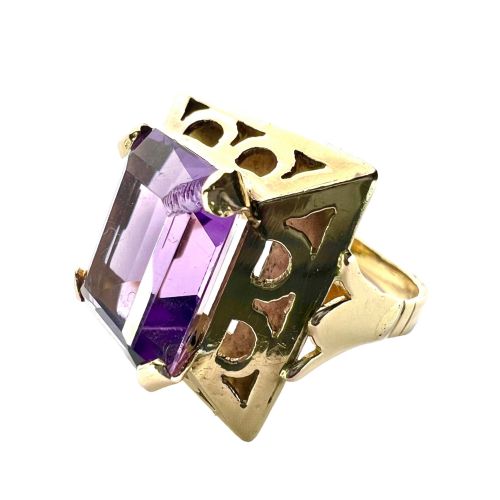
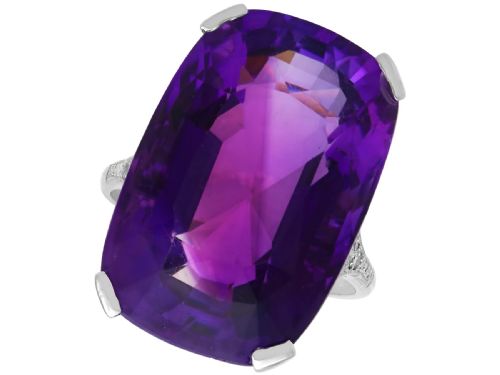
A statement amethyst ring commands the hand with deep purple quartz, drawing the eye through scale and presence.
Statement Amethyst Ring
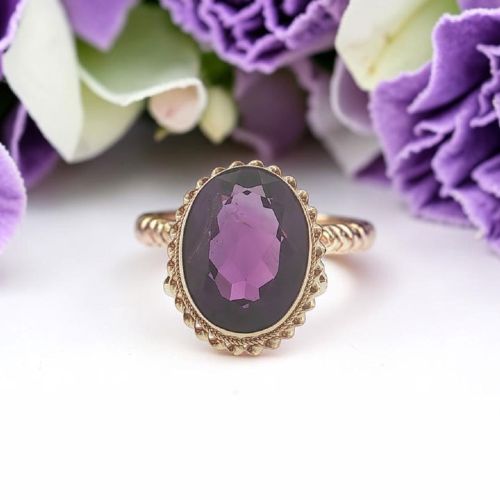
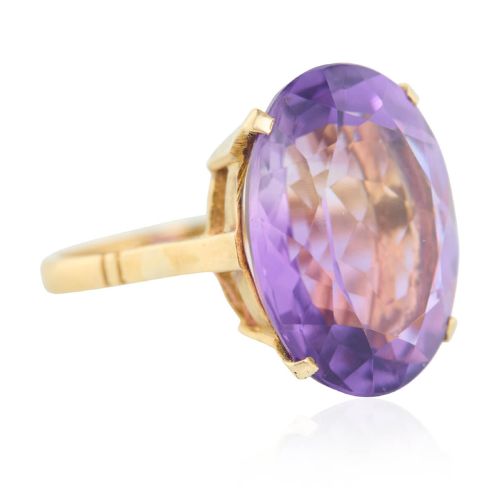
A statement amethyst ring is a bold piece of jewellery designed to showcase large purple quartz stones set upon the hand. These rings appear across multiple decades, spanning Victorian cluster designs through to mid-century cocktail iterations.
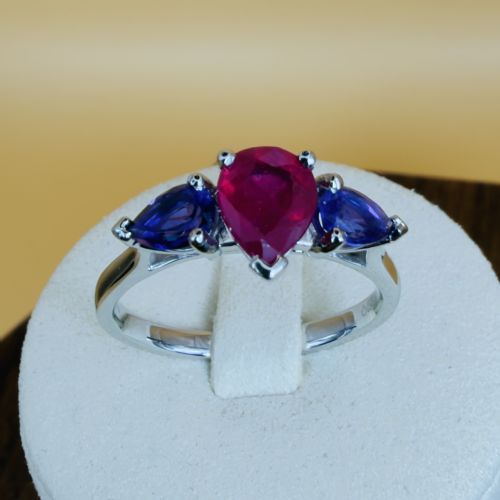
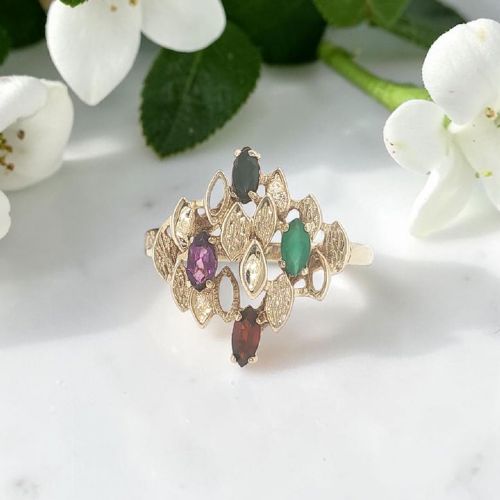
Buyers seeking a statement amethyst ring will encounter substantial stones cut into emerald, pear, cushion, heart, or square profiles. Many examples incorporate surrounding diamonds, pearls, rubies, or emeralds to frame the central purple gem.
The selections on this page range from early twentieth-century Art Deco creations to later vintage and retro pieces. Solitaire settings and heavy cluster mounts dominate the forms available here.
Materials and construction
These rings rely on precious metals including nine-carat and fourteen-carat yellow gold, eighteen-carat rose and white gold, and platinum to secure the heavy stones. Goldsmiths employed robust settings such as claws, bezels, and halos to support amethysts exceeding twenty carats.
Stones are faceted into cushion, pear, and emerald cuts to maximise light return through the purple quartz. Accompanying gems like small diamonds, rubies, and pearls are flush or bead-set into the surrounding metalwork.
Some mid-century amethysts grow so heavy they require sturdy platinum shoulders just to keep the purple from tipping sideways.
Evaluating the pieces
Quality rests upon the depth of the purple colour and the transparency of the amethyst crystal. Master lapidaries cut the quartz to enhance brilliance across large surface areas without dull patches.
The weight and gauge of the gold or platinum shank dictate the durability of the mount. Superior execution shows crisp claw work and balanced proportions between the central stone and any supporting diamond cluster.
The Statement Amethyst Ring Glossary
- Amethyst
- A purple variety of quartz prized for its violet hue. It serves as the primary gemstone in these cocktail and dress rings.
- Cocktail ring
- A large, ostentatious ring designed to draw attention during evening social events. These pieces often feature oversized centre stones.
- Solitaire
- A mounting holding a single gemstone without smaller accent stones. This setting highlights the natural scale of the central amethyst.
- Cluster ring
- A design featuring a central stone encircled by a group of smaller gems. Pearls and diamonds frequently form these decorative borders.
- Bezel setting
- A metal collar that wraps around the outer edge of the gemstone to hold it securely in place. This technique offers robust protection for large quartz crystals.
Statement Amethyst Ring: Frequently Asked Questions
How do I wear a statement amethyst ring?
Wear your ring as a standalone piece on the hand to let the large purple stone catch the light without competition. Pair it with simple evening attire or understated bracelets.
Ensure the setting is secure before daily wear, especially with stones exceeding twenty carats that might catch on fabrics.
How do I date an antique amethyst ring?
Examine the metal type, hallmark stamps, and the cut of the amethyst to determine the era of production. Victorian and Edwardian pieces often utilise rose gold and delicate pearl halos, while Art Deco rings favour geometric platinum settings.
Consult Birmingham or London assay marks where present on the shank for precise year letters.
What is the difference between a dress ring and a cocktail ring?
Dress rings and cocktail rings both prioritise visual impact, though cocktail rings typically feature much larger stones and bolder silhouettes intended for evening gatherings. Both styles appear frequently across mid-century and vintage jewellery selections.
Inspect the carat weight and mounting height to gauge whether a piece leans towards daytime wear or grand evening use.
How do I clean a large amethyst ring?
Clean your amethyst ring using warm water, mild washing-up liquid, and a soft-bristled brush to remove oils from the pavilion and facets. Avoid harsh ultrasonic cleaners if the piece contains softer surrounding gems like pearls.
Dry the metal thoroughly with a lint-free cloth to restore the shine of the gold or platinum.