
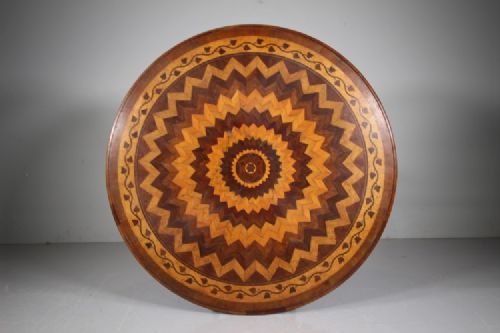


Starburst Marquetry Table
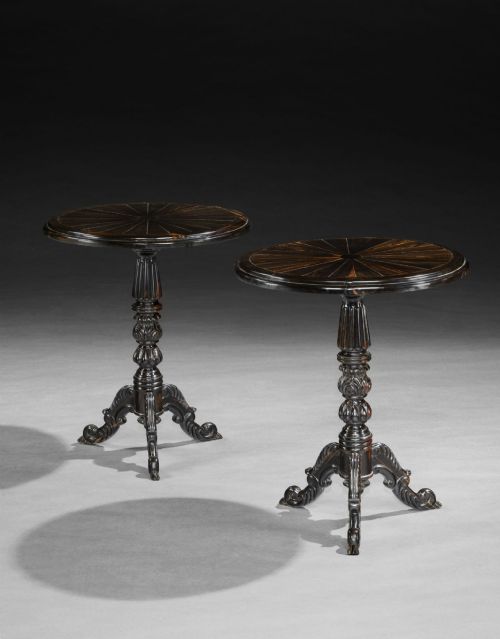
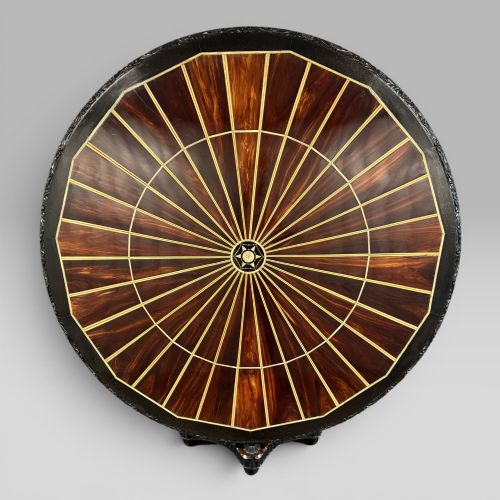
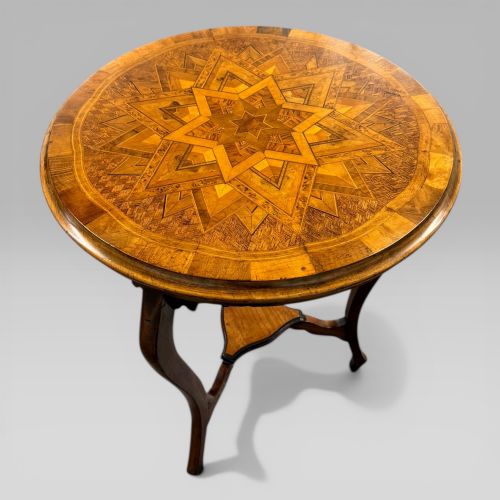
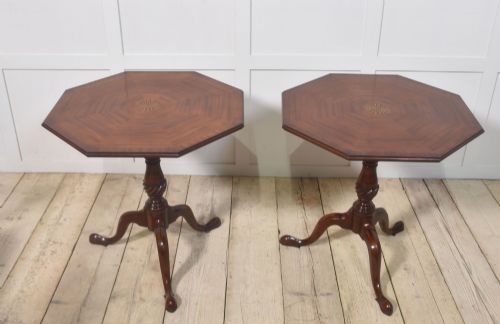
These starburst marquetry table examples are striking centrepieces built from contrasting woods that catch the light.
Starburst Marquetry Table
A starburst marquetry table brings together geometric precision and natural timber tones in a compact surface. When exploring this selection, buyers frequently encounter occasional tables, side tables, and low tables designed for display.
The pieces span several centuries and regions, connecting Georgian and Victorian workshop traditions with Anglo-Indian Colonial and Sorrento styles. Origin points range from European cabinets to Ceylonese workshops and New Zealand makers.
Forms vary from tripod wine tables to rectangular lamp tables and low coffee tables. These diverse formats share a dedication to intricate top surfaces arranged in radial patterns.
How they were made
Cabinetmakers constructed these surfaces using a diverse palette of materials, including walnut, ebony, mahogany, olive wood, fruitwood, and kauri wood. Mixed specimen woods provide the natural tonal shifts required for the geometric contrast.
Artisans cut thin veneers of native and exotic timbers and fitted them precisely onto a stable foundational core. This labour-intensive process demands exact measurements so the radial segments meet cleanly at the centre.
Starburst Marquetry Table Retail Price Guide 2026
Typical asking prices for starburst marquetry table among the pieces listed under this phrase on Sellingantiques today, from the lower quarter to the upper quarter. They describe what is for sale here now, not the wider market.
Listings feature items from the eighteenth, nineteenth, and early twentieth centuries, constructed in walnut, ebony, mahogany, and kauri wood.
What varies in quality
The distinction between standard and exceptional work rests on the tightness of the veneer joints and the harmony of the timber selection. Master makers aligned the grain so the starburst optical effect appears crisp and deliberate.
Subtlety in the contrast of native and exotic specimens defines the upper tier of execution. Stronger pieces display careful thought in how the lighter and darker woods interact across the entire tabletop.
Anton Seuffert
The Starburst Marquetry Table Glossary
- Marquetry
- The art of forming decorative patterns by fitting together small pieces of wood veneer. This technique allows makers to create complex pictorial and geometric designs on furniture surfaces.
- Specimen wood
- Timber chosen for its distinctive grain, colour, or origin rather than structural utility. Makers combined multiple varieties to build natural colour gradients.
- Tripod table
- A small freestanding table supported by three legs radiating from a central pillar. This form appeared frequently in eighteenth and nineteenth-century parlours.
- Sorrento ware
- Inlaid woodwork produced in southern Italy, known for intricate geometric and mosaic motifs. Artisans utilised local olive and fruitwoods to achieve bright contrasts.
Starburst Marquetry Table: Frequently Asked Questions
What is a starburst marquetry table?
A starburst marquetry table is a small occasional or side table featuring a geometric inlaid top. The wood veneers radiate outwards from a central point to create a distinct star pattern.
Craftsmen utilised various native and exotic timbers to achieve the contrasting light and dark segments. These pieces function as decorative focal points in sitting rooms.
How do I style an antique occasional table?
These tables work well beside seating where the detailed tabletop remains visible. Keep items placed on top minimal to let the geometric marquetry patterns show through.
Their compact footprints suit corners or small wall spaces. Pair them with neutral furnishings to highlight the natural tones of the mixed woods.
Which periods do these tables come from?
The listings span the eighteenth and nineteenth centuries up to the early twentieth century. Victorian and Georgian pieces appear alongside Anglo-Indian Colonial and Sorrento examples.
Each period brought different regional timber preferences to the craft. Makers utilised local varieties alongside imported exotic woods.
How do I identify Sorrento inlay?
Sorrento inlay typically originates from southern Italy and utilises Mediterranean fruitwoods and olive wood. The patterns often incorporate precise geometric tessellations or local scenes.
Cabinetmakers in this region specialised in bright tonal contrasts. The work focuses heavily on miniature mosaic effects.