
Standing Oak Bookcase
When you search for a standing oak bookcase, you seek a sturdy timber home for your library shaped by Edwardian, Victorian and later hands.
Standing Oak Bookcase
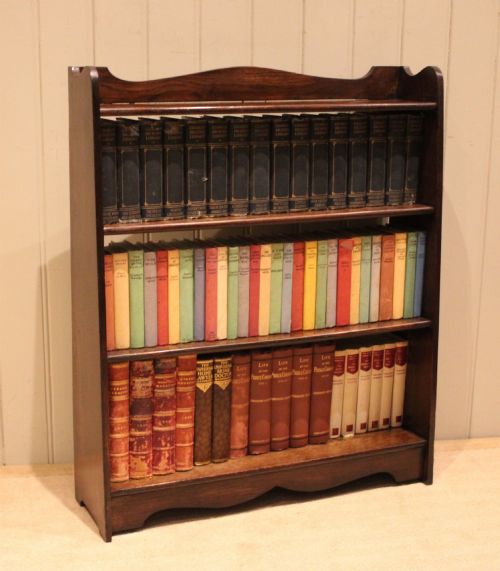
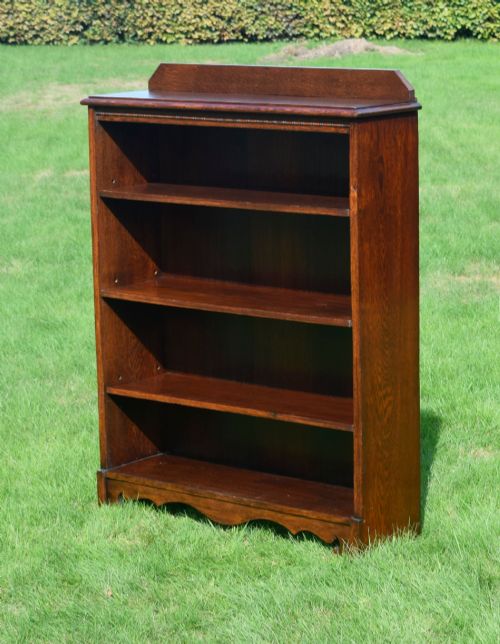
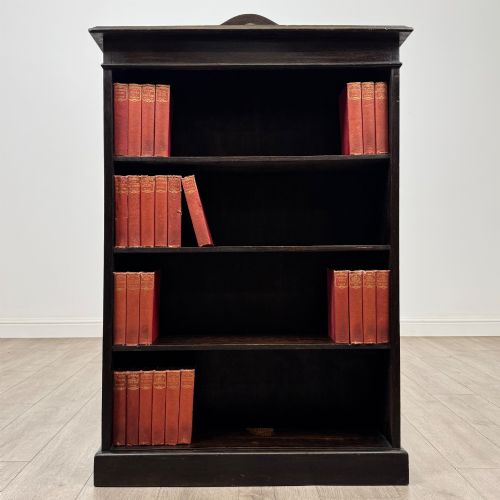
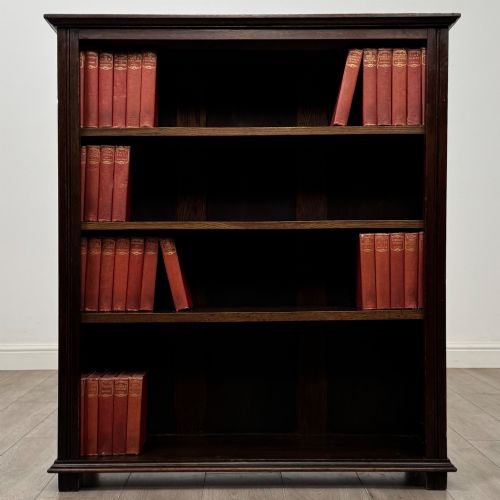
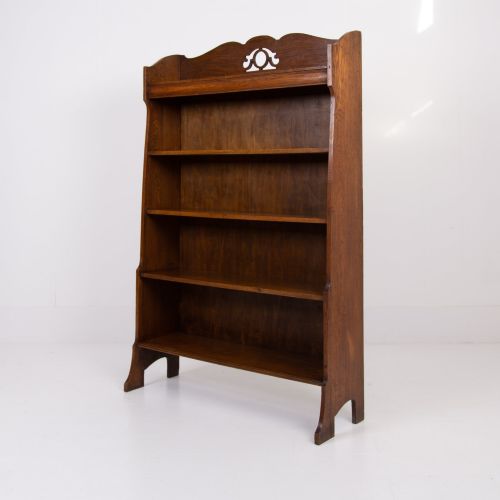
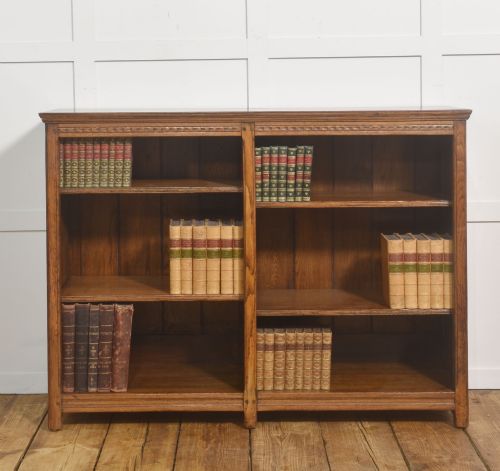
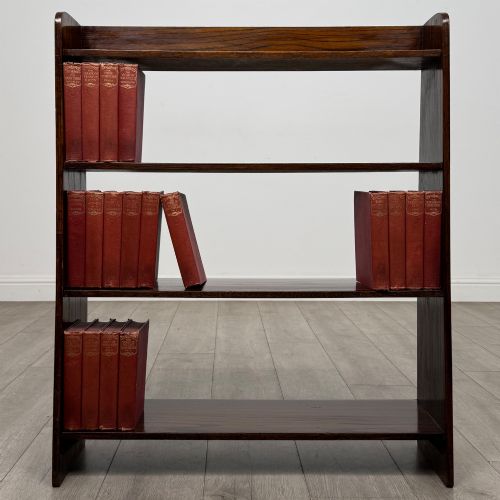
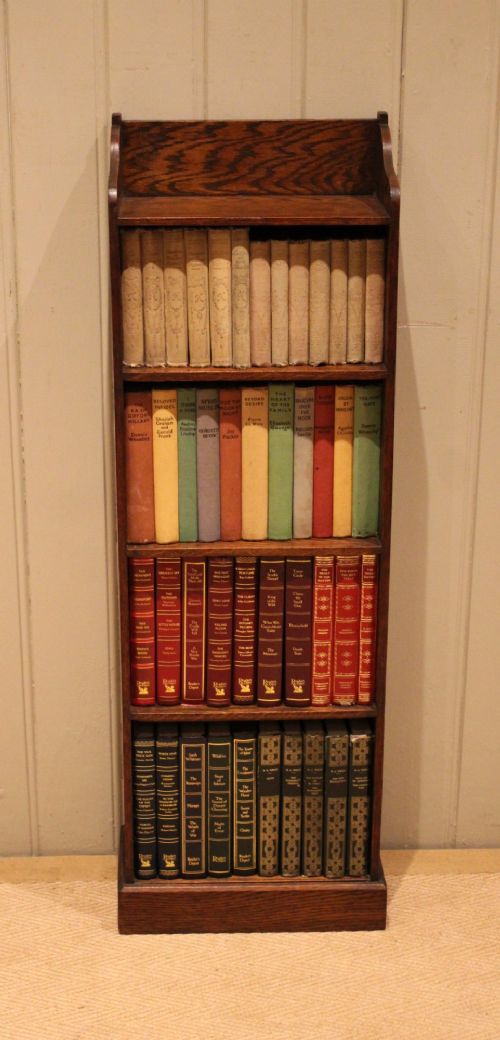
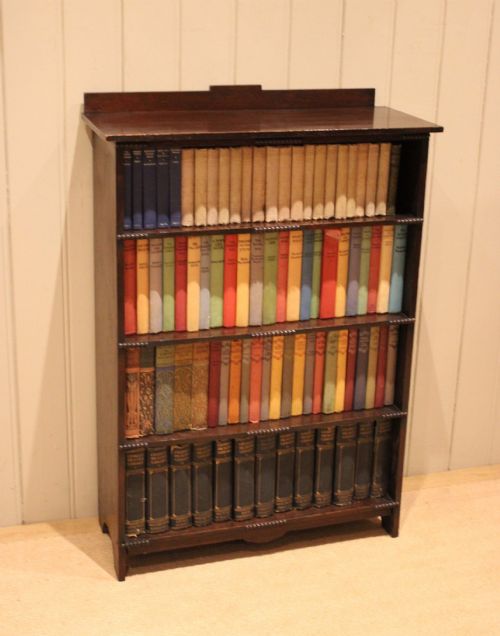
A standing oak bookcase is a floor-standing piece designed to hold volumes upright in a domestic or institutional study. You will frequently encounter open formats from the Edwardian period and the 1920s, alongside earlier Victorian examples.
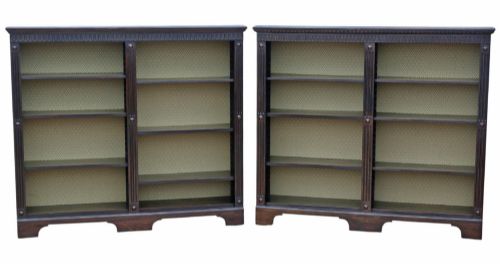
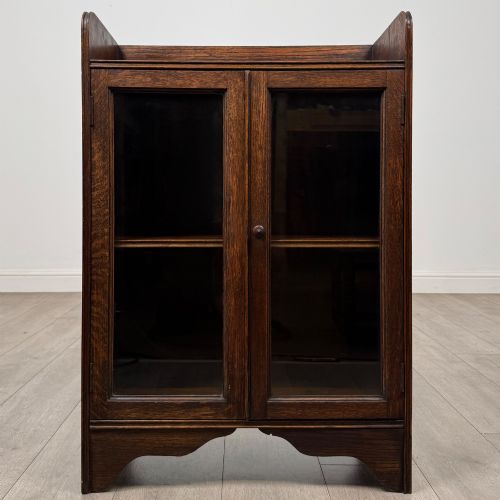
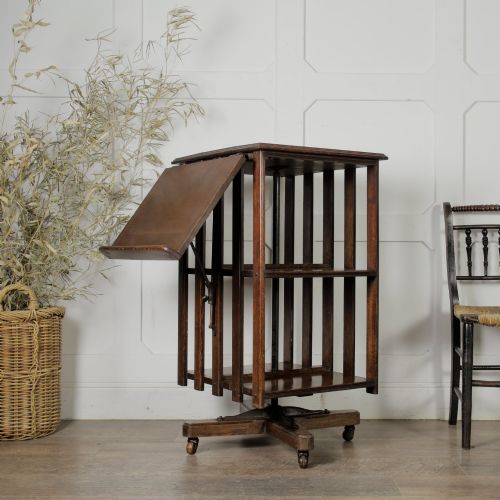
The selection ranges from narrow open shelves and revolving table designs to glazed cabinets and Arts and Crafts pieces with characteristic honest construction. These items serve to organise collections while anchoring a room with dense, figured timber.
How They Were Made
Craftsmen built these pieces primarily using solid oak, dark oak, or golden oak, sometimes enhanced with brass hardware, iron fittings, or glass door panels. Construction relied on sturdy joinery, with adjustable shelves appearing in better library formats.
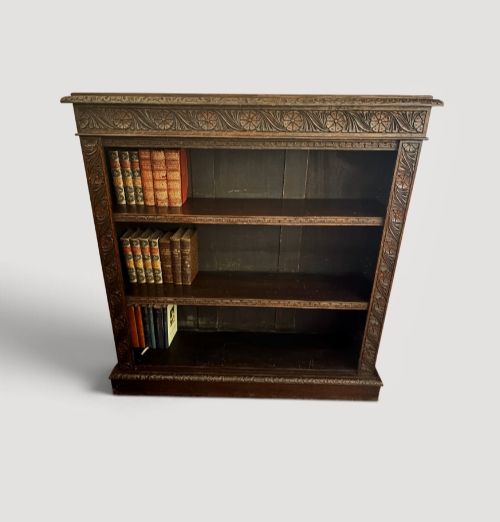
Surfaces received treatments ranging from simple waxed finishes to limed effects, carved ornamentation, and beaded edges. Revolving variants incorporated complex internal mechanisms to support weight smoothly upon a central pedestal.
Some revolving models feature hidden castors so your entire library can spin silently across the carpet.
What Varies in Quality
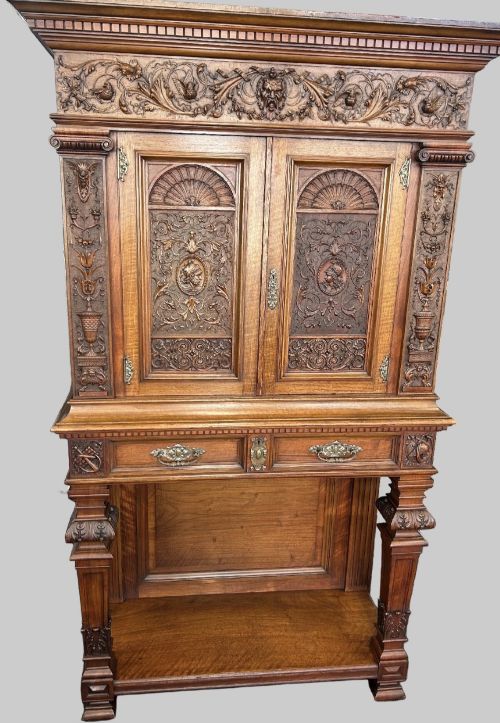
Quality rests in the selection of the oak timber itself, distinguishing plain boards from richly figured golden oak or carefully quarter-sawn stock. The ambition of the design dictates value, separating standard utilitarian shelving from expressive Arts and Crafts or Jacobean Revival carving.
Integration of thoughtful details such as adjustable shelving, leather-topped writing surfaces, or maker attribution marks elevates a piece. Structural integrity in revolving mechanisms and glazed doors further separates everyday items from superior examples.
Heals
The Standing Oak Bookcase Glossary
- Quarter-sawn oak
- Timber cut radially from the log to produce a distinct medullary ray pattern often prized in Arts and Crafts furniture. This method yields stable boards with attractive figuring.
- Revolving bookcase
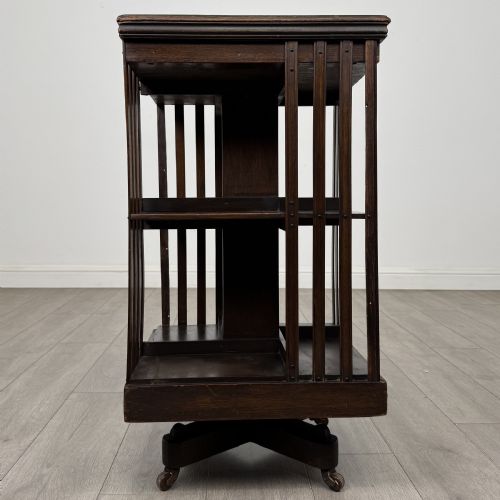
- A small freestanding case mounted on a concealed turntable base to allow access from any angle. They are commonly found in Edwardian studies.
- Waterfall bookcase
- A stepped open shelf unit where each tier narrows towards the top. This form creates a tiered profile popular in early twentieth-century interiors.
- Beaded edge
- A narrow rounded moulding carved along the border of a shelf or stile. It adds subtle linear definition to plain oak boards.
Standing Oak Bookcase: Frequently Asked Questions
What periods do these bookcases come from?
The listings encompass items spanning the Victorian era through the Edwardian period and into the 1920s and 1930s. You will also find occasional nineteenth-century and Arts and Crafts examples.
Design influences across these decades shift from heavily carved Victorian proportions to cleaner Edwardian lines and modernist Art Deco treatments.
How do I adjust the shelves?
Many library bookcases incorporate vertical side slots or wooden ratchets that allow individual shelves to be moved up or down. This enables the housing of both large folios and small novels.
Earlier simple constructions often feature fixed shelves nailed or screwed directly into the carcass sides.
Where were these pieces used?
These items were built for domestic libraries, studies, and drawing rooms to house expanding personal book collections. Revolving versions sat beside armchairs for immediate access to reference volumes.
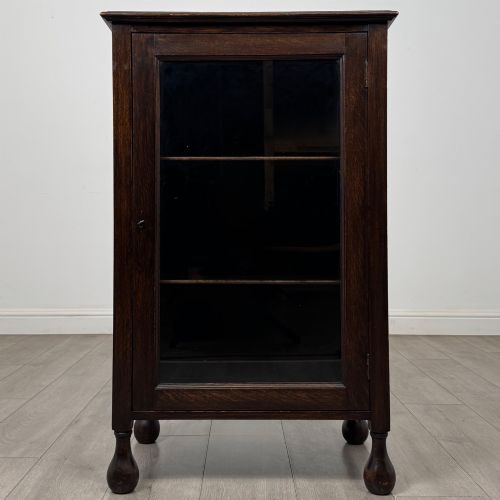
Larger glazed cabinets protected valuable or leather-bound volumes from dust and light in formal rooms.
Are revolving bookcases stable?
Revolving designs rely on a heavy internal iron or wooden spider mechanism mounted on a stable cruciform base. When loaded evenly, they turn smoothly without tipping.
They were engineered to hold substantial weight while occupying a minimal floor footprint.