
Standing Magazine Rack
A standing magazine rack keeps periodicals upright and tidy while adding period character to a room.
Standing Magazine Rack
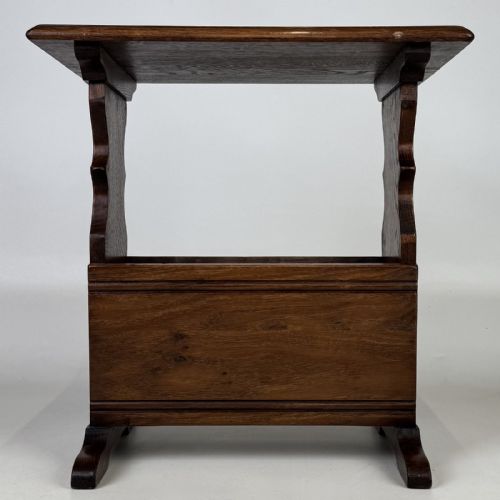
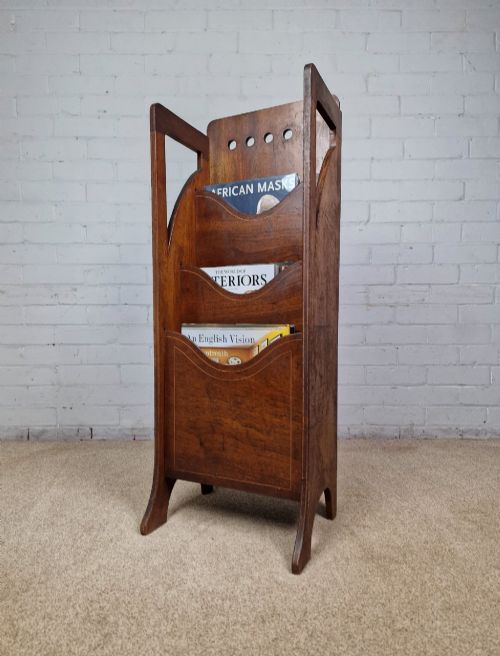
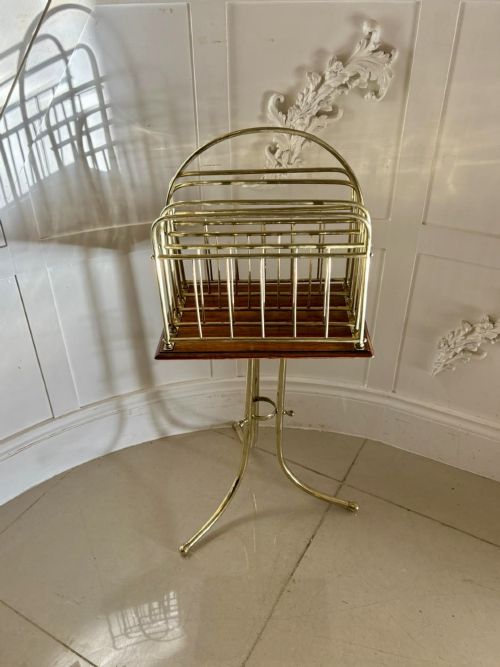
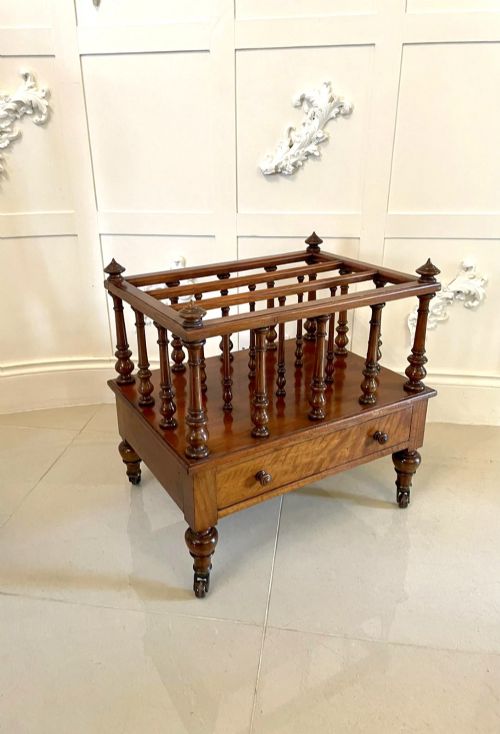
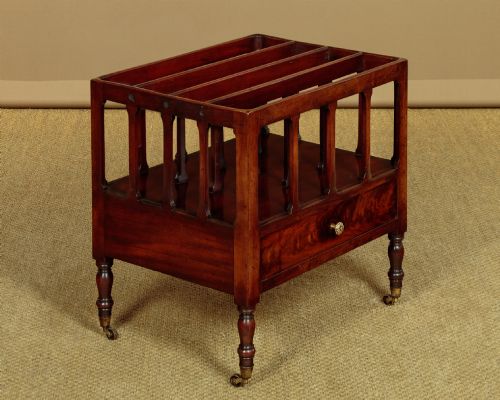
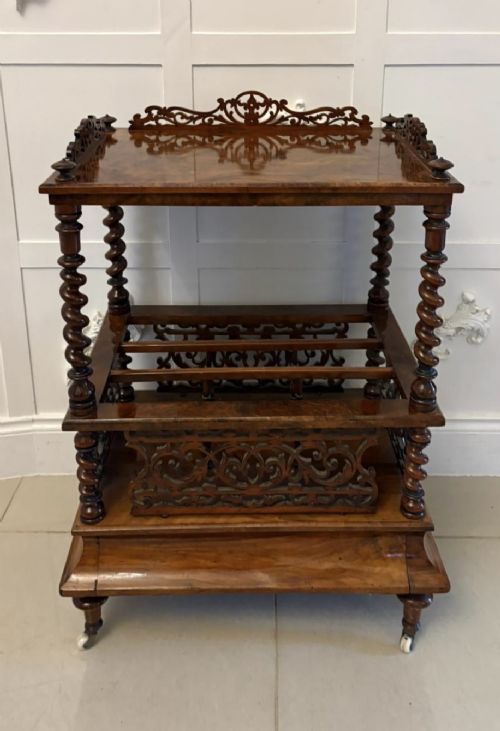
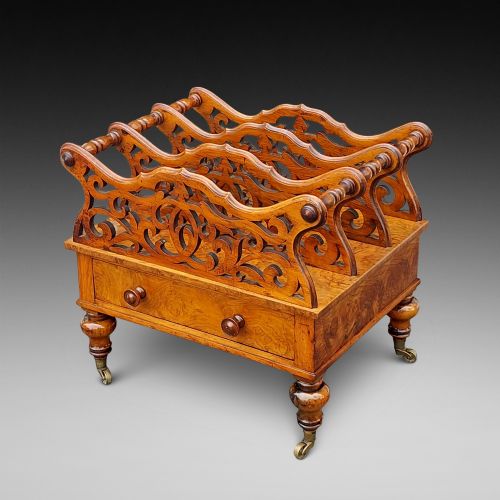
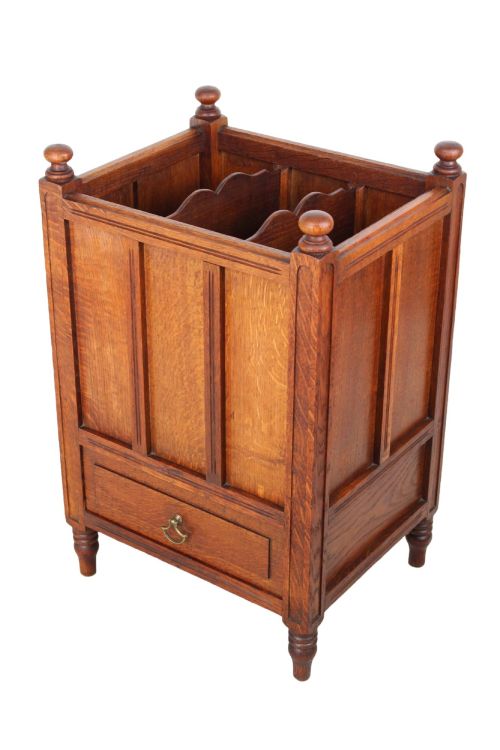
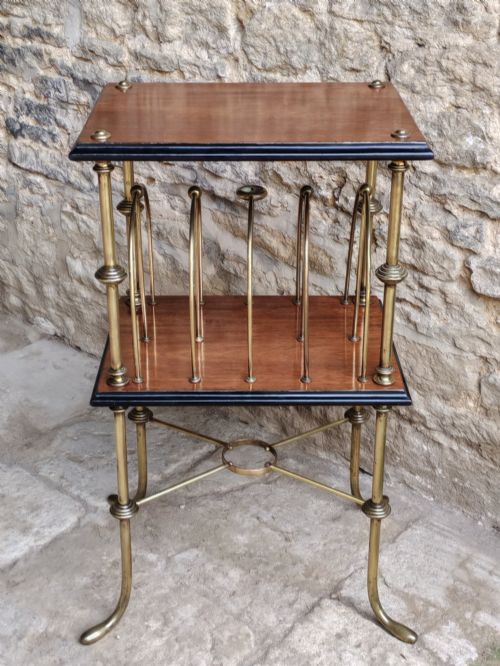
A standing magazine rack functions as a dedicated freestanding holder for periodicals, newspapers, and sheet music. These pieces range from traditional wooden canterburys to copper and brass stands designed for domestic use.
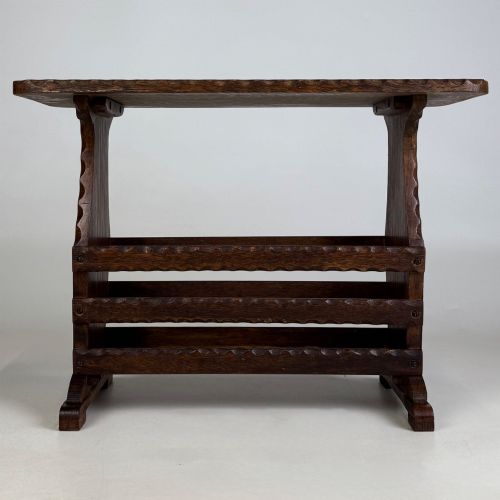
The selections on this page span the 18th, 19th, and 20th centuries, covering periods from Regency and Victorian to Edwardian and Arts & Crafts. Buyers frequently encounter forms that double as side tables or occasional tables with integrated compartments.
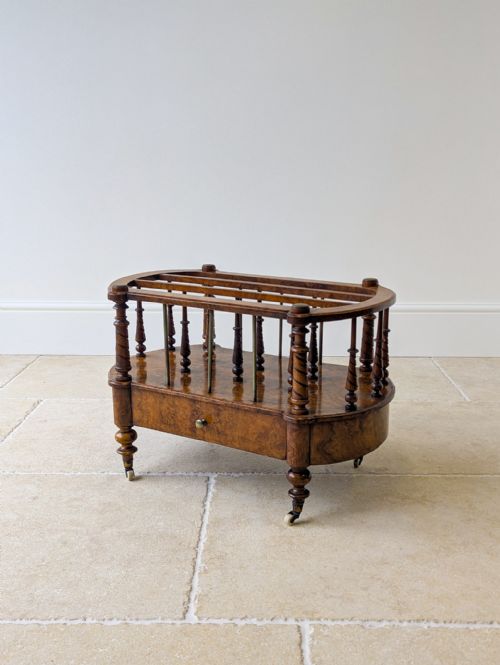
Makers utilised various timbers and metals to construct these items, resulting in distinct forms like boat-shaped canterburys and bamboo stands. The typology bridges utilitarian storage and decorative furniture meant for the sitting room.
Materials and construction
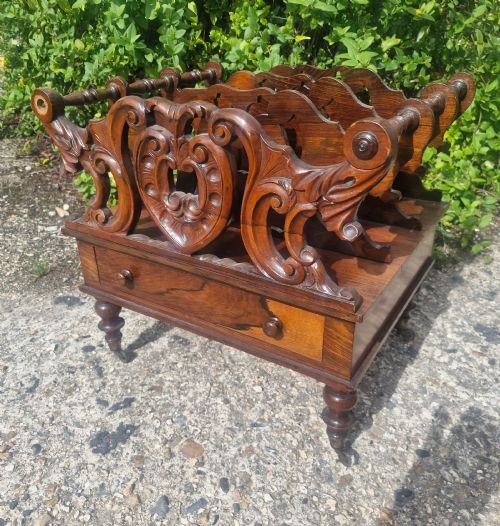
Cabinetmakers built these pieces using dense hardwoods such as mahogany, walnut, burr walnut, rosewood, and oak. Finer examples incorporate decorative elements like mother of pearl inlay, ceramic details, and turned woodwork.
Joinery methods vary by period, from traditional pegged and glued joints in earlier Georgian and Regency pieces to later Edwardian production. Carved details and shaped shelves reflect the prevailing style of each decade.
Listings feature woods including mahogany, walnut, burr walnut, rosewood, and oak, alongside bamboo and metal.
Judging quality and execution
Quality reveals itself in the selection of timber veneers, particularly the grain matching on burr walnut or figured mahogany surfaces. Superior pieces display crisp carving, balanced proportions, and careful attention to secondary timbers.
The integration of functional elements, such as smoothly operating drawers and sturdy brass castors, separates standard utility items from finer cabinetwork. Structural integrity in the slatted divisions and upright supports determines longevity under everyday use.
Edwards & Roberts
The Standing Magazine Rack Glossary
- Canterbury
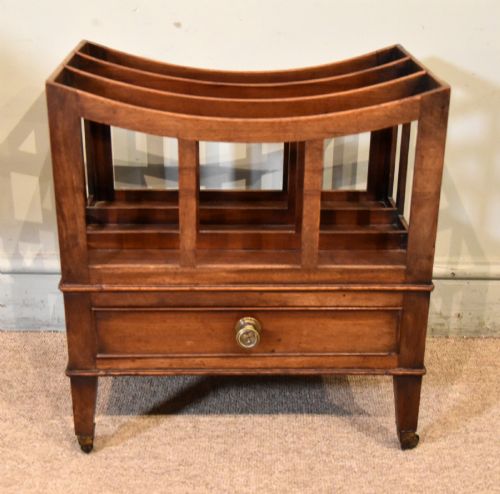
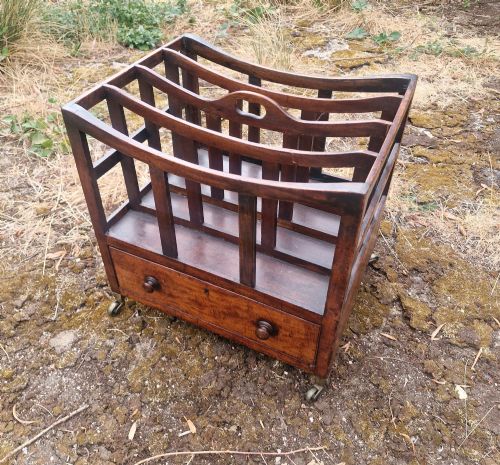
- A low freestanding stand with partitioned sections for holding sheet music, books, or periodicals. It often includes a low drawer at the base and carrying handles.
- Burr walnut
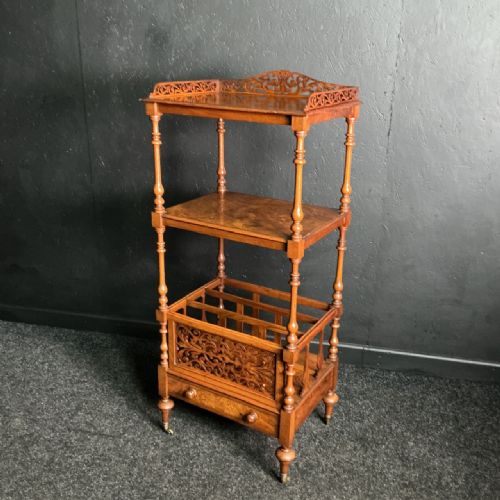
- A prized timber veneer taken from the growth excrescences of walnut trees, yielding intricate, swirling grain patterns. It gained popularity during the Victorian period for high-end occasional furniture.
- Aesthetic Movement
- A late 19th-century design style that rejected heavy Victorian industrialism in favour of simplicity, handcraftsmanship, and artistic expression. Pieces from this movement often incorporate bamboo or contrasting materials.
- Whatnot
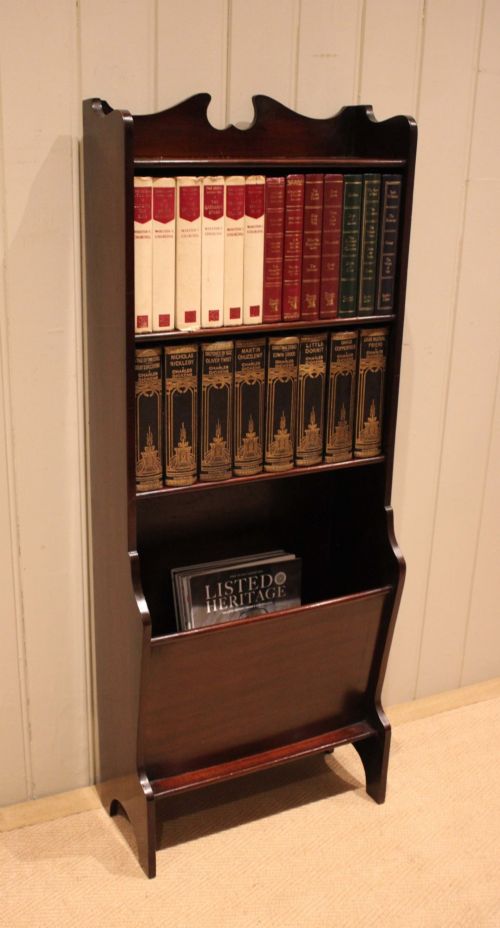
- An open set of multi-tiered shelves used for displaying ornaments or holding books and papers. Some variations combine this shelving structure with a lower magazine compartment.
- Regency
- An English design period spanning the early 19th century, characterised by classical restraint, architectural lines, and occasional use of brass inlay or mounts.
Standing Magazine Rack: Frequently Asked Questions
What is a standing magazine rack used for?
These pieces provide an organised, upright storage solution for newspapers, periodicals, and sheet music in living spaces. They keep reading material accessible while maintaining a neat interior.
Historically, they sat beside seating areas to hold the daily papers or musical scores for the household. Today, they serve a similar domestic function while acting as decorative antique furniture.
How do I date a standing magazine rack?
Dating relies on identifying the prevailing timber, construction methods, and stylistic details associated with periods like the Regency, Victorian, or Edwardian eras. Finer points such as turned legs, brass mounts, and inlay styles offer clues to the decade of manufacture.
Comparing the piece to documented examples from the 19th and early 20th centuries helps narrow down the origin. Cabinetmakers of each era utilised specific woods and decorative motifs that mark the timeline.
Where should I place a standing magazine rack?
These racks suit placement beside armchairs, sofas, or alongside desks where reading materials accumulate. Their freestanding nature allows them to move easily around a room as needed.
Because many examples double as side tables or occasional tables, they can also hold small lamps or decorative objects on top. This dual purpose makes them practical for smaller rooms or studies.
What is the difference between a canterbury and a rack?
A canterbury is a traditional form of low stand featuring divided vertical partitions specifically designed for sheet music or folios, frequently incorporating a drawer. Magazine racks can encompass a broader range of open frames and metalwork stands designed primarily for periodicals.
Over time, the terms became somewhat interchangeable in listings as makers adapted the partitions for modern reading formats. Traditional canterburys tend to feature more formal cabinetwork and turned legs.