




Antique Library Book Rack
An antique library book rack brings order to working spaces, ranging from compact revolving stands to tall mahogany bookcases.
Antique Library Book Rack
When you search for an antique library book rack, you encounter a varied group of furnishings designed to hold working volumes within arm's reach. These pieces span compact desk accessories and book troughs alongside larger open bookcases and revolving stands.
The selections appearing on this page date predominantly from the Victorian, Edwardian and Regency periods, stretching from the nineteenth century into the twentieth. Oak and mahogany dominate the forms, accompanied by walnut, pine and rosewood.
Most examples serve specific domestic or institutional reading habits, whether through extending book slides on a desk or tall shelving units against a wall. The variety reflects how libraries and studies evolved to handle different quantities of bound volumes.
Materials and construction
Cabinetmakers relied on solid timbers such as oak and mahogany, often pairing them with brass mounts, cast iron mechanisms and marquetry or painted details. Selected pieces utilise flame mahogany veneers or intricate inlay work to accentuate the grain.
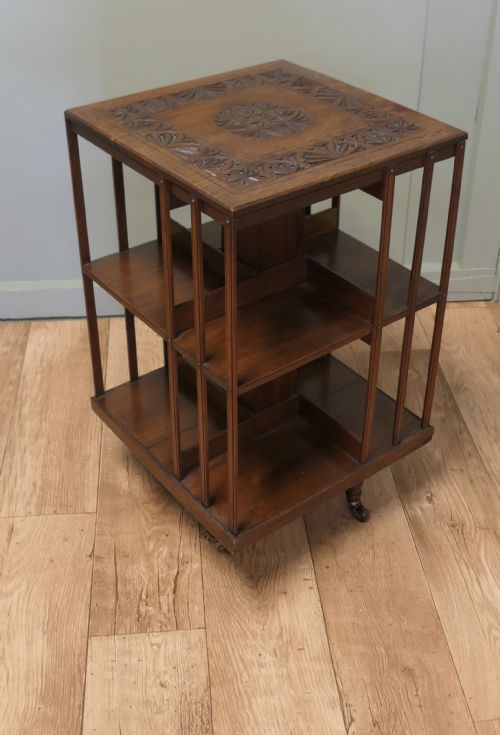
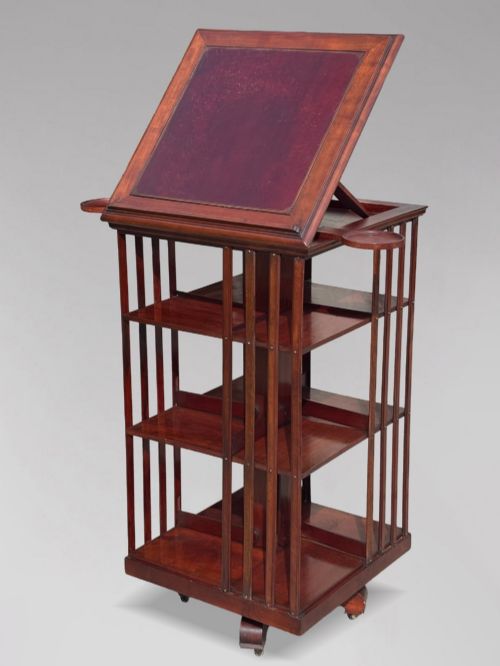
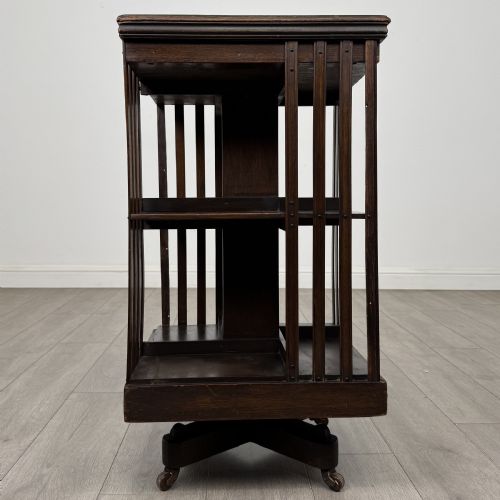
Revolving mechanisms require sturdy central pivots and slatted frames to support rotating weight without tipping. Extending book rests incorporate sliding wooden actions secured with brass fittings to adjust the length smoothly.
Formats range from revolving stands and desk book troughs to tall open bookcases and extending slides.
Markers of distinction
Distinction in these pieces rests upon the choice of timber and the precision of the joinery. Figured grain such as flame mahogany or burr walnut elevates a standard book trough into a significant furnishing.
The integration of secondary materials like hand-painted plaques, brass mounts or refined marquetry signals higher workshop standards. Smooth mechanical operation in revolving stands and extending slides also separates superior items from simpler utilitarian versions.
Waring and Gillows·Harrods
The Antique Library Book Rack Glossary
- Book trough
- A small open trough designed to sit on a desk or table to hold a selection of current reading. These portable pieces keep volumes upright without requiring full shelving.
- Revolving bookstand
- A rotating tiered stand that allows access to multiple books from a single seated position. These often feature slatted sides and sit on a cruciform base with castors.
- Extending book slide
- An adjustable rack with sliding sections that lengthens to accommodate varying numbers of volumes. They frequently incorporate brass mounts and gothic revival detailing.
- Open bookcase
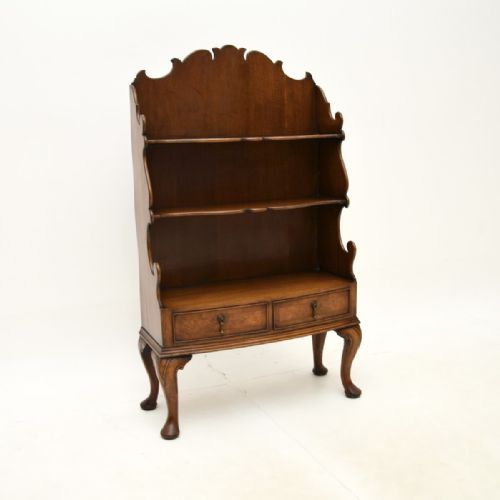
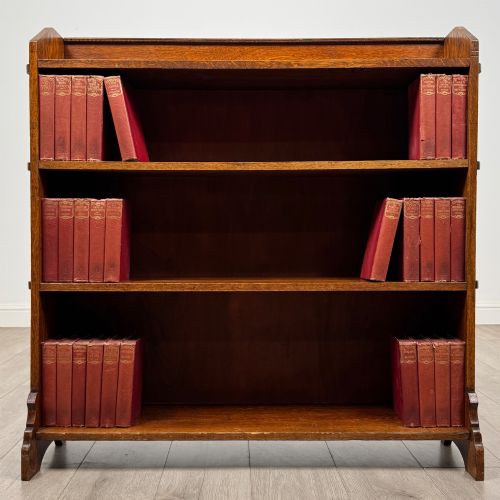
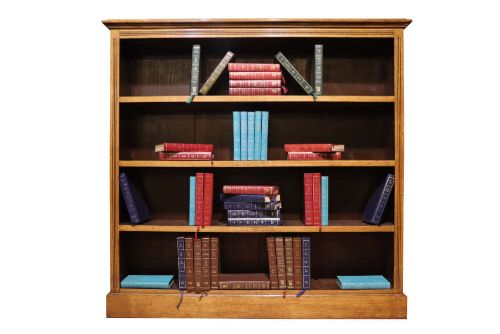
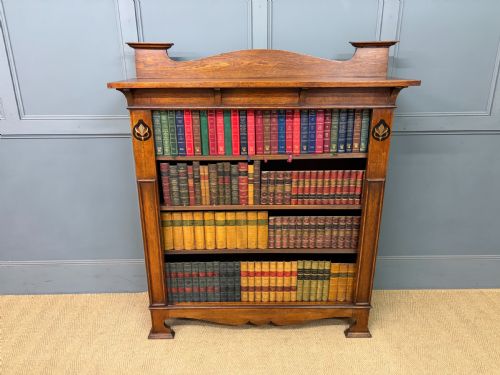
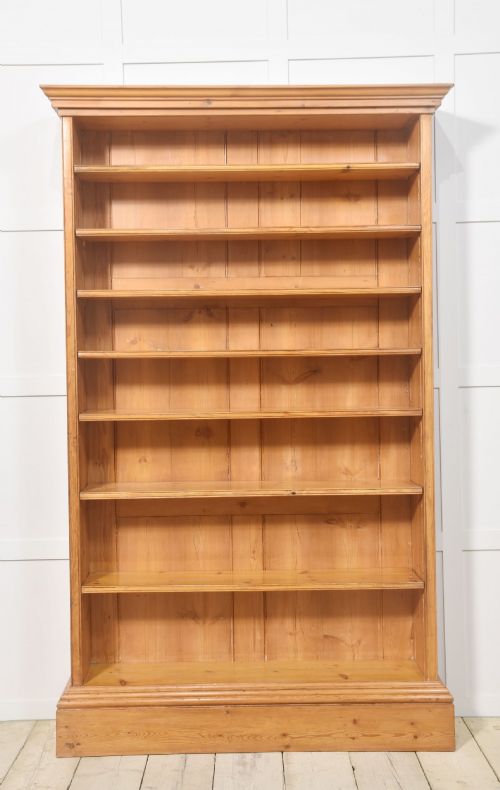
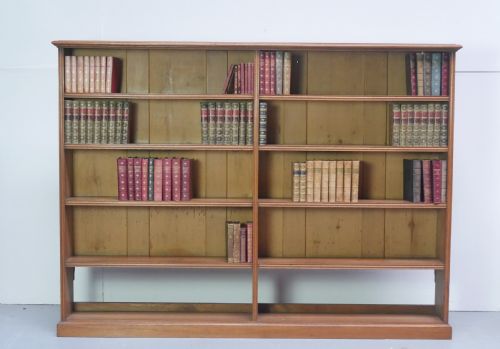
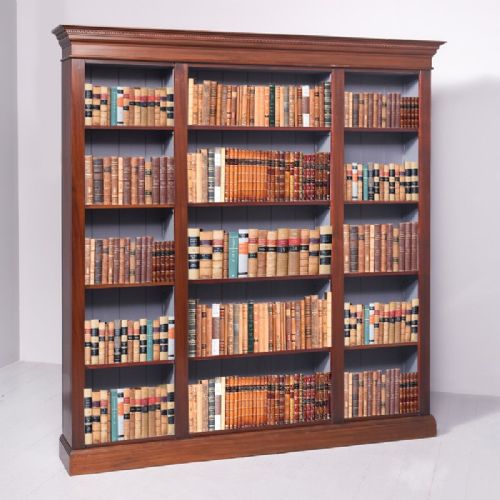
- A tall or low shelving unit without doors for immediate access to books. Examples range from simple pine boards to tall mahogany and golden oak structures.
Antique Library Book Rack: Frequently Asked Questions
What is a library book trough?
A library book trough is a small, open container designed to sit on a desk or table, holding a curated selection of volumes upright for easy daily access.
Cabinetmakers shaped these troughs in mahogany, oak, and walnut, frequently adding inlaid details or painted plaques to suit domestic studies.
How do revolving bookstands work?
Revolving bookstands operate on a central pivot mechanism hidden beneath the tiers, allowing the entire wooden structure to turn smoothly and present different titles to the reader.
This design became popular in the Victorian and Edwardian eras for keeping reference books accessible near a desk or armchair.
Where were extending book slides used?
Extending book slides sat upon desks and library tables to keep working volumes tidy and upright during research.
The sliding wooden sections permitted users to adjust the length as books were added or removed, often secured with brass fittings.
What woods appear most frequently?
Mahogany and oak form the vast majority of these pieces, appearing across both Victorian and Edwardian editions.
Cabinetmakers also utilised walnut, rosewood, pine, and painted wood alongside decorative brass and marquetry elements.