
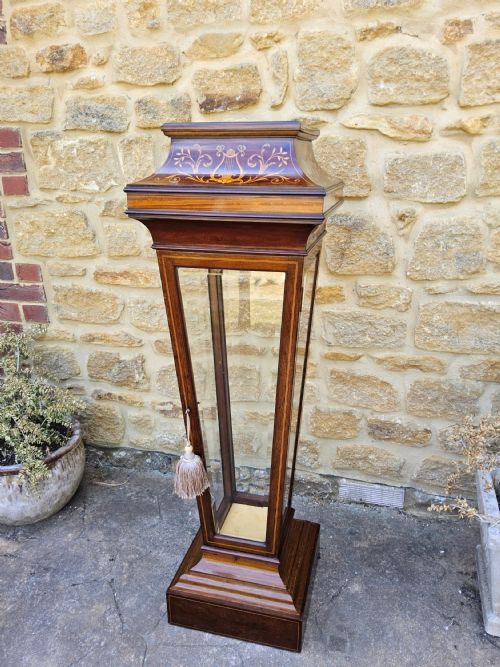


Standing Glazed Curio Cabinet
A standing glazed curio cabinet frames precious objects behind glass, bringing order and light to a room.
Standing Glazed Curio Cabinet
A standing glazed curio cabinet serves primarily to display collections, ceramics, and small valuables safely within domestic spaces. Buyers seeking a standing glazed curio cabinet will encounter numerous Edwardian examples alongside Victorian and Georgian pieces.
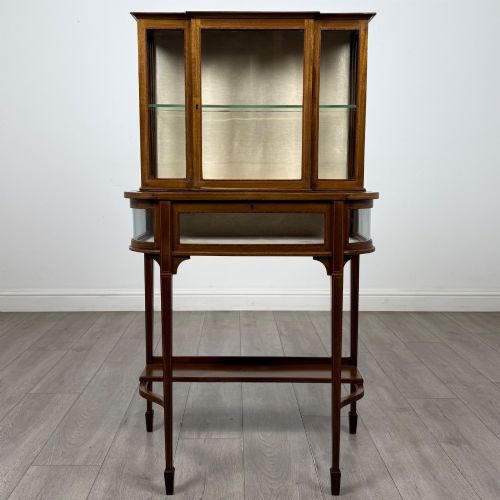
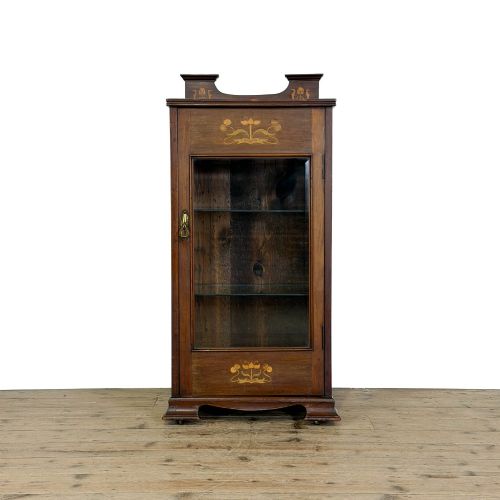
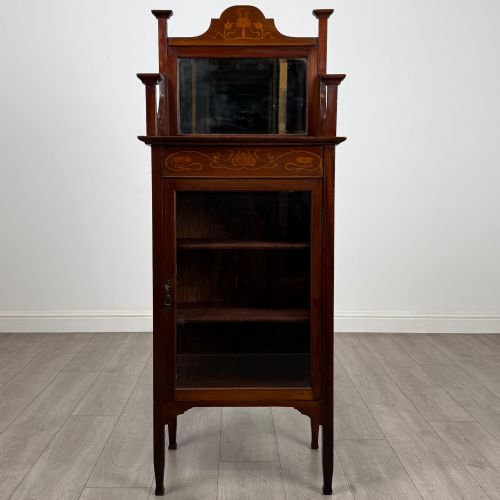
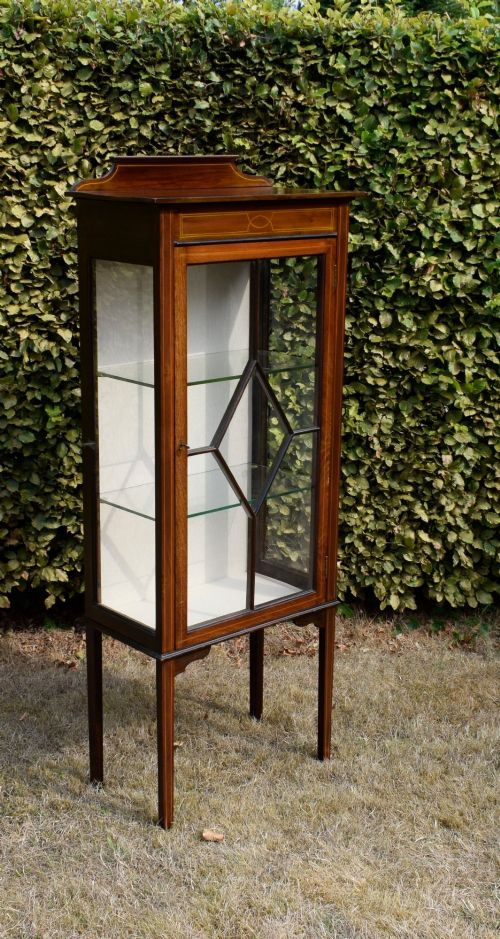
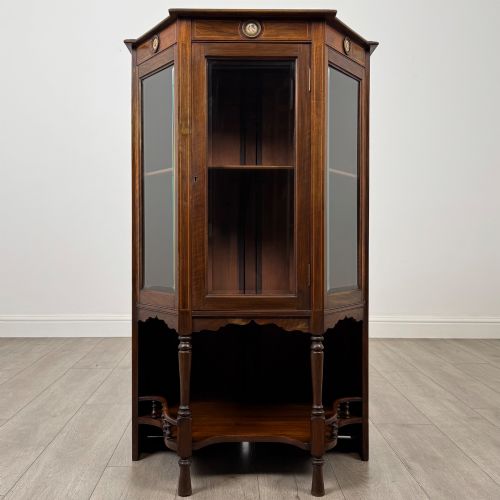
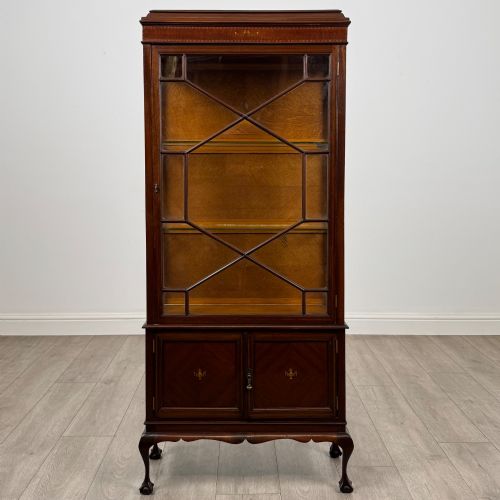
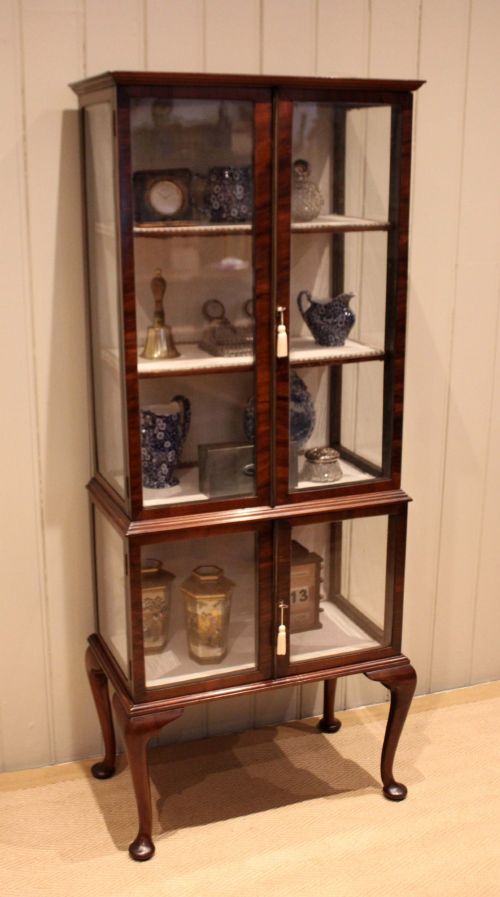
Most entries belong to the Edwardian period, frequently rendered in mahogany with delicate inlay work. Formats range from tall tower cabinets and corner units to lower pedestals and glazed bookcases on stands.
Continental versions introduce giltwood, painted panels, and cylindrical shapes, whilst English makers relied heavily on mahogany, satinwood crossbanding, and classical proportions.
Materials and Construction
Makers constructed these cabinets using dense timbers such as mahogany, walnut, and kingwood, often enhancing plain surfaces with satinwood crossbanding and intricate stringing. Glass panels are integrated into doors and sides to maximise light penetration.
Ornate models incorporate giltwood, brass mounts, and ormolu details to elevate the visual weight of the frame. Fabric linings frequently appear inside the display areas to provide a soft backdrop for curated objects.
Mahogany and glass dominate the listings, complemented by satinwood inlay, giltwood carvings, and brass hardware.
Evaluating Craftsmanship
Quality rests in the precision of the inlay, the clarity and thickness of the glass, and the stability of the timber frame. Superior examples demonstrate seamless joinery and refined proportions that balance the glass panels securely.
Decorative ambition separates standard utility cabinets from masterworks, evident in hand-painted panels, parcel-gilt carvings, and sophisticated serpentine or cylindrical woodwork.
Waring and Gillow
The Standing Glazed Curio Cabinet Glossary
- Vitrine
- A glass-fronted display cabinet designed specifically for showing porcelain, curiosities, and fine objects. These pieces feature glazed sides to allow light to enter from multiple angles.
- Bijouterie cabinet
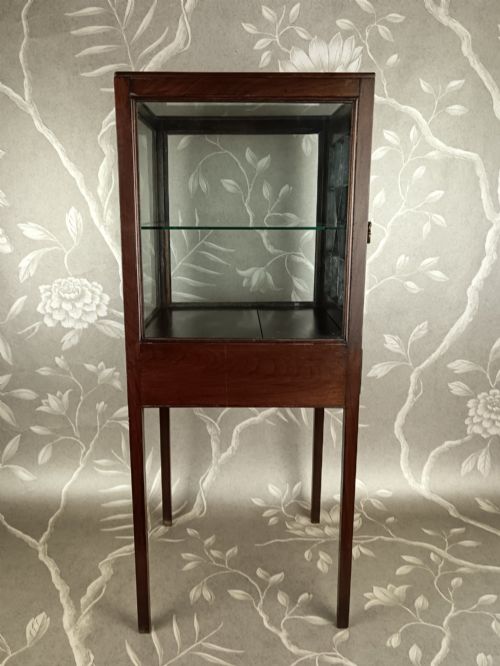
- A shallow display case with a glass top, often raised on slender legs, intended for holding jewellery and small trinkets. The internal compartment is frequently lined with velvet or silk.
- Satinwood crossbanding
- A decorative technique where a border of contrasting yellowish satinwood is applied perpendicularly around the edges of a mahogany panel. This frames the primary wood grain with a bright perimeter.
- Ormolu
- Gilded bronze mounts and decorative feet applied to furniture frames during the nineteenth and early twentieth centuries. The technique adds metallic lustre and sculptural detail to wooden cabinets.
Standing Glazed Curio Cabinet: Frequently Asked Questions
How are standing glazed curio cabinets best lit?
Most antique cabinets rely on ambient natural light entering through the glazed doors and side panels to illuminate the interior contents.
Placing the cabinet near a window ensures objects inside remain clearly visible without the need for modern internal lighting.
What is the difference between a vitrine and a curio cabinet?
A vitrine typically refers to a glass-fronted display piece with French stylistic origins, often featuring extensive glazing and giltwood decoration.
Curio cabinets span a wider variety of English and continental forms, including corner units, pedestal stands, and tall tower shapes.
Where should a tall display cabinet be placed?
These pieces require stable flooring and adequate wall clearance, particularly when housing heavy glass or porcelain collections.
Drawing rooms, dining spaces, and hallways serve as traditional locations where the glazed panels can catch and reflect light.
How do I identify an Edwardian inlaid cabinet?
Edwardian cabinets frequently employ lightweight mahogany frames decorated with boxwood and satinwood stringing and floral motifs.
They reflect a revival of eighteenth-century Sheraton and neoclassical styles, combining slender legs with refined rectilinear or serpentine proportions.