
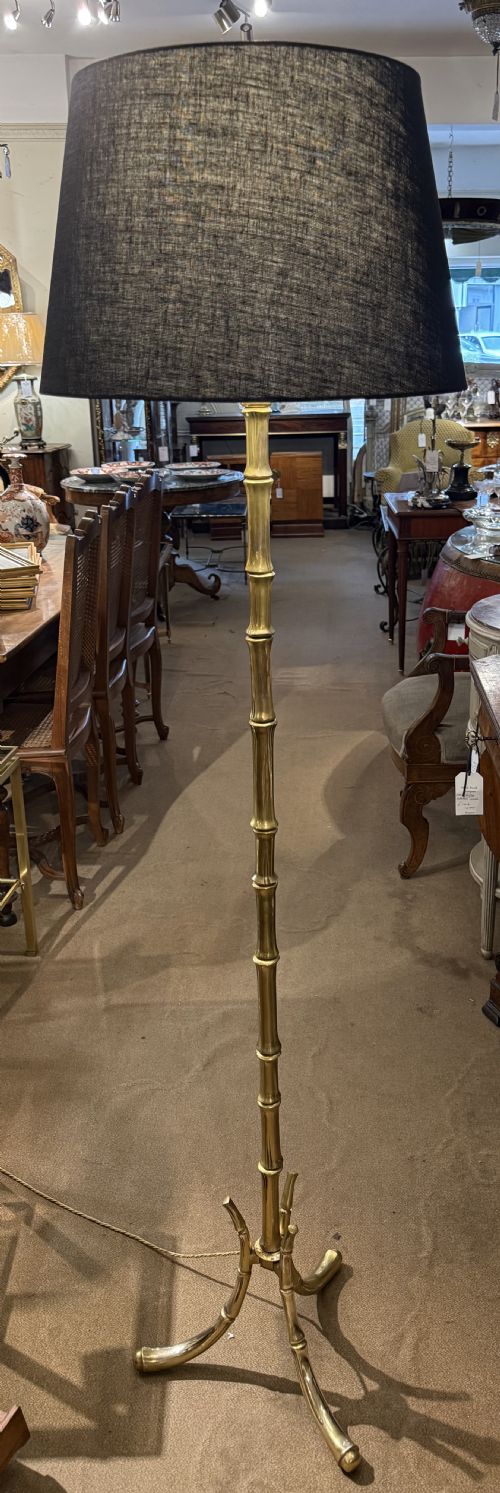

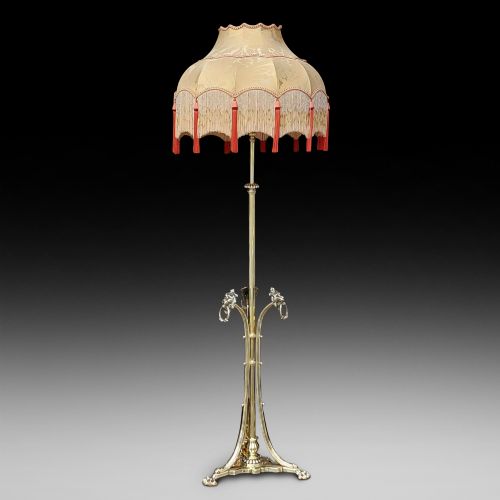
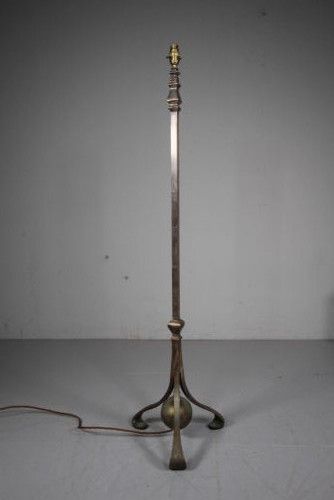


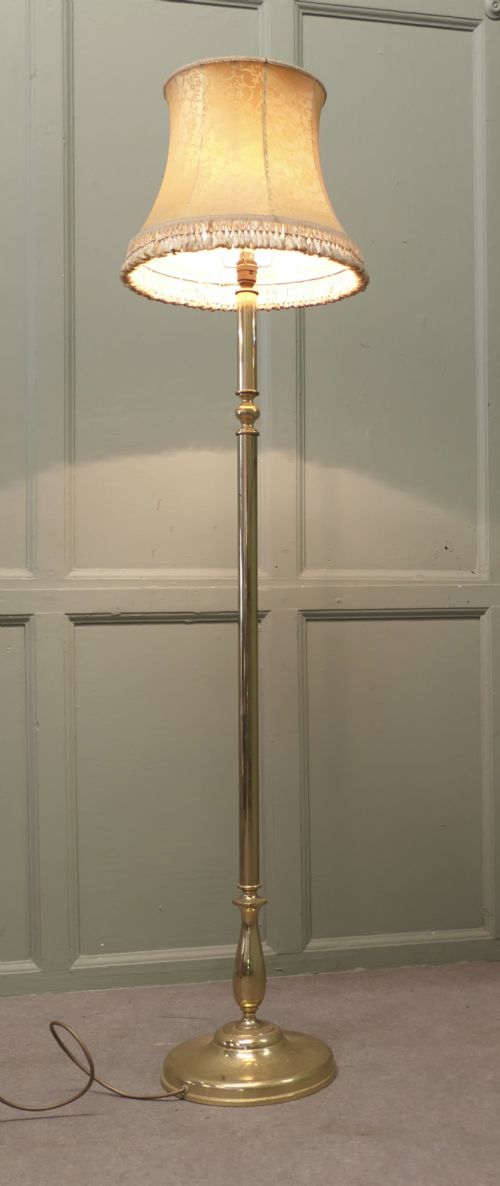
Standing Brass Reading Light
A standing brass reading light offers targeted illumination and substantial weight, bringing period character and adjustable height directly to a corner or armchair.
Standing Brass Reading Light
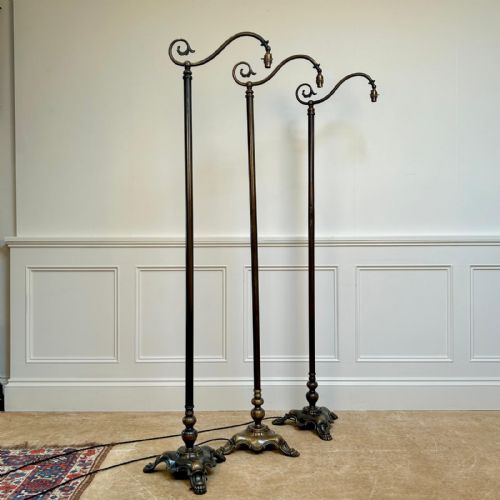
A standing brass reading light combines functional height with adjustable stems, pivoting arms, or telescopic mechanisms to direct light precisely where needed. When searching for a standing brass reading light, buyers encounter pieces primarily originating from Victorian, Edwardian, and early twentieth-century periods.
The form frequently bridges utilitarian design and decorative grace, appearing as standard lamps, converted oil lamps, or column lamps. Victorian and Edwardian examples dominate the selection, often featuring heavy bases in cast brass or combined materials to maintain balance when extended.
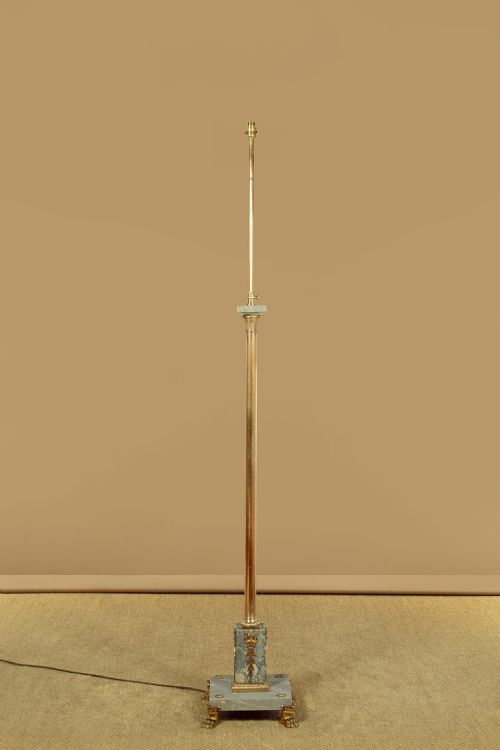
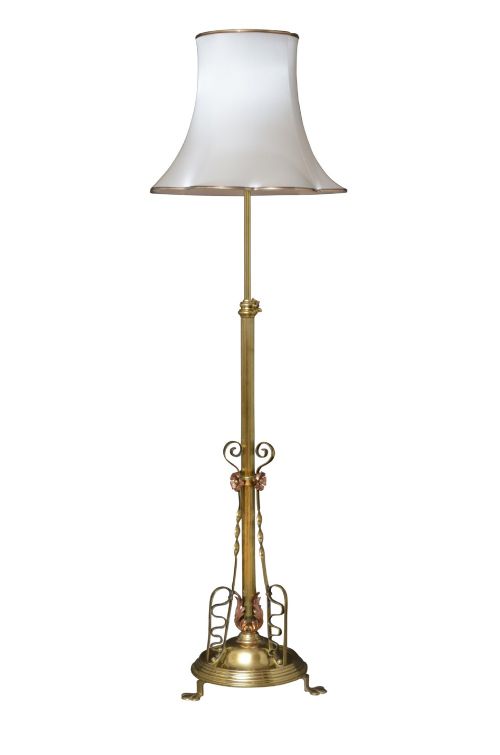
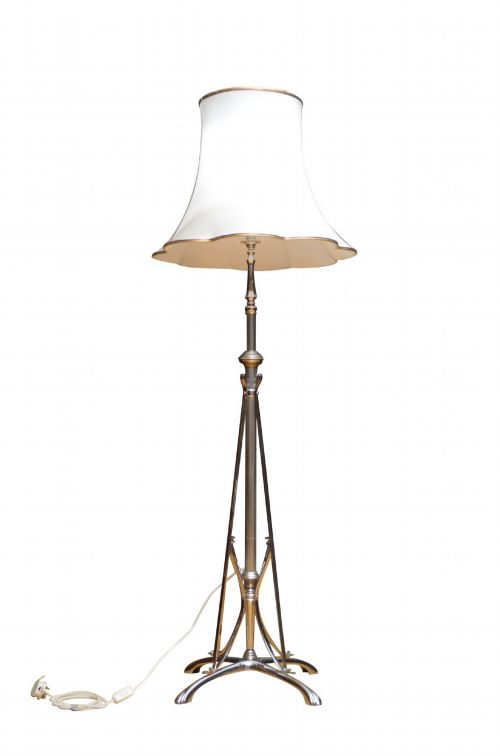
Makers and workshops utilised various stylistic vocabularies, ranging from restrained Neoclassical Corinthian columns to flowing Art Nouveau organic motifs. These floor-standing pieces serve both as practical illumination and as substantial vertical furniture elements within a room.
Materials and construction methods
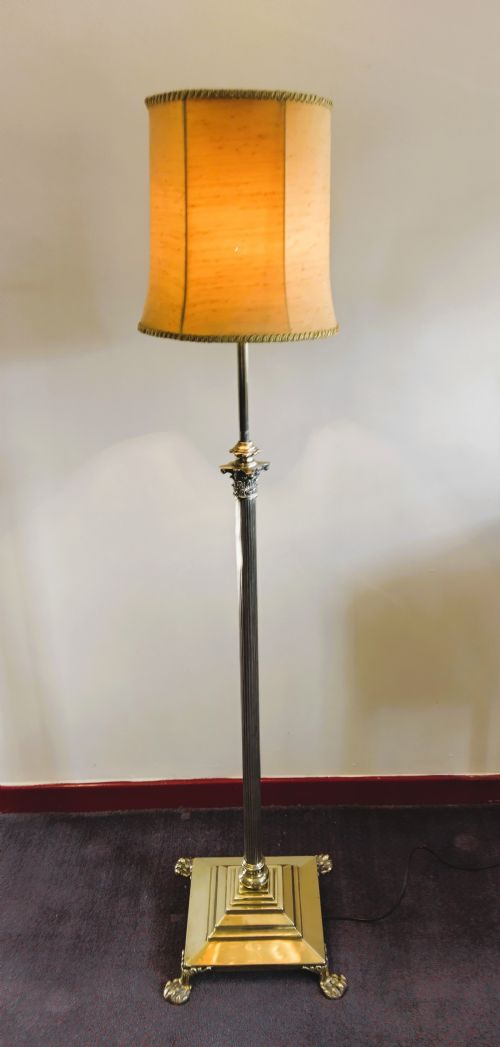
Construction relies heavily on cast and spun brass, sometimes paired with copper, marble, mahogany, onyx, or cast iron bases to provide necessary stability. Many examples incorporate telescopic stems or screw keys that allow the height of the standard to be adjusted manually.
Early wiring and conversion details show the evolution from oil burning fonts to electric fixtures, with fabric shades or glass components completing the assembly. Surfaces often display patination developed through age, reflecting the handling and polishing traditions of past decades.
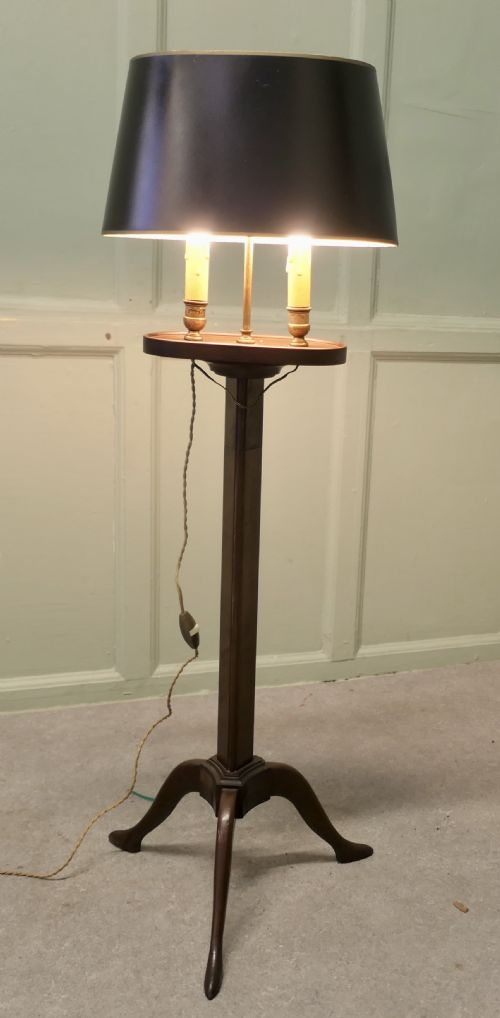
Some models thoughtfully combined illumination with hospitality, uniting a reading light and a small wine table on a single brass stand.
Distinctions in quality and execution
Quality reveals itself in the weight of the metal casting, the precision of telescopic mechanisms, and the integrity of structural joints. Superior examples maintain smooth vertical movement without wobble, utilising heavy weighted bases to support extended heights securely.
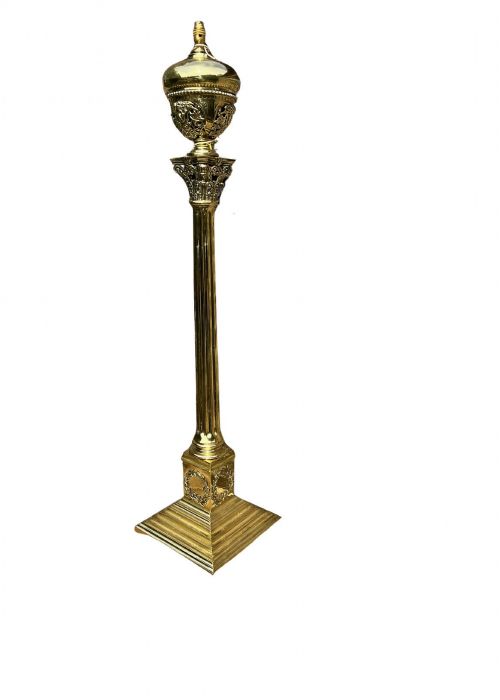
Detailing in the metalwork separates standard production from finer pieces, visible in crisp chasing on Corinthian columns, deliberate floral openwork, or balanced scroll arms. The harmony of proportions between base, column, and shade determines the visual success of the piece.
Maison Bagues·Hinks
The Standing Brass Reading Light Glossary
- Standard Lamp
- A floor-standing lamp designed to illuminate a room or provide task lighting over seating. These pieces utilise a tall vertical column supported by a weighted base.
- Telescopic
- Describing a standard with a sliding inner shaft that allows the overall height to be adjusted. This mechanism is frequently secured with a thumb screw or collar.
- Corinthian Column
- A classical architectural column form featuring ornate acanthus leaf capitals at the top. Victorian standard lamps frequently adopted this motif in solid brass.
- Bouillotte
- A style of adjustable reading lamp originating in France, traditionally featuring a central column and multiple candle arms or a single burner beneath a shade. The height is typically regulated by a key or screw.
- Ormolu
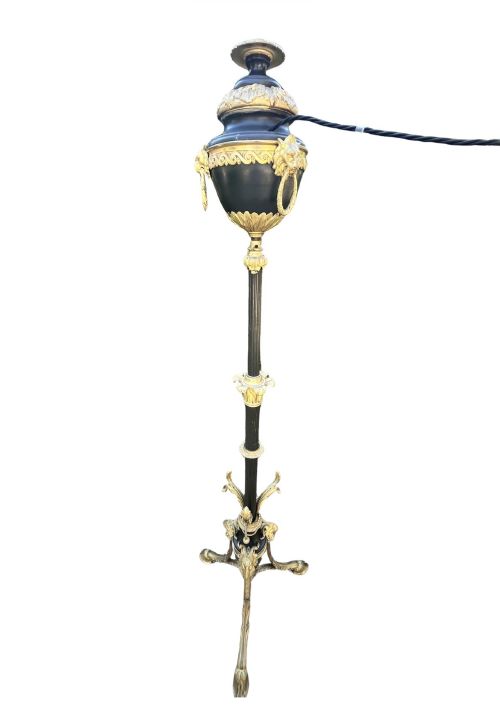
- Gilded bronze or brass applied to furniture and decorative objects. It provides a bright, gold-like finish on select luxury pieces.
Standing Brass Reading Light: Frequently Asked Questions
How do I adjust the height safely?
Most adjustable examples use a central thumb screw or collar on the telescopic shaft to lock the inner column in place. Support the upper section with one hand while loosening the mechanism to prevent sudden drops.
Ensure the cord has enough slack to move freely as the height changes, avoiding any tension on internal wiring.
Were these originally oil lamps?
A significant portion of nineteenth-century standard lamps began as oil-burning fixtures before being converted to electricity later in their lifespan. These conversions often retain original burners, fonts, or reservoirs adapted for modern wiring.
Inspect the upper section where the shade mounts to see how the conversion was executed and whether original galleries remain intact.
What styles are common in these lamps?
The selection spans several distinct aesthetic movements, with Victorian and Edwardian interpretations forming the core. Neoclassical columns, fluid Art Nouveau organic lines, and utilitarian Arts and Crafts tripod designs appear frequently.
French influences also emerge through Empire styles and bouillotte configurations, adding variety to the decorative detailing of the brasswork.
How do I choose the right shade?
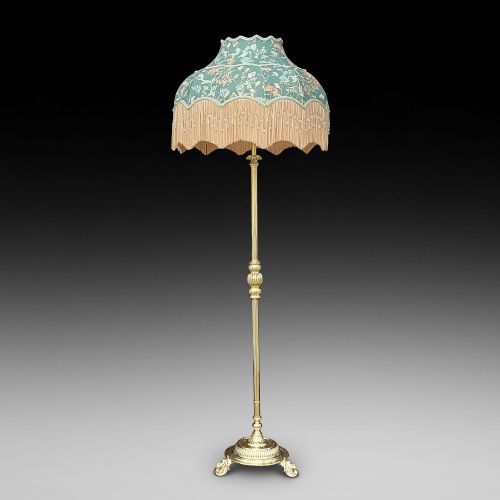
Shades range from traditional fabric designs to glass bowls, including cranberry glass and triple glass configurations. Proportions matter greatly, as a shade must balance the visual weight of the heavy brass column and weighted base.
Consider the intended function, as reading lights require opaque or downward-directing shades to focus illumination effectively.